Trailer Hitch and Towing Gear Reviews and Guides
TowPure helps drivers choose trailer hitches, ball mounts, brake controllers and towing accessories. We curate top picks by comparing tow ratings, vehicle fit, build quality and security, then explain in plain language why each product earns a place.
TowPure curates the best trailer hitches and towing gear for drivers who want safe, secure connections without guesswork. Each top pick is judged on tow rating, fit, finish and long-term durability, the way an installer would judge it. Coverage spans receiver hitches, ball mounts and hitch balls, brake controllers, couplers and axles, fifth wheel and gooseneck gear, tow dollies, cargo carriers, locks, receiver accessories and boat trailer parts.
Latest Contents

What Is TowPure?
A hitch is only as good as the rating on its label and the fit behind it.
How TowPure Chooses Gear
- Ratings that match: We check hitch class, tongue weight and gross trailer weight ratings against real vehicles and common trailers before recommending anything.
- Fit and compatibility: Receiver size, shank length, wiring style and drop or rise are weighed so parts work together on common tow vehicles.
- Build and finish: Welds, coatings, hardware and moving parts are inspected for the corrosion and wear points that matter after seasons of road salt.
- Safety and security: Pins, locks, chains and brake response are considered, because secure connections decide whether a loaded trailer stays predictable.
Frequently Asked Questions
How do I know which hitch class I need?
Start with your vehicle’s tow rating in the owner’s manual, then match it to the trailer’s loaded weight. Lighter trailers often suit smaller classes, while campers, boats and heavy loads generally need a higher class. Never exceed the lowest rating in the whole towing setup.
What is tongue weight and why does it matter?
Tongue weight is the downward force the trailer coupler places on the hitch ball. Too little may cause sway, while too much can overload the rear axle. A common guideline is roughly ten to fifteen percent of the loaded trailer weight, so always check your ratings.
Do I need a brake controller for my trailer?
Many trailers with electric brakes need a controller in the tow vehicle, and local rules often require brakes above a certain trailer weight. A controller lets you adjust braking force to the load, which generally gives smoother, safer stops than relying on the tow vehicle alone.
How should I choose the right ball mount height?
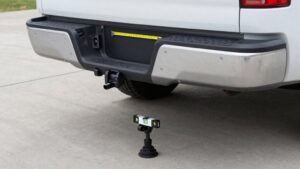
Measure from the ground to the top of the receiver tube and to the trailer coupler with the trailer level, then choose a drop or rise that closes the gap. A level trailer tows more steadily, brakes better and puts weight where the hitch was designed to carry it.
How can I keep my hitch and trailer secure when parked?
Use a receiver lock and a coupler lock, store pins and clips, and park where the trailer is not easy to hitch. Rinse road salt from the hitch after winter trips and apply a light protective coating so locks and pins keep moving freely.