What Is a Tow Bar Base Plate and Why Flat Towing Needs One
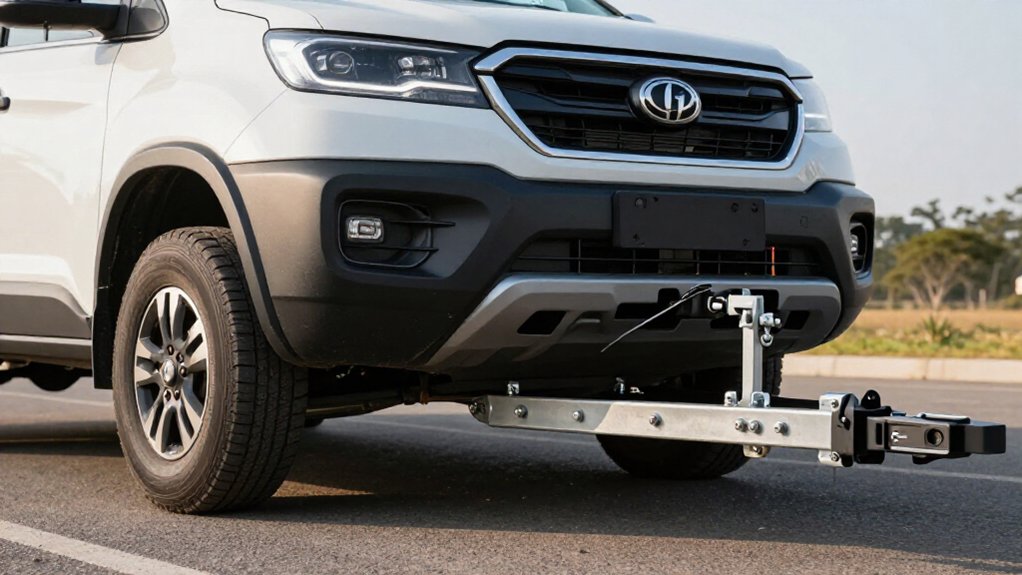
A tow bar base plate is a vehicle-specific bracket system that bolts to your chassis or frame, often without welding. It gives your tow bar connection points, keeping towing forces away from weaker body panels and spreading them across structural mounts.
You’ll need the right plate for your vehicle’s year, make, model, and configuration, plus proper installation and hardware. Check your owner’s manual for flat-towing approval; the details below can help you choose and connect your setup safely.
Vehicle-Specific Mounting Brackets
Choose a base plate with mounting brackets made for your vehicle’s exact make, model, and year. These vehicle-specific brackets bolt to factory chassis or frame mounting points, usually without welding. Their design matches your vehicle’s structure and directs towing forces into the frame rails instead of weaker body panels.
That distinction matters when road loads build over long trips. Check the manufacturer’s fitment information before you buy, and confirm the installation follows the vehicle and base-plate instructions. Proper bracket alignment also helps keep the tow bar at a suitable height; setup guidance commonly limits the height difference between your RV and vehicle to about three inches. Many assemblies include removable tabs, letting you keep the front of your vehicle neat when you’re not towing.
Base Plate Connection Points
Once the vehicle-specific brackets are installed, the base plate’s connection points provide the structural interface for the tow bar. Matched receiver openings align with the tow bar arms; pins and retaining clips lock them at the designed geometry. These points bolt to frame rails and spread towing forces across multiple mounts, not one spot.
| Check | What you confirm |
|---|---|
| Openings | Arms seat; pins and clips secure |
| Alignment | Height difference stays within about 3 inches |
Many plates use removable tabs or covers, keeping openings accessible for towing and discreet when you’re parked. Before driving, check that the arms fully seat, retainers are secured, and the tow bar and base plate align within the recommended height range. Don’t tow if anything binds or feels loose for safety.
A Jeep Wrangler Setup
For a Jeep Wrangler, start with a vehicle-specific base plate that bolts directly to the frame rails and provides secure tow bar anchor points. Don’t use a generic mount; fitment depends on your Wrangler’s model year and configuration. Before towing, confirm the manufacturer approves your specific vehicle for four-wheels-down travel.
Check that the base plate and RV tow bar sit at a compatible height, generally within about three inches, as specified in your setup guidance, so the connection won’t bind or place excess stress on components. Attach the tow bar arms to the receivers with the specified pins or lynch pins. Connect safety cables between the RV and base plate, leaving appropriate slack for turns.
Remove the tabs or covers when you’re not towing to keep the mounting points clean and less visible. Match the tow bar’s rating, braking system, and wiring equipment to your Jeep and RV.
Base Plate Styles
You can choose fixed-arm or removable-arm base plates, depending on whether you want the mounting arms to remain visible when you’re not towing.
Because each base plate is designed for specific vehicle makes and models, confirm it mounts securely to your vehicle’s chassis. Check that its connection type and alignment match your tow bar for safe towing.
Fixed Arm Styles
Because fixed-arm base plates hold the tow bar at set positions, they provide a consistent connection to your vehicle’s frame.
Most kits are vehicle-specific and bolt directly to the chassis without welding. Precision fit and multiple mounting points help distribute towing forces. Some designs offer multiple receiver or attachment options, while keeping the arms in set positions. This consistency helps preserve predictable towing geometry each time you connect.
Check your tow bar’s alignment before travel; many setups call for the connection points to be within about three inches of each other in height. Proper alignment supports stable steering and helps manage towing loads. Follow the vehicle-specific installation instructions and torque specifications, then inspect mounting points regularly. If the anchor area is exposed when you’re not towing, fitted covers can reduce visual clutter while keeping it accessible, and won’t change how the tow bar connects.
Removable Arm Styles
When you’re not flat towing, removable-arm base plates let you detach the tow bar arms for a cleaner-looking front end.
Mounting tabs or receivers bolt to your vehicle’s chassis, usually without welding. When you’re ready to tow, you attach the arms and connect a compatible tow bar. Many styles accept direct-connect geometry, so you won’t need improvised adapters that compromise alignment.
| Stage | Your task | Safety cue |
|---|---|---|
| Tow setup | Insert arms | Seat pins fully |
| On road | Check connection | Confirm no looseness |
| Parked | Remove arms | Keep receivers ready |
Secure each arm with its pin or lynch pin, then verify full engagement before you drive. A loose connection increases stress on the plate and attachment points.
Remove arms between trips; the receivers stay ready for quick reattachment.
Vehicle-Specific Designs
Removable arms affect how the front end looks between trips; the base plate itself must match your vehicle’s exact year, make, model, and trim. That match matters because each plate is engineered to bolt to factory-appropriate chassis points, creating a dependable anchor for your tow bar. Many designs use precise tabs and plates for direct-fit installation without welding, integrating with the frame structure.
Choose between direct-connect styles, which provide a straightforward tow bar connection, and crossbar-style systems, which use an integrated crossbar or quick disconnect for setups. Some crossbar designs also accommodate accessories such as a Rock Shield or Tow Defender while keeping the connection accessible. Most plates include removable appearance tabs, so you can keep hardware mostly hidden when you’re not flat towing.
RV Hitch Receiver Ratings
Check your RV receiver’s ratings for both gross trailer weight and tongue weight before you connect a tow bar. Your receiver must meet or exceed the tow bar’s specified rating, while staying within your RV’s towing limits. Don’t exceed either limit, even if the rig appears stable.
Receiver Weight Ratings
Because flat towing creates dynamic forces during braking, turns, and bumps, your RV receiver must handle more than the towed vehicle’s static weight.
Your receiver has two limits: maximum trailer weight and maximum tongue or vertical load. Both matter to your tow bar/base plate setup. Class labels, III, IV, or V, are rough guides; check your specific hitch model’s manufacturer ratings.
Flat towing adds changing loads as you accelerate, brake, turn, or cross potholes, so don’t plan to use either limit fully. Your base plate transfers vehicle-side load, but doesn’t raise receiver capacity. Match your tow bar and vehicle to the hitch ratings. If their combined load exceeds the rated vertical limit, install and properly torque a higher-rated receiver before towing for safer flat towing.
Gross Trailer Weight
Your receiver’s gross trailer weight (GTW) rating sets the maximum total weight it can tow, including the vehicle and towing hardware.
When flat towing, count your vehicle’s curb weight and added cargo; the tow system carries the full rolling load. Check the receiver label or owner’s manual for its specific rating, since hitch classes don’t guarantee identical limits.
Your tow bar, base plate, and brackets also have ratings. Keep the entire setup within the lowest applicable ceiling. If any rating is unclear, contact the manufacturer before connecting or departing; never estimate capacity from appearance.
| Item | What to check | Practical action |
|---|---|---|
| Receiver | GTW limit | Read label |
| Vehicle | Curb weight + cargo | Include both |
| Tow bar | Rated capacity | Verify marking |
| Base plate/brackets | Component rating | Match system |
Tongue Weight Limits
A receiver’s tongue weight limit is the maximum downward load it can safely support; exceeding it can bend the hitch or compromise stability, even briefly.
Check your motorhome’s receiver label and owner’s manual for its Class rating and exact capacities; “rated for towing” isn’t enough. Match those limits to the load your flat-towing connection actually places on the receiver. The tow bar and base plate transmit forces, so don’t assume the towed vehicle’s curb weight tells you the vertical load.
Include accessories and account for the connection’s actual imposed load. If the receiver lists maximum tongue weight, gross trailer weight, or a separate maximum vertical load, stay within every limit and use the most restrictive applicable rating. Use a rated scale to verify your setup before travel.
Flat Towing a Pickup
When you flat tow a pickup with all four wheels down, connect the tow bar to a vehicle-specific base plate bolted to the chassis so towing forces transfer safely to the frame. Before departure, confirm the pickup’s drivetrain and transmission meet flat-towing requirements, and make sure your RV can handle the truck’s actual weight, including cargo.
| Check | What you do | Why it matters |
|---|---|---|
| Base plate | Use chassis bolts; don’t weld. | Transfers force to frame. |
| Visibility | Choose removable attachment points. | Keeps hardware discreet. |
| Alignment | Keep height difference near 3 inches or less. | Promotes level towing. |
| Connections | Lock arms and pins; connect cables and lights. | Secure road setup. |
Recheck every connection before each trip, and follow the pickup and tow-bar manufacturers’ procedures throughout your journey carefully.
Flat-Tow Model Compatibility
Which vehicles can you flat tow safely? Start with your owner’s manual: it must permit four-wheels-down towing and specify the required transmission and drivetrain setup. A model’s appearance or trim’s approval doesn’t establish compatibility.
Next, match the base plate to your exact year, make, model, and often trim. A vehicle-specific kit connects to chassis attachment points; many use no-weld, direct-to-frame connections engineered for towing forces. Don’t substitute an improvised front tow point.
Check weight before choosing equipment. Include cargo in the towed vehicle’s weight, confirm it stays within both the tow bar and base plate ratings, and verify your RV’s tow limits exceed the combined load. If the manual prohibits flat towing or the required setup isn’t available, don’t tow it four wheels down.
Base Plate Installation Errors
Even a vehicle-specific base plate can fail if you install it incorrectly.
Use the specified frame holes and bracket alignment; improvising the mounting points can weaken the connection. Torque every fastener to the value with a calibrated wrench: too little lets bolts loosen, while too much can strip threads or damage the bracket.
- Check that base plate height keeps tow-bar geometry within about three inches of the recommended range, preventing binding and hookups.
- Seat removable tabs fully and fit accessory covers; a partly engaged tab may stop the linkage from locking securely.
- Before your first trip, carefully inspect bracket security and confirm the tow bar connects and operates.
Don’t tow until you’ve corrected any looseness, misalignment, or incomplete engagement.
A careful installation helps keep towing forces controlled.
Check Your Vehicle’s Owner’s Manual
Secure installation is only part of safe flat towing; check your owner’s manual first to confirm your vehicle is approved and learn which drivetrain, transmission, and towing procedures it requires. Confirm that your model’s drivetrain and transmission are permitted; approval can differ for front-, rear-, or all-wheel drive and for manual or automatic gearboxes. Follow each stated setup step, including shifting to neutral, setting the ignition and steering correctly, and engaging or releasing parking mechanisms as directed.
Then verify the required front-end connection: many manufacturers specify an approved base plate attached to the frame. Respect the manual’s towing-speed and weight limits, accounting for cargo and accessories. Don’t improvise with straps or chains, or tow before disconnecting or locking required systems. Before connecting, verify compliance.
Conclusion
When you flat tow, a properly matched base plate gives your tow bar secure, vehicle-specific connection points. Check your vehicle’s owner’s manual and confirm your model is approved for flat towing before choosing equipment.
Match the base plate and tow bar to your vehicle, and verify that every component stays within its rating. Don’t tow with loose, misaligned, or incorrectly installed brackets. If you’re unsure about fit or installation, have a qualified professional inspect the setup before you travel.