How to Check Trailer Wheel Bearings for Play, Heat and Noise
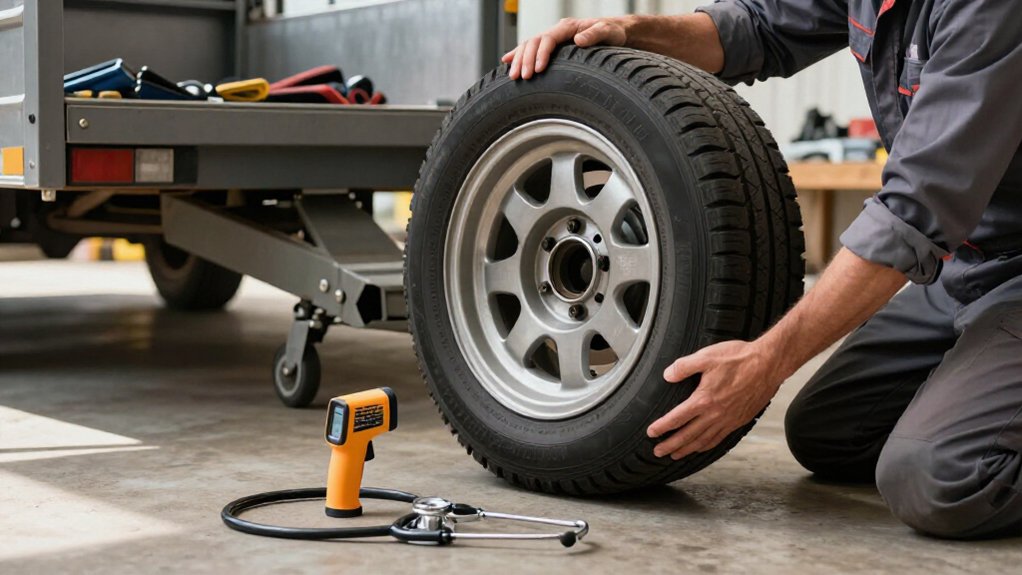
Before towing, park on level ground, chock the wheels, and support the axle with jack stands—never a jack alone. Grip your tire at twelve and six o’clock and rock it; excessive movement suggests bearing play.
Spin the wheel and listen for grinding, growling, or clicking.
After a 5–10-mile tow, compare hub temperatures; stop if one hub is too hot to hold.
Inspect grease and seals; the checks below can help you decide when to stop.
Axle Temperature and Bearing Play
After towing 5–10 miles at highway speed, park safely and carefully check each wheel hub; if one’s too hot to hold, its bearing may be overheating. A single unusually hot hub warrants stopping and inspecting the bearing before you continue.
Once the wheel is safely supported, grip it at 12 and 6 o’clock and rock it. Normal end play is slight, typically 0.001–0.005 inch, with no clunk. Play of 0.006–0.010 inch is excessive; adjust the bearing before towing accelerates wear.
No movement at all isn’t automatically good: zero play can mean the bearing’s too tight, leaving no room for thermal expansion and raising overheating risk. If the wheel shifts in and out or clunks, don’t tow farther. Stop and inspect or adjust the bearing.
Jack, Chocks, IR Thermometer
Before checking bearing play, park on level ground, chock the wheels, and raise the trailer with a jack, then support it with jack stands rated for its weight; never rely on the jack alone.
- With the tire fully off the ground, grip it at 12 and 6 o’clock; rock it gently and watch for slight, barely perceptible play.
- About 0.001–0.005 inch is typically normal; obvious looseness needs inspection before towing.
- After a 5–10-mile highway-speed run, aim an IR thermometer at each hub and compare readings.
- If a hub’s too hot to hold comfortably, or you hear squeaking, grinding, or clicking near 25 mph, inspect and adjust bearings immediately.
Take readings promptly after stopping, and don’t touch hot components; let them cool before hands-on inspection or adjustment.
Step 1: Park on Level Ground
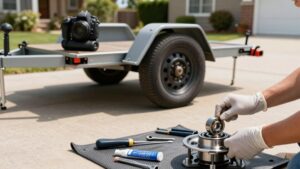
For a reliable bearing-play check, park your trailer on level ground and chock the wheels. Use a jack to raise the axle until the tire sits completely off the ground. Place adequately rated jack stands under the trailer frame to support it; never rely on the jack alone. Check the area.
With the wheel suspended, grasp the tire at 12 o’clock and 6 o’clock, then rock it side to side. Aim for about 1/8 inch or less of movement. Excessive play can signal a bearing problem. Spin the wheel and listen for grinding, squeaking, or clicking. These noises may also indicate trouble.
Keep your hands clear of pinch points as you test, and don’t crawl beneath a trailer that isn’t securely supported. If you notice excessive play or unusual noise, have the bearing inspected before towing.
Step 2: Remove the Dust Cap
Once the trailer is securely supported on jack stands, carefully pry off the dust cap with a screwdriver to expose the cotter pin and castle nut.
Confirm the trailer is on level ground, the wheels are chocked, and the stands are stable beneath the frame. Never rely on the jack alone; a shifting trailer can cause serious injury. Pry carefully to avoid slipping or damaging the cap or hub. Set the cap aside.
Check the cap and hub for cracks, dents, or grease leakage; these may signal seal failure or contamination. Wipe dirt and old grease from the castle nut and spindle with a clean cloth before touching the cotter pin. Keep debris out of the hub. With the hardware clean, you’re ready to continue the bearing inspection.
Step 3: Twelve-Six Rock Test
With the wheel fully off the ground, grip it at the 12 o’clock and 6 o’clock positions and rock it back and forth to check for axial play.
Before testing, jack up the trailer on level ground and support it with properly rated jack stands. Never rely on the jack alone. Use both hands to feel for side-to-side, or axial, end play. A trace of movement may be normal; tapered roller bearings typically allow about 0.001–0.005 inch.
If you feel or hear a clunk, or see obvious rocking, the bearings likely need adjustment or inspection. Movement around 0.006–0.010 inch generally signals excessive play and warrants service. If you find no play but the hub runs hot after towing, the bearings may be too tight; recheck them and follow service specifications.
Step 4: Spin Wheel, Listen for Grinding
After checking for play, keep the trailer securely supported and spin the wheel by hand. Ensure the tire is fully off the ground, and never rely on a jack alone; use rated stands on solid, level ground. Turn the wheel slowly, then listen for grinding, growling, squeaking, clicking, or a rough, uneven feel.
Ask a helper to listen near the wheel and from the opposite side while you spin it. A smooth, quiet rotation is reassuring, though it can’t rule out every problem. Any grinding or growling is a warning: stop and inspect the bearing before towing.
While towing, listen near 25 mph for new wheel-area noises. After the trip, spin it at rest; treat road noise as reason to check bearing condition and adjustment.
Step 5: Inspect Grease for Metal
During bearing inspection, wipe the grease from the hub and bearings, then check for fine gritty flakes or metal shavings. Compare the grease with fresh grease, which should look uniform. Dark, rough, or metallic-looking grease points to ongoing damage.
If you find metal, don’t rely on a simple adjustment. Clean and inspect the bearings and races before repacking with grease. Look for pitting, scoring, or discoloration on the rollers and races; these marks support metal contamination and may mean you need to replace bearings or races. Milky or rust-colored grease suggests water entered through a failing seal, which can speed corrosion and create more metal wear particles. Wear gloves and keep debris out of the hub as you work. Don’t tow with visible damage.
Step 6: Reinstall the Dust Cap
Once you’ve adjusted the bearing and secured the castle nut with a cotter pin or tang washer, press the dust cap fully into place so it fits snugly and helps keep water and dirt out. If the cap is cracked, bent, or otherwise damaged, replace it before towing; a compromised cap can let contamination reach the bearing and accelerate wear or heat.
After installation, spin the wheel by hand carefully. It should turn freely, without binding or grinding. Before a trip, check hub temperature after a 5–10-mile run at highway speed. You should be able to hold your hand against the hub; excessive heat can signal incorrect bearing preload, even with the cap installed. Stop and investigate any abnormal heat or noise before continuing.
Verify Cotter Pin Alignment
Before inserting the cotter pin, turn the castle nut back only until a slot lines up exactly with the pin hole; never tighten it by force to make them align. Push the cotter pin through the hole, then bend both ends securely so towing can’t let it back out. If your tang washer is used, align its tab with the pin-hole area, then bend it into position to keep the nut from rotating loose.
A missing or misaligned pin can let the castle nut back off, creating dangerous wheel-end play, typically beyond about 0.006–0.010 inches, and overheating bearings. If the slot doesn’t align, back the nut off slightly until it does; don’t force it tighter. Recheck before towing. This prevents loosening and helps protect your bearings.
Water-Intrusion Seal Failure
After you submerge a trailer at a boat ramp or drive through heavy rain, check for water-intrusion seal failure. Pop the dust cap and inspect the grease. Milky or rust-colored grease signals that water has passed a failed seal. Check the bearings and races for pitting, scoring, or unusual metal debris; these signs point to damage that can build heat quickly.
| Sign | What you should do |
|---|---|
| Milky or rusty grease | Treat it as water contamination |
| Hub too hot to hold | Stop and inspect |
Water-contaminated grease can contribute to play and temperatures 20–50°F above normal. After highway-speed travel, if a hub is too hot to hold a hand against, stop. Treat the heat as a warning; inspect and replace damaged seals, bearings, or races before towing.
Schedule Annual Bearing Repacking
Repack and inspect your trailer’s wheel bearings at least once a year, ideally before boating or cargo season, because water and road vibration can degrade grease and seals and loosen bearing preload.
Annually, check end play with the jack-stand method; aim for 0.001–0.005 inches. Inspect the hub and races for scoring or pitting, replacing worn bearings to limit wear. To reassemble, tighten the castle nut to 50 ft-lbs to seat bearings; back it off, then retighten only to snug alignment before inserting a new cotter pin.
On your next trip, drive 5–10 miles at highway speed, then check hub temperature by touch. If a hub’s too hot to hold your hand on, schedule service before towing farther.
Conclusion
Before your next trip, check each trailer hub for unusual heat, noise, and movement. Park on level ground, chock the wheels, and use a jack rated for your trailer. Don’t rely on the jack alone; support the axle securely.
Remove dust caps, perform the twelve-six rock test, and inspect seals and cotter pin alignment. Reinstall caps, and arrange annual bearing repacking. If you find looseness, contamination, or excess heat, don’t tow until you’ve corrected it.