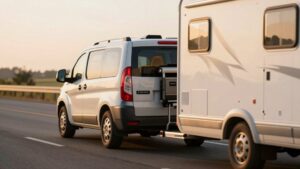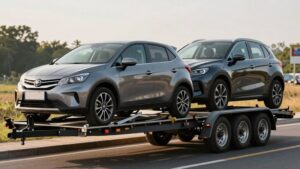
What Cars Can Be Flat Towed? Dinghy-Towable Vehicles List
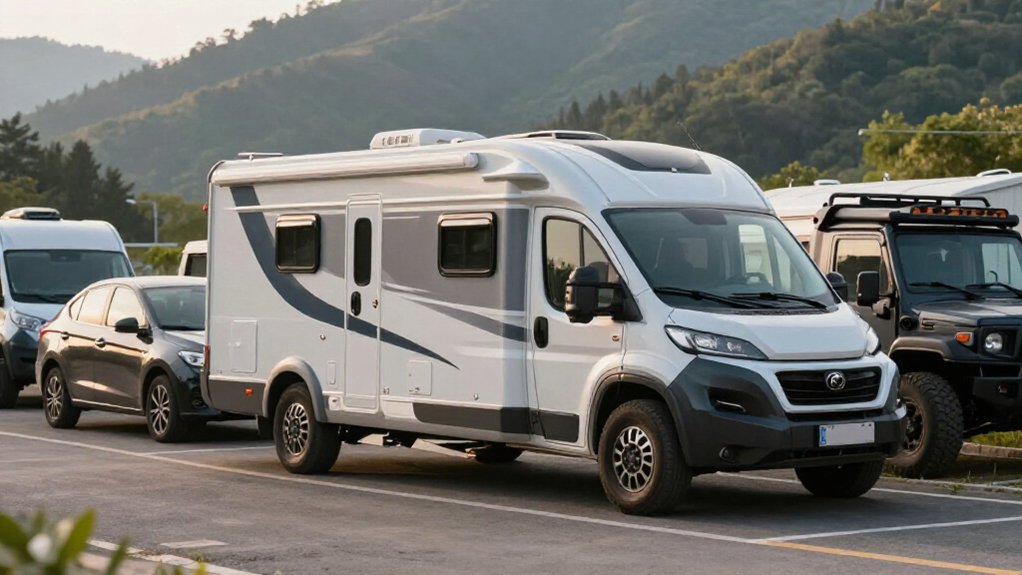
What Cars Can Be Flat Towed? Dinghy-Towable Vehicles List
You can flat tow only a car whose owner’s manual explicitly approves four-down towing for its exact model year, transmission, and drivetrain. Dinghy-towable lists often include select sedans, SUVs, trucks, and Jeep Wrangler configurations, but approval changes by year and trim.
Check the recreational-towing procedure before buying, including transfer-case neutral and battery-disconnect or charging instructions. You’ll need compatible tow-bar, lighting, and supplemental-braking equipment. The guide below explains how to verify candidates and avoid towing mistakes.
Eligible Makes and Models
Flat-towable vehicles vary by model year and configuration, so don’t assume every version of a make or model qualifies. Your choices depend on the model year, because transmission, drivetrain, and software changes can add or remove approval for four-down towing. Use year-specific dinghy-towing guides, including RV Life’s listings through 2025, 2024, and 2023, or older Motorhome Magazine lists, to identify candidates.
But treat each entry as configuration-specific: a manual transmission may qualify where an automatic doesn’t, and some four-wheel-drive vehicles require a transfer case that offers neutral. Before you shop, match the make, model, and year to your owner’s manual’s recreational-towing section. Don’t rely on a dealer’s assurance if it conflicts with manufacturer documentation. Some listed vehicles carry conditions, so verify eligibility before you buy.
Manufacturer-Approved Tow Procedures
After confirming a vehicle qualifies, check its owner’s manual for the exact four-down towing procedure for your model year, drivetrain, and transmission. Look for “recreational towing,” and follow every listed step; approval can change across trims. Battery instructions may require a disconnect or auxiliary charger, so confirm before departure.
AWD/4WD models may need transfer-case neutral. If dealer advice conflicts, trust the manual. Your safe, legal setup also needs manufacturer-matched supplemental braking and lighting, plus compliance with motorhome towing limits and GCWR.
| Check | Confirm | Why it matters |
|---|---|---|
| Manual | Model-year procedure | Avoid costly mistakes |
| Equipment | Battery, brakes, lights | Protect your trip and others |
Confirm the configuration before you hitch; a mistaken assumption can strand you, damage the drivetrain, or leave you responsible for an unsafe combination.
Four-Down Towing Basics
With four-down towing, all four wheels of your toad stay on the road as your RV pulls it with a tow bar. Your vehicle must be explicitly approved for recreational towing in its owner’s manual; check the “Recreational Towing” section or equivalent. If the manual doesn’t support flat towing, don’t do it.
Even approved vehicles may need a battery charger or disconnect, so follow the procedure exactly. Use dinghy-specific lighting and braking so others can see your toad and it can slow with your RV. Supplemental braking is typically needed and required by law in most U.S. states and Canada.
Check RV towing capacity and GCWR before travel. Count toad weight, cargo, passengers, and braking equipment; keep the combined rig within legal, safe limits.
Sedans, SUVs, and Trucks
You’ll find flat-towable sedans, SUVs, and trucks, but eligibility varies by model year, drivetrain, and transmission. Check your exact vehicle’s owner’s manual for the approved four-down procedure and any required accessories.
Before towing, confirm your RV’s weight limits and meet applicable braking and lighting requirements.
Flat-Towable Sedans
Sedans, SUVs, and trucks can be flat-towed only when the owner’s manual approves four-down towing for that exact model year and drivetrain. Eligibility varies by year because transmission, drivetrain, or software changes can alter manufacturer approval. Check the manual for explicit “recreational towing” or “flat towing” authorization; a published list isn’t final authority.
Follow every listed procedure, including any speed or distance limits. Even an approved sedan may need a battery disconnect or charging setup, so confirm required equipment before departure.
Before you choose a toad, verify that your motorhome can handle its weight within the GCWR and determine whether an auxiliary braking system is required. Confirm compatibility for the model year and drivetrain, then prepare the vehicle as instructed for safe use.
Flat-Towable SUVs
Many SUVs can serve as dinghies, but flat-tow approval depends on the exact model year and configuration. Check your owner’s manual for a “Recreational Towing,” “four-down,” or “flat towing” section; a model’s name alone isn’t enough. When approved, keeping all four wheels on the ground can make towing simpler than using a trailer, and disconnecting the tow bar may be quicker when you arrive.
Follow the manual’s setup instructions: some SUVs need a battery charger or disconnect, while others prohibit flat towing. Confirm your motorhome’s GCWR and tow rating, counting the coach, passengers, cargo, SUV, and towing accessories. You’ll typically need supplemental braking and a lighting kit to meet requirements and maintain control. Verify requirements before departure; equipment and procedures vary by SUV configuration.
Flat-Towable Trucks
Consider trucks alongside sedans and SUVs when choosing a flat-towable vehicle, but confirm the exact model year and drivetrain in the owner’s manual.
Some trucks can be towed four-down, but don’t rely on dealer claims. Check the manufacturer’s instructions for explicit approval for recreational or flat towing.
For four-wheel-drive models, follow any required transmission or transfer-case neutral procedure exactly. A mismatch in drivetrain or setup can make towing unsafe or damage the vehicle.
You’ll also need a tow bar, supplemental braking, and lighting equipment. Before buying, verify your motorhome’s tow rating and GCWR can accommodate the truck’s weight, contents, and auxiliary brake equipment. Staying within those limits helps preserve braking performance and handling. Use the manual, not retailer guidance, to confirm eligibility.
Model-Year Differences
Because flat-tow approvals can change with drivetrain, transmission, or software updates, a vehicle approved in one model year may not be approved in the next. That matters across sedans, SUVs, and trucks: older lists may include choices newer model years no longer offer. A nameplate doesn’t guarantee the same towing status after a redesign or powertrain update.
For sedans and SUVs, approval may depend on trim and transmission; a manual version might qualify while a CVT doesn’t. Treat each model year and configuration as its own case, rather than carrying older approval forward. Even when approved, you’ll need to follow that year’s setup steps, such as placing a transfer case in neutral, before towing. These changes can make older guides misleading for today’s available choices.
Verify Towing Compatibility
Before you choose a sedan, SUV, or truck for flat towing, make sure you check its Owner’s Manual under “Recreational Towing.” If that section isn’t present, the vehicle isn’t approved for four-down towing. Verify the exact year, make, and model; drivetrain, software, or transmission changes can alter eligibility between model years.
Follow every listed procedure and install required equipment, such as a battery charger or disconnect. Approval by itself doesn’t ensure a safe setup.
Check your motorhome’s tow rating and GCWR before buying or traveling. Tally the toad’s weight, cargo, passengers, and auxiliary braking equipment against those limits to protect handling and remain legal. Check state or country rules for supplemental braking and lighting. Choose a compatible braking system and lighting kit alongside your tow bar, as required.
Battery Disconnect Requirements
Even if a vehicle is approved for flat towing, you may need to disconnect its battery or use a charger to prevent battery drain and system problems.
Check the manual’s recreational-towing or four-down section for your exact year, model, and drivetrain. Manufacturers may prohibit leaving the battery connected, and procedures vary. If the manual directs you to disconnect it, follow that instruction; you typically won’t need a separate charger.
If it doesn’t require disconnection or give another approved procedure, assume you’ll likely need a charger to prevent drain and system issues. Verify the requirement before purchase, then use any specified equipment. Flat-tow approval doesn’t mean you can tow safely without accessories, so treat battery instructions as part of the approved setup for your vehicle.
Hybrid and EV Restrictions
Battery procedures are only part of the picture: hybrid and EV flat-towing approvals are limited and can vary by model year, trim, and drivetrain.
Traditional dinghy-towing lists often emphasize older drivetrain designs; don’t assume a hybrid or EV qualifies because a similar gasoline model does. Check the owner’s manual for explicit permission to recreational tow, four-down, or flat-tow that exact vehicle. Without that wording, treat it as unapproved.
Regenerative braking and drivetrain lubrication can make towing unsuitable or require specific pre-tow steps. Follow any stated neutral setting or transfer-case neutral procedure where applicable.
Your battery requirements may also differ from conventional cars; some models require a charger or battery disconnect.
Before setup, verify the exact year, trim, and transmission against the manufacturer’s documented approval.
Jeep Wrangler Flat-Towing Example
In dinghy-towing guides, the Jeep Wrangler is a familiar example, but you’ll still need to follow the exact model’s approved procedure and use the right equipment.
Before you buy a tow bar or braking system, check the owner’s manual for a “recreational towing,” “four-down,” or “flat towing” approval section for your Wrangler’s model year and drivetrain. Treat the manual as the authority; don’t rely on a dealer’s claim. Follow its specified transfer-case and transmission steps, and confirm whether your setup needs battery charging or disconnection.
Then verify your RV’s towing rating and gross combined weight rating (GCWR). Include the Wrangler, cargo, tow equipment, and supplemental braking system in your weight calculation. Staying within those limits helps you tow legally and safely and arrive ready to drive.
Transmission Overheating Symptoms
Transmission overheating after flat towing may cause a burnt smell, delayed or rough shifting when you start driving, or a temperature warning. Automatic transmissions face greater risk if your owner’s manual doesn’t approve four-down towing or you skip its required pre-tow and neutral steps.
These signs may indicate inadequate lubrication because you missed a specified speed, distance, ignition, neutral, or transfer-case procedure. Check for these warning signs:
- Burnt or overheated smell.
- Delayed or rough shifts.
- Transmission temperature alert.
- Limp mode or “service” indicator.
If you see an over-temperature message, limp mode, or service indicator, stop towing immediately. Confirm your model year’s exact flat-towing procedure in the owner’s manual before towing again. If required, use your auxiliary battery charger or disconnect as directed during flat towing.
Tow-Bar Compatibility Guide
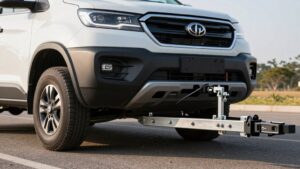
Once you’ve ruled out overheating risks, make sure your tow bar matches your vehicle and setup. Even if your car is approved for recreational, four-down, or flat towing, you still need a properly matched system for a safe mechanical connection.
Check these points before travel:
- Choose non-binding latches and capacity for repeated extensions and combined motorhome-and-toad loads.
- Add any model-year-specific accessories, such as a battery charger or disconnect, if required.
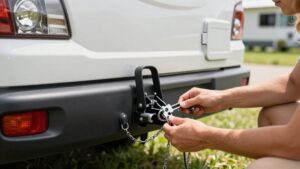
- Install supplemental braking and lighting for brake, turn, and running lights, keeping your toad legal and visible.
- Confirm tow-bar compatibility and procedures in your exact year and model’s owner’s manual; its requirements can override generic advice.
Approval alone doesn’t guarantee compatibility. Match each component to your vehicle and towing setup, then follow the specified procedure.
Conclusion
Before you choose a dinghy vehicle, confirm that the manufacturer approves your exact model year and trim for four-down towing. Follow the owner’s manual for transmission settings, speed limits, and battery-disconnect steps, and use a compatible tow bar and braking system.
Don’t assume every Jeep, SUV, truck, hybrid, or EV can be flat towed. When you’re unsure, verify the procedure with the manufacturer. Taking these steps helps protect your vehicle and makes each trip safer.