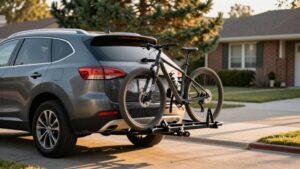
Hitch Cargo Carrier vs Roof Box: Capacity, Mileage and Convenience
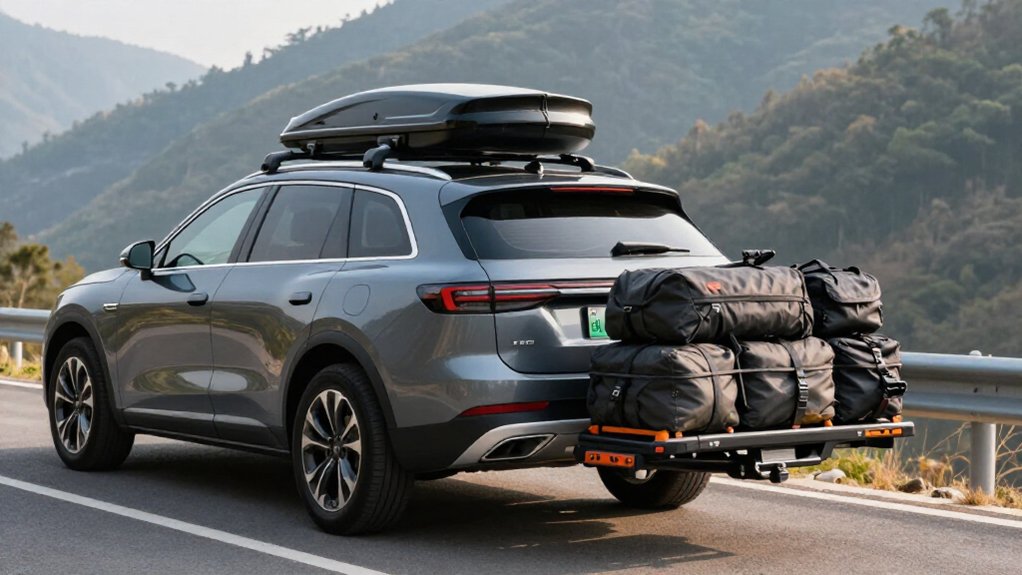
Choose a roof box when you need more space: it holds 10–20+ cubic feet, but overhead loading is harder and highway drag can cut mileage.
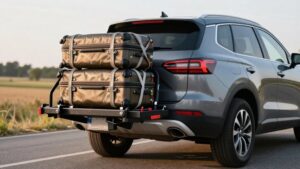
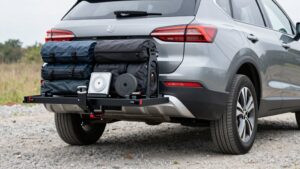
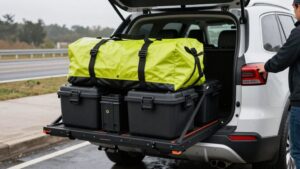
A hitch box offers 9–14 cubic feet, keeps heavy gear low, and disturbs airflow less, though it may obstruct your camera, liftgate, or spare tire.
In testing, the roof setup returned 21 mpg versus 25 mpg for the hitch carrier.
Check clearance and storage needs before comparing access and fit for your setup.
Cargo Capacity and Mileage
Although a roof box usually offers more room, a hitch cargo box can be easier on fuel. Compare rated space and mileage before choosing.
A roof box often gives you 10–20+ cubic feet and 100–165 pounds, subject to your vehicle’s roof limit. A hitch box typically holds 9–14 cubic feet and about 100 pounds. Its smaller capacity may suit bags, while the roof can take bulkier loads.
| Carrier | Volume | Typical effect |
|---|---|---|
| Roof box | 10–20+ cu. ft. | Up to 25% MPG loss |
| Hitch box | 9–14 cu. ft. | About 1% efficiency hit |
| Test result | 21 MPG roof | 25 MPG hitch |
Use your roof rating, then weigh added space against mileage over your full trip distance.
Carrier Placement and Aerodynamics
Capacity and mileage figures don’t tell the whole story; placement matters too. Mount a box on your roof and you increase frontal area, exposing more cargo to oncoming air. That added drag becomes more costly as highway speed rises, so the same load can reduce your driving range; a roughly 25% fuel-economy loss could turn a 300-mile tank into about 225 miles.
Even crossbars disturb airflow, making roof setup and removal worth considering when you don’t need them.
Hitch carriers sit low in the vehicle’s low-pressure wake, so they generally disturb airflow less than roof boxes. They still add weight and may affect handling. Before choosing, check hitch clearance, tailgate access, and rear-camera visibility.
If you drive at highway speeds or take long trips, keeping bulky cargo off the roof can save range.
Real-World MPG Test Findings
In spring and fall 2025, Car and Driver’s highway testing of a long-term Toyota Grand Highlander found that a hitch carrier returned 25 mpg, while a roof box returned 21 mpg: a 4-mpg, or roughly 16%, disadvantage for the roof setup.
You can use the back-to-back figures as a comparison, not a promise; your speed, wind, load, and route still matter.
- With gear behind the vehicle, you’re more likely to preserve highway mileage.
- A roof box’s added drag can raise fuel use.
- The Grand Highlander roof setup delivered 21 mpg, about 16% less than the hitch carrier.
- The Kia Carnival returned 28 mpg without crossbars, versus 25 mpg with them.
For highway trips, compare that fuel savings with the cargo space and convenience each setup gives you.
Loading and Access Height
At loading time, a hitch cargo box keeps gear close to the ground, so you can lift and unload without reaching over your head.
A roof box usually puts the lid above shoulder height, so you must raise bags overhead and reach across the roof. If you’re short or carrying a heavy cooler, that move can strain your back and may tempt you to stand on a stool. Once open, a high lid can also make items harder to see and grab, leading you to rummage.
With a hitch-mounted carrier, you load heavier camping gear at a lower, steadier height, which makes handling more controlled. Some models tilt or swing away for easier access, while a roof box occupies roof space whenever it’s installed.
Spare-Tire and Liftgate Clearance
Low loading height makes a hitch cargo box easy to use, but its position behind the bumper can complicate rear access. You may need to tilt the carrier down or swing it aside before opening your liftgate; a fixed setup can limit hatch travel. Roof boxes leave rear access untouched.
- If your spare mounts at the rear, a hitch box may block it or force you to move cargo.
- A close-fitting spare cover can also conflict with the carrier near the bumper.
- With a roof box, you can reach the spare and rear-mounted parts more easily during a roadside tire change.
- A hitch carrier extends behind you, so it can narrow backup visibility and complicate parking; a roof box adds height instead. Check clearances.
Replacement Lock Costs
If you lose a key or a lock fails, replacement costs depend on the carrier’s brand and lock design. For a hitch cargo box, you may find replacement easier to manage when it uses a standard keyed cylinder shared across units on the same base system.
A universal option can cost less or arrive sooner than an exact factory part, but check compatibility before ordering. A roof box often puts a proprietary cylinder inside its lid handle, so you may need the model-specific OEM lock.
Newer, less-common mechanisms can raise the price and extend delivery times.
To limit future expense, document spare keys and, when the maker allows it, match lock systems across your carriers before you buy, and store key codes safely offline.
Backup Camera Obstruction
With a hitch cargo box, you may lose much of your backup-camera view because the box sits directly behind the vehicle, often higher and farther back than the camera’s usual sightline.
A roof box usually leaves the rear camera’s view clearer, while a hitch box can crowd the close-range frame and make parking or tight maneuvers harder. Check whether loading changes the displayed guides or alerts.
- The carrier may protrude farther rearward than a roof box, narrowing the camera image and sensor coverage.
- You might see less of nearby obstacles when backing into a tight space.
- Hitch setups can trigger false backup alerts or automatic braking on some vehicles.
- Test the camera in an actual parking spot before depending on it for everyday reversing.
Cargo Weather Protection
When you compare weather protection, a hitch box usually sits in less disruptive airflow, while a roof box takes more direct rain, snow, road grime, and sun. Check each box’s seals and shell; a lockable, weather-sealed hitch box can help keep your gear dry and clean.
You can also remove and store it between trips to limit exposure to harsh weather.
Protection From the Elements
Although both options shield cargo from rain and road grime, a hitch-mounted box sits lower and is often easier to keep sealed because you don’t need to open it as frequently as a roof box. You’ll still want to compare how each carrier handles spray, access, and impact.
- A rooftop box’s raised position catches more wind-driven spray along its underside and edges.
- Because retrieval takes more effort, you may pack gear tightly and leave it closed longer.
- A lower hitch box faces less constant high-mounted airflow, which can reduce uneven weathering.
- Check for impact-resistant construction and secure latches; rain, snow, hail, and debris still test either lid.
Some enclosed hitch models also deter small wildlife, adding protection when you stop or park overnight briefly.
Weatherproof Storage Options
For everyday weather protection, both hitch cargo boxes and roof boxes can keep gear dry, but a hitch box is often easier to use in rain, snow, or cold. Since you reach a hitch box near ground level, you can load or retrieve gear without lifting it overhead or rummaging above your head. That matters when frequent stops in bad weather make standing outside unpleasant.
Hitch boxes also tend to create less wind noise, so long stormy drives may feel quieter.
A roof box faces rain, snow, hail, road grime, and sun throughout the trip. Check that its latch and lock seal securely, and choose a durable exterior to resist wear and corrosion. With either option, confirm the product’s weatherproof rating rather than assuming a closed lid guarantees dryness.
Some molded hitch boxes provide a weathertight, animal-resistant enclosure, adding protection for your gear during storms. It adds reassurance when storms arrive outdoors overnight.
Cost of Replacement Locks
Replacement-lock prices vary by brand, so check whether your hitch carrier or roof box takes a standard cylinder or a proprietary lock. You may be able to order a replacement using the lock code, but compare the cost of the cylinder, shipping, and installation.
If you’ve lost a key, ask about re-keying, and keep your lock code somewhere safe to simplify ordering.
Replacement Lock Pricing
Budget for replacement locks by the lock system, not the hitch cargo box shell: a single replacement cylinder may cost less than a keyed-alike or master-key set that must match your existing keys. Treat the lock hardware as a separate line item when comparing carriers; the box’s purchase price won’t predict your replacement bill. Check the exact part number before budgeting, since brands and models use different hardware packages.
- A single cylinder usually costs less than replacing several cylinders as a keyed-alike set.
- If you need extra cylinders to retain one key, allow for a higher set price.
- Ask whether the quote covers hardware only or includes any ownership-verification process after lost keys.
- Compare that added expense with a single-cylinder order before choosing for your budget.
Lock Compatibility
When comparing a hitch cargo box with a roof box, check whether each lock uses a replaceable key-code system or a unique key, which can make replacements more expensive.
Then check whether the hitch box shares a lock family with your roof accessories and other gear. Matching systems can reduce the number of separate lock replacements you’ll need, but don’t assume one key will fit every brand or model. Some setups require a specific replacement cylinder, and a universal key may not work.
Before you buy, compare the carrier’s lock family and cylinder compatibility with the locks you already own. If they differ, budget for separate replacements on the hitch and roof systems. Treat that compatibility as its own cost factor: roof boxes and hitch boxes often use different mechanisms, so a lower-priced carrier may still add expense if its lock won’t match your existing setup. Confirm these details directly with the manufacturer.
Key Replacement Options
Check the exact hitch-box brand and model before ordering a replacement lock: a Yakima EXO SwingBase or GearLocker cylinder, for example, may not fit another system. Your cost depends on what failed: a cylinder or lock core usually costs less than a complete latch assembly.
Rooftop boxes follow similar rules, but their cylinders may not match hitch-box hardware because latch designs differ.
- Confirm the model and keep your key code; suppliers may require proof of ownership and that code before shipping a cylinder.
- If you’ve lost the key, ask whether the maker can cut one from its code instead of replacing the lock.
- For frequent trips, order spare keys by code to avoid repeat lock costs and delays.
- Compare cylinder pricing with full assemblies.
Fold-Away Storage When Empty
Because you can remove a hitch cargo box after each trip, you can store it in the garage and keep your vehicle’s height and parking clearance unchanged.
This makes a hitch setup useful if you have a low garage door or tight parking space. Install the carrier only when you’re traveling, then take it off when you return. Most models are straightforward to remove, so you won’t need to leave extra bulk, wind noise, or aerodynamic drag on your vehicle between trips.
A roof box often stays mounted because fitting and removing it takes more effort. Even when empty, it can add height and drag, and complicate garage clearance. For occasional cargo needs, hitch storage keeps your everyday parking simpler overall.
Conclusion
Choose a hitch cargo carrier when you need easy loading, flexible storage, and less roof-height hassle; choose a roof box when weather protection and keeping the rear clear matter more. Either option can affect fuel economy, so compare real-world MPG, not just capacity.
Before buying, check liftgate and spare-tire clearance, backup-camera visibility, and access height. If you choose a hitch carrier, factor in a weatherproof bag and replacement-lock costs. Your best fit depends on what you carry and how often you load it.