How to Measure Hitch Ball Height (and What Height Your Trailer Needs)
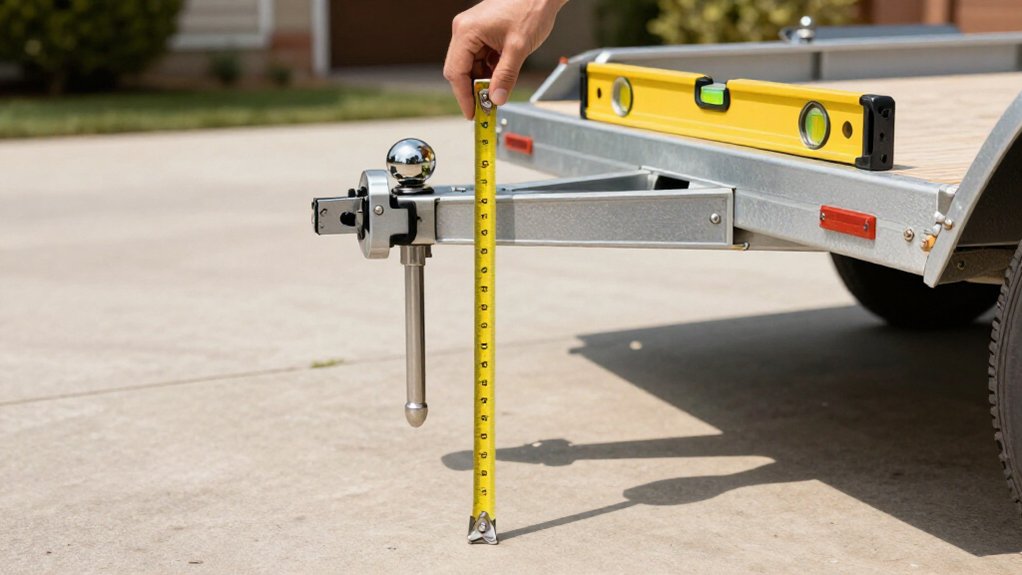
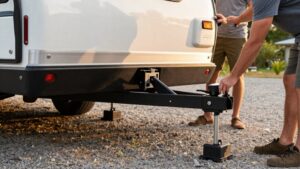
Park your tow vehicle and trailer on flat ground, chock the trailer’s wheels, and use the tongue jack to level its frame.
Measure from the ground to the receiver’s inside edge with the vehicle in towing condition, then measure to the coupler’s bottom edge.
Compare heights to choose a ball mount’s rise or drop, following its specifications.
Account for suspension sag, then verify the trailer sits level when coupled.
Inspect and secure hardware.
Continue for guidance.
Target Level Trailer Position
Park the tow vehicle and trailer on flat, level ground, then use the tongue jack to level the trailer.
Keep the trailer level by adjusting the tongue jack until the frame and tongue run parallel to the ground. Measure ground-to-frame height near the rear taillights and where the frame meets the tongue; adjust until both measurements match. With the trailer level, measure from the ground to the top of the coupler. This is the required tow-ball height.
On your vehicle, measure from the ground to the top of the hitch or receiver reference point. Compare heights to select the rise or drop needed. After coupling, tongue weight and weight-distribution effects may cause suspension sag. Don’t chase perfect level; a difference of about 1–2 inches after normal sag is typically acceptable for a properly matched trailer and tow vehicle.
Tools and Safety Gear
Use two tape-measure readings on level ground: measure from the ground to the receiver tube’s inside top edge, then from the ground to the bottom of the trailer’s coupler while the trailer’s level. Keep the tongue jack supporting the trailer so it stays level; tongue-weight suspension squat can distort your estimate. Wear eye protection, and keep your hands clear of pinch points whenever you handle or flip the ball mount or shank.
- Record receiver height A, measured to the receiver tube’s inside top edge.
- Record coupler height B at its bottom edge with the trailer leveled.
- Subtract B from A; use the difference to choose ball-platform rise or drop.
- Confirm both measurements share level ground before selecting or adjusting mount.
Step 1: Chock the Trailer Wheels
Before adjusting the tongue jack, park the trailer on level ground and chock both wheels to prevent rolling.
Place chocks snugly against tires on the side that could allow the trailer to move; use rated chocks suited to tire size and ground conditions. Set the parking brake if equipped, but don’t treat it as a substitute for chocks. Confirm each chock contacts the tire firmly and won’t slide on the surface.
Keep the trailer supported in its leveled condition while you measure, so the coupler and tongue height remain consistent. Once you’ve positioned the chocks, adjust the tongue jack without moving them. Measure from the ground to the top of the coupler while the trailer remains secured. Keep them set during any recheck, too.
Step 2: Level the Trailer Frame
With the wheels chocked, set the trailer on flat, level ground and adjust the tongue jack until the frame and tongue sit parallel to the ground. Use a tape measure to compare the ground-to-frame distance near the rear, close to the taillights, with the distance where the frame meets the tongue.
If the readings don’t match, raise or lower the tongue jack and measure again until they’re equal. Even a one- or two-inch difference can affect towing control and handling, so don’t estimate or rely on the trailer’s appearance.
Take measurements only after the trailer is level, and recheck them whenever you change the hitch, jack position, or setup. Keep the trailer stable, and confirm both frame readings remain equal before proceeding with care.
Step 3: Measure Receiver Opening Height
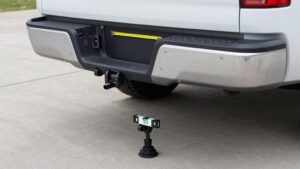
Park the tow vehicle on flat, level ground, then measure from the ground to the bottom inside edge of the receiver opening. Keep the vehicle level and in the condition you’ll use for towing before taking the reading.
Hold a tape measure vertically beneath the receiver tube; don’t measure to its top, outer lip, or centerline. Those reference points produce different values and can lead you to choose an unsuitable ball mount. Write the result in inches and label it receiver height (A). For example, a reading of 19 inches means the receiver’s bottom inside edge sits 19 inches above the ground.
If you expect rear squat under load, account for the anticipated change when selecting your setup carefully.
Step 4: Measure Trailer Coupler Height
To measure trailer coupler height, set the trailer on flat, level ground and use the tongue jack to level it until the frame and tongue are parallel with the ground. Keep the trailer fully loaded and ready to tow while measuring, because weight affects position. Place a tape measure vertically from the ground to the coupler’s bottom edge; don’t measure to its top.
Keep the tape straight and the trailer level while you read the height. Record the ground-to-bottom measurement and its unit. You’ll use this value with the receiver opening height to determine the rise or drop needed to align the hitch ball with the coupler. If you’re adjusting the hitch, keep the trailer level throughout and remeasure after any tongue jack change.
Step 5: Check Loaded Suspension Sag
Once the trailer is level and the tongue jack is set, check how much the tow vehicle’s rear suspension settles under the expected tongue weight.
Measure with tongue weight applied when possible; an unloaded vehicle won’t reflect towing height. Expect roughly one to two inches of rear squat, but verify your setup.
With self-leveling suspension or air bags, set intended PSI and let the system settle before measuring hitch ball height.
With the expected load in place, aim for the combined vehicle-and-trailer setup to sit within about one or two inches of level after suspension sag. Perfect alignment isn’t required, but avoid a pronounced nose-up or nose-down attitude.
If you change hitch height, tongue weight, or cargo load, reassess the level condition before towing.
Step 6: Record Your Height Measurements
Record both heights on level ground: measure from the ground to the inside top edge of the receiver for hitch height (A), then measure to the coupler’s bottom edge for coupler height (B) with the trailer level.
Write both values down, along with any load or suspension conditions, so you can reproduce the setup. If the trailer’s frame isn’t level, measure frame height near the taillights and where it meets the tongue; adjust the tongue jack until those readings match, then remeasure B.
Calculate rise/drop (C) as A minus B: a positive result calls for drop, while a negative result calls for rise. After any jack or leveling change, remeasure B.
For the ball-height requirement, use the trailer’s level ground-to-top-of-coupler measurement. Keep your figures available when selecting or adjusting a mount, and verify each measurement before towing.
Verify Level Towing Angle
Verify the towing angle with both the tow vehicle and trailer on level ground. Park the tow vehicle on level ground, then use the tongue jack to level the trailer.
Measure frame height near the rear and where it meets the tongue; adjust until both readings match.
With the trailer level, measure from the ground to the coupler’s bottom edge for coupler height (B). Measure from the ground to the top of the receiver opening or receiver tube to record hitch height (A).
Calculate A − B: if A exceeds B, choose drop; if B exceeds A, choose rise.
After coupling, account for tongue weight, which may compress suspension by about 1–2 inches. Recheck the trailer’s frame position under load; it should remain within an inch or two of level for safe, controlled tracking. Confirm measurements before selecting or adjusting your hitch ball mount height.
Trailer Sways After Coupling
If your trailer sways after coupling, an incorrect hitch-ball height may be changing the tongue angle and making the rig unstable. Measure on level ground with the trailer loaded and tongue weight applied; an empty trailer can give you a false reading, shifting your selected mount by one or two inches.
Match tow-ball height to the required ground-to-top-of-coupler reference, then confirm the frame and tongue stay parallel after suspension squat of one to two inches.
| Measurement | Use | Check |
|---|---|---|
| Receiver opening to coupler bottom | Calculate rise/drop | Choose matching mount orientation |
| After suspension changes | Recheck fully loaded geometry | Include WDH or airbags setup |
Use receiver height minus coupler height to calculate rise or drop; select the direction that corrects the higher side. Recheck changed suspensions before towing again.
Inspect Ball Mount Hardware
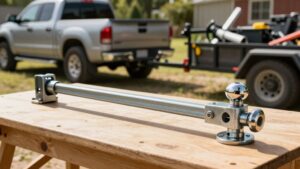
Once you’ve calculated the required ball height, inspect the mount before measuring: seat and tighten the ball and platform hardware, confirm the rise/drop orientation, and match the shank to the receiver opening. Use rise when the coupler sits higher than the ball, and drop when it sits lower.
Match the shank to your receiver tube’s opening; common sizes are 2–2.5 inches, while 3-inch openings are limited on some 2017-and-newer Ford Super Duty trucks, RVs, and semis. Install the hitch pin or lock fully as designed. A loose or partly engaged mount can shift under load, changing height and alignment.
With the trailer leveled, measure from the ground to the ball’s top only after confirming every connection; incorrect hardware position will skew your final hitch-height reading.
Conclusion
Before towing, confirm that your trailer sits level when coupled and that the hitch ball height matches its coupler. Secure the trailer with wheel chocks while measuring, and keep your hands clear of pinch points. Recheck the receiver, ball mount, and hardware for correct fit and tightness.
If the trailer tilts or sways, don’t tow until you’ve corrected the setup and verified the towing angle. A careful measurement helps protect your equipment and keeps your trip safer.
What Size Trailer Hitch Do I Need? Class Selector
Enter loaded trailer weight, tongue weight and your ratings to get the minimum hitch class (I–IV) and see which rating sets your limit.
Hitch Bike Rack Load & Fit Checker
Check your e-bikes and hitch bike rack against your receiver's tongue-weight rating and the rack's own capacity, in lb or kg.
Hitch Step Fit Checker
Check if a hitch step fits your receiver: shank vs opening, step load rating vs the heaviest user, and approximate platform height.
Ball Mount Drop and Rise Calculator
Enter receiver and coupler heights to calculate the required ball mount drop or rise in inches and millimeters.
Towing & Trailer App Finder
Filter 13 verified towing apps by purpose, platform, brand, hardware and price, including GM, camera, leveling, brake and weight apps.