Adjustable vs Fixed Ball Mount: Is the Upgrade Worth It?
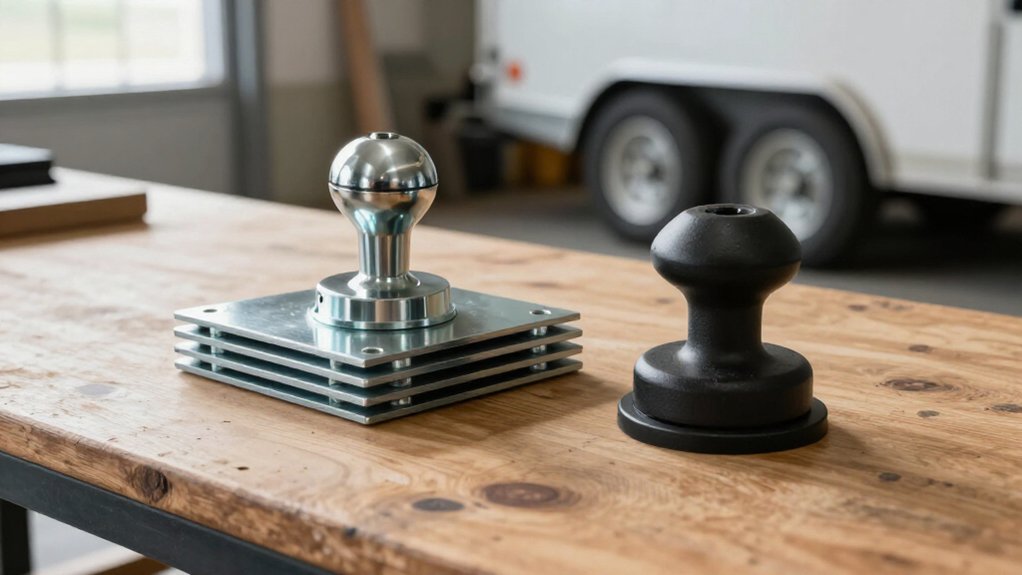
If you tow one trailer with a consistent coupler height, a fixed ball mount saves money and needs less maintenance.
Choose an adjustable mount if you switch among trailers with different heights; its channel lets you set the drop or rise for a level ride.
Before towing, secure pins fully, check receiver fit, and match the mount’s ratings to trailer and tongue weight.
Your setup depends on your trailers and budget, and a few important details to evaluate.
Hitch Height Adjustment Range
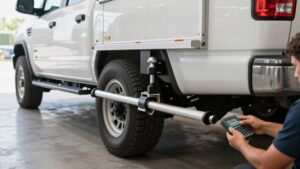
How do you know which mount height you need? Measure from the ground to the bottom of your receiver opening, then from the ground to the trailer coupler. Subtract coupler height from receiver height to determine the required drop; reverse the relationship when you need rise. For example, a 22-inch receiver minus a 16-inch coupler calls for a 6-inch drop. Don’t guess: being off by about two inches can increase sway, impair stopping, and accelerate tire wear.
| Receiver | Coupler | Setting |
|---|---|---|
| 22 in | 16 in | 6-in drop |
| 18 in | 18 in | Level |
| 20 in | 23 in | 3-in rise |
| 24 in | 17 in | 7-in drop |
Adjustable mounts accommodate varying coupler heights; fixed mounts limit you to one setting. Some adjustable models offer drops of 3¾, 6, or 6¾ inches. Recheck your setting whenever you change trailers or alter tire size or suspension height, even if your tow vehicle stays the same.
Ball Mount Construction and Components
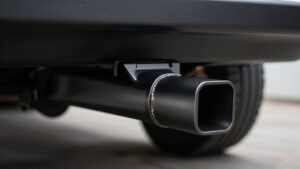
Construction determines how easily you can match a mount to your trailer. A fixed mount is a one-piece attachment: its ball height stays set, with no sliding shank or repositioning hardware beyond changing the ball. This leaves fewer adjustment points to inspect, but you’ll need another mount when the height or coupler size changes.
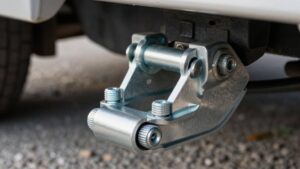
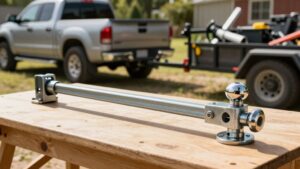
An adjustable mount has a shank that fits your receiver and a vertical channel or tongue that moves to the desired height. Removable hitch pins lock the tongue in place, so verify they’re seated and secured before towing. Models often include reversible 2-inch and 2-5/16-inch balls; some offer three sizes. CURT, for example, offers dual-ball designs with six-inch drops and tri-ball versions. Check ratings; the lowest-rated part governs.
Towing Stability and Control
A level trailer tracks more steadily than one riding nose-up or nose-down. Set your ball-mount height so the coupler and trailer frame sit level when hitched and loaded. This geometry helps limit sway, supports predictable braking, and reduces uneven tire wear.
A roughly 2-inch rise or drop can disturb the truck-to-trailer relationship, worsening control and accelerating tire wear.
An adjustable mount lets you match coupler heights across different trailers, helping you maintain consistent weight distribution and steadier handling. A fixed mount can work when you tow the same vehicle-and-trailer combination at one established height. With other trailers, its height may leave the trailer unlevel and handling less predictable. Leveling helps limit rear sag and avoids loading the coupler, frame, and suspension at an unfavorable angle.
Pin and Bolt Security
Even with the trailer level, the adjustable mount must be locked securely at the chosen height.
Removable hitch pins secure the tongue or sliding tube through height holes; make sure each pin passes fully through and its spring clip engages. Never tow with a partially seated or worn pin. Excess play can increase movement, cause rattle, or let the ball height shift under load.
If your model uses bolts, follow its torque specifications and recheck them after the first few miles, when vibration may loosen hardware. Use an anti-rattle kit or tightening method if the mount moves between the receiver and its locked position.
After setting height, inspect the pin or bolt point by hand: you shouldn’t be able to lift or drop the tongue.
Receiver Tube Dimensions
Before comparing height adjustment, make sure the mount’s shank fits your receiver tube. A 2-inch x 2-inch receiver accepts standard 2-inch shanks on fixed and adjustable mounts. An adjustable model may use a channel to raise or lower the tongue, but its shank still has to match the receiver opening.
Before choosing drop, measure from the ground to a consistent receiver reference point, such as the bottom of the hitch opening. Receiver designs can place that datum differently, so use one point when comparing measurements. Confirm the mount’s shank against your receiver dimensions. If they don’t match, the mount won’t seat correctly.
Height adjustment can’t fix a fitment problem; resolve compatibility first, then choose the adjustment range your trailer needs.
Ball Mount Pin Security
Once you’ve set the correct height, insert the hitch pin fully through the receiver and ball mount holes so it seats securely and can’t back out under vibration. Use a locking hitch pin or spring-style lock to prevent accidental removal, especially on rough roads or after height adjustments. Confirm the adjustable tongue or channel is locked, and recheck pin security before departure and after the first few miles.
If the mount shifts or feels loose, inspect the mating holes and bushings for wear; replace worn pins or hardware before towing. Add anti-rattle measures only after confirming full pin engagement; they can mask a partially seated lock. Check pin passage and retainer engagement; quiet operation alone proves nothing before you start towing each time.
Weight Capacity Limits
A secure pin keeps the mount attached, but it doesn’t determine how much weight the setup can safely tow.
Your ball mount must handle the trailer’s gross weight and tongue weight. Check the ratings for your receiver, ball, and mount; your limit is the lowest one. Exceeding it can send unsafe loads into the hitch and vehicle frame. Fixed mounts have fewer parts, but that doesn’t raise their capacity.
Adjustable models may offer high ratings, yet capacity can vary by configuration. Confirm the rating at your drop or rise and pin position. Leveling the trailer can support weight distribution; aim for tongue weight around 10–15% of trailer weight to help protect axles and suspension. Before towing, verify your truck’s GCWR and GVWR, plus receiver limits.
Hitch Noise and Rattle
Hitch rattle comes from vertical or rotational play between the shank and receiver, and a fixed mount can make noise if the fit isn’t snug. Adjustable mounts add pin and channel connections, so seat the tongue fully, secure the locking hardware, and consider an anti-rattle kit.
Before each trip, especially after changing height, check the receiver fit and pin retention, since looseness can cause wear or failure.
Common Causes of Hitch Rattle
On the road, hitch rattle usually signals excess play in the connection. A loose or worn receiver fit is a cause: check whether the hitch pin is seated and locked. With an adjustable mount, unsecured height pins or a loose tongue can let the channel shift under load. A mismatched ball and coupler, or a ball that hasn’t seated correctly, can create clearance, especially over bumps or uneven pavement.
Inspect the receiver bore, shank, and pin holes for rust or road grime; corrosion and debris can prevent a snug fit. If you’ve installed an anti-rattle kit, pin clip, or stabilizer bracket, improperly torqued hardware may still leave movement. Don’t ignore clunks; locate their source before towing, since excess play can compromise connection security.
Reducing Noise and Movement
When you drive over bumps, even small gaps between the receiver, shank, and ball assembly can let a loose mount shift and rattle. An adjustable mount may rattle more if its height-setting pins aren’t fully seated and tightened. Its pins, holes, and sliding channel add contact points that can move, unlike a fixed one-piece mount.
Choose a mount with a close receiver fit or install a compatible anti-rattle kit when you detect play. Before towing, verify every pin locks securely, tighten hardware as specified, and replace worn parts; don’t rely on noise alone to judge security. Set the correct rise or drop so your trailer rides level. A nose-up or nose-down setup can alter suspension loading, encouraging oscillation and shifting that amplify movement.
Check the ball connection, too, and use an anti-rattle device if it has play. If looseness persists, stop and correct it before traveling again.
Cost and Maintenance Trade-Offs
A fixed mount usually costs less upfront and needs little maintenance, while an adjustable mount adds cost and requires periodic checks of its pins and anti-rattle hardware.
If you tow trailers with different coupler heights, one adjustable setup may cost less than buying and storing several fixed mounts. Weigh that versatility against the time needed to inspect for looseness and corrosion before towing.
Upfront Purchase Cost
Although a fixed ball mount usually costs less upfront, an adjustable model may save money if you tow trailers or vehicles that require different hitch heights. A fixed mount’s one-piece design avoids the sliding channel, adjustment hardware, and removable pins, keeping its purchase price lower when one height suits your setup.
If you tow at varying heights, one adjustable mount can replace several fixed mounts, making its higher initial price practical. Adjustable models commonly cost about $207–$378, depending on capacity and options. Choose a rating that meets your trailer’s loaded weight and a drop range that levels the trailer; a mismatched unit wastes money and may compromise safe towing.
Compare capacity options, such as 6,000- to 20,000-pound ratings, against your actual needs. Don’t pay for excess capacity or range you won’t use.
Long-Term Maintenance Needs
Purchase price is only part of the cost; maintenance also differs by design. With one consistent trailer and setup, you’ll usually spend less time maintaining a fixed mount: it has no sliding height mechanism, and you can spot rust or looseness quickly.
An adjustable mount adds interfaces that need routine attention:
- Lubricate removable pins periodically to keep them moving freely.
- Inspect locks, adjustment surfaces, and the shank for wear or corrosion.
- Check for growing play or rattle before every trip; tighten connections or fit an anti-rattle kit when needed.
- Verify locking pins seat fully and secure the assembly.
- Replace worn components promptly; don’t tow with uncertain retention.
You’ll pay more upfront, but changing coupler heights can make that upkeep worthwhile; inspect before towing carefully.
Value Across Multiple Trailers
Across multiple trailers, an adjustable ball mount can cost less than buying and storing a separate fixed mount for each required drop or rise.
A fixed mount costs less upfront and has fewer moving parts, so you’ll inspect it rather than service a height mechanism. But when you switch among trailers with coupler heights, each fixed setup may require another mount and storage space.
One adjustable system can reposition for combinations, reducing between-trip hassle. Models with dual balls, such as 2-inch and 2-5/16-inch options, and multiple drop settings can cover differing couplers and tongue heights.
That flexibility needs upkeep: check the channel and shank for corrosion, and clean and lubricate locking pins as directed. Confirm the selected ball size, drop, capacity, and pin engagement before towing.
One Mount, Several Trailers
One adjustable ball mount can cover several trailers by letting you set its rise or drop with pins to ensure match each coupler height. Measure your receiver height, subtract the coupler height, then choose the setting that keeps the trailer level. That alignment helps limit sway and uneven tire wear, especially when you switch trailers often.
- Set rise or drop with pins to match each coupler height.
- On dual-ball models, flip between 2-inch and 2-5/16-inch balls.
- Match ball size to coupler; height adjustment alone won’t ensure compatibility.
- CURT #45900 offers 6-inch drop; CURT #45903 provides 3-3/4-inch drop.
- Keep one mount ready for changing trailer assignments, loads, and stops.
You’ll store and swap fewer mounts, while making quick, on-site changes before towing each different trailer.
Conclusion
An adjustable ball mount is worth the upgrade if you tow trailers with different coupler heights and need one setup to fit them safely. Check its adjustment range, receiver size, and rated capacity; secure every pin and bolt, and address excess rattle.
A fixed mount is simpler, often lighter, and may cost less when you tow one trailer. Match the mount to your vehicle and trailer ratings, verify level towing, and inspect hardware regularly. Choose flexibility only when you’ll use it.
Ball Mount Drop and Rise Calculator
Enter receiver and coupler heights to calculate the required ball mount drop or rise in inches and millimeters.