How to Choose a Ball Mount: Drop, Shank Size and Weight Rating
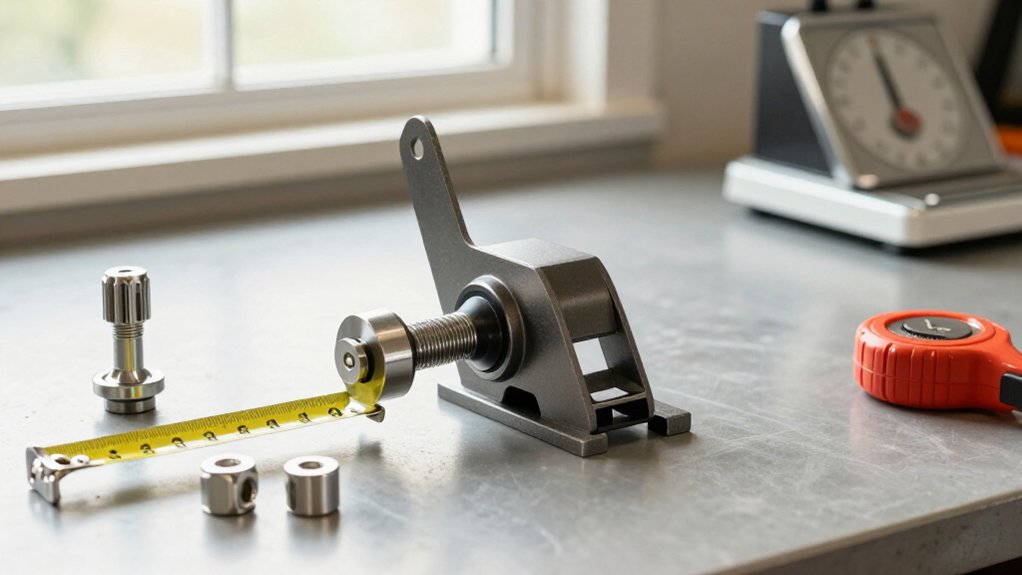
Measure your receiver opening and match the mount’s shank; common sizes are 2, 2.5, and 3 inches. With the trailer loaded on level ground, compare receiver and coupler heights, then choose rise or drop to keep the trailer level. Match the ball to the coupler and verify the mount’s GTW and tongue-weight ratings meet loaded demands.
Measure tongue weight, target 10–15% of GTW, and check pin alignment, clearance, and welds before towing. More guidance follows.
Ball Mount Drop and Shank Size
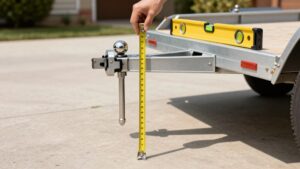
Start by matching the shank to the receiver’s inside width—commonly 2, 2.5, or 3 inches—then compare the ground-to-receiver height with the ground-to-bottom-of-coupler height to determine rise or drop; if the coupler sits higher, you need rise.
Measure from level ground to the receiver’s top inside edge and to the coupler’s underside using the same reference surface. The difference between these heights sets the preliminary rise or drop. Choose a mount that brings the trailer level when connected and loaded; don’t accept an almost-enough drop.
Check clearance beneath the mount and trailer; target at least 11 inches where conditions allow. Account for the mount’s total length: listed drop doesn’t equal its full extension. On a 180-degree hitch, add 3 inches for the lower tow ball. Verify dimensions and fit before towing, and secure the mount with the pin and hardware.
Measure Loaded Tongue Weight
With the trailer hitched and loaded for travel, measure its tongue weight (TW) and check that it’s typically 10–15% of gross trailer weight (GTW).
Use a calibrated tongue-weight scale or suitable weighing method, then compare the result with the trailer’s GTW. A typical target is 10–15% of GTW; this load helps support stable towing and proper hitch loading. Confirm your ball mount’s tongue-weight rating meets or exceeds the measured TW. A lower-rated mount can be overloaded, impair braking, and wear faster.
Incorrect TW, especially excessive loading, can also increase stopping distance, reported around 49 feet, or 22%, and raise axle temperatures by about 55%. If cargo, passengers, or loading changes, measure again: TW can shift, affecting the drop or rise and ball height needed for level towing. With an adjustable hitch, set ball height for level towing while targeting the correct measured TW, not a drop number.
Hitch Pin Hole Alignment
For secure hitch pin hole alignment, match the ball mount shank to the receiver’s inside size, measuring the sleeve openings if a sleeve is installed. Measure the receiver’s inside opening; common sizes are 2, 2.5, and 3 inches. Choose a matching shank, and measure inside any sleeve.
| Receiver | Shank | Action |
|---|---|---|
| 2 in. | 2-in. | Match |
| 2.5 in. | 2.5-in. | Match |
| 3 in. | 3-in. | Match |
Insert the mount fully; align holes before installing the pin and clip. Never force partial alignment. Confirm the coupler’s stamped ball size, typically 1-7/8, 2, or 2-5/16 inches, matches your tow ball. Check that the intended drop or rise still permits hole alignment and secure locking. If holes don’t line up, recheck fit and height before towing; don’t tow unsecured.
Fixed vs. Adjustable Mounts
If you tow one trailer with a consistent coupler height, a fixed mount keeps the ball at one set height. An adjustable mount lets you change the height, and often switch between drop and rise, when you tow trailers with different coupler heights.
Choose the mount that lets you tow each loaded trailer level, measure receiver and coupler heights rather than guessing, and verify the mount’s size and weight ratings.
Fixed Mount Advantages
A fixed ball mount suits a towing setup that rarely changes: once you verify the truck’s receiver height and the loaded trailer’s coupler height, you can choose the correct drop or rise and keep the trailer level without readjusting the mount.
Match the shank to your receiver opening—commonly 2, 2.5 or 3 inches—and confirm the ball fits the coupler. Measure ground-to-receiver and ground-to-coupler heights with the truck and loaded trailer level; select the required rise or drop from those measurements.
For example, a particular 2.5-inch receiver setup may call for a 6-inch drop or 7-inch rise. With heights unchanged, the fixed geometry stays correct, reducing setup errors. Proper leveling also supports expected tongue weight, typically about 10–15% of gross trailer weight, and helps maintain predictable control.
Check the mount and hardware ratings against your towing load before use. Before each trip, inspect the mount, verify fastener security, and follow your vehicle and trailer manufacturers’ limits for the specific loaded combination you’re towing today.
Adjustable Mount Benefits
An adjustable ball mount lets you set the ball height in increments and switch between drop and rise to level trailers with different coupler heights. That range helps you match the coupler when trailer heights vary. Under load, your truck and trailer should sit level to the ground.
Setting the ball height correctly reduces the chance that you choose too little drop and tow with the trailer unlevel. If you tow multiple trailers, you can reset ball height for each coupler. Match the ball mount’s shank to your receiver size—commonly 2, 2.5, or 3 inches. Confirm hitch ratings meet or exceed the trailer’s actual gross trailer weight and tongue weight; tongue weight typically equals 10–15% of GTW. Recheck level and connections before each trip.
Choosing Between Mounts
When you tow the same trailer at the same coupler height, choose a fixed ball mount; choose an adjustable mount when trailer heights vary or you need to fine-tune leveling. A fixed mount holds one ball height, so you won’t need to reset it. An adjustable mount typically positions the ball in drop or rise and allows small corrections.
For either, measure the receiver opening and match the shank size: common openings are 2 or 2.5 inches; some newer Ford Super Duty trucks use 3-inch receivers. Measure ground to the receiver’s top inside and coupler’s bottom. Choose drop or rise to keep the loaded trailer and tow vehicle level for your towing setup. Verify ratings cover GTW and TW; TW typically equals 10–15% of GTW.
Switching Between Trailers
Switching trailers safely starts with making sure receiver fit and each trailer’s setup. Measure receiver opening inside square tube; select an exactly matching shank—commonly 2, 2.5, or 3 inches. An incompatible fit isn’t acceptable.
For different coupler heights, use an adjustable mount to set drop or rise in steps and keep each trailer level. A fixed mount works when you tow the same trailer at the same loaded height.
Before each switch, match the coupler’s stamped ball diameter: typically 1-7/8, 2, or 2-5/16 inches. Swap the ball or use a dual-ball design if needed. Target tongue weight at 10–15% of actual gross trailer weight; ensure mount ratings meet or exceed actual GTW and TW. Correct height can’t make up for inadequate ratings for that load.
Best Choice by Trailer Type
Choose your ball mount by trailer type, then match its coupler or hitch system and ratings to your trailer’s loaded weight. For utility, boat, and camper trailers, verify ball diameter, receiver fit, and drop or rise so the trailer tows level without compromising clearance.
For heavy-duty trailers, use a higher-capacity setup rated for the actual load; fifth-wheel trailers require a dedicated fifth-wheel hitch, not a standard ball mount.
Utility Trailer Ball Mounts
For a utility trailer, match the ball mount to your truck, coupler, and loaded trailer: measure the receiver’s inside width, common shank sizes are 2, 2.5, and 3 inches, rather than guessing, and match the ball diameter exactly to the coupler stamp (typically 1-7/8, 2, or 2-5/16 inches).
To set drop or rise, measure ground to receiver top and ground to coupler bottom, then choose a ball height that keeps the loaded trailer level with at least about 11-inch ground clearance. Check the mount’s gross trailer weight (GTW) and tongue weight ratings against actual loaded weights; tongue weight should be 10–15% of trailer GTW. Never exceed either rating; excess weight can increase instability and stopping distance.
If you tow utility trailers with different coupler heights, choose an adjustable mount to switch between drop and rise and re-level quickly. A fixed mount suits one trailer at a consistent height. Confirm the receiver and hitch components share adequate ratings, and secure the pin before towing; recheck level and connections whenever you change utility trailers.
Boat Trailer Ball Mounts
Match your boat trailer ball mount to the receiver, coupler, loaded trailer, and towing height. Measure your receiver’s inside opening to confirm shank size; common options are 2-inch and 2.5-inch, with 3-inch used on newer Ford Super Duty applications. Don’t guess. Match the ball diameter exactly to the coupler—1-7/8-inch, 2-inch, or 2-5/16-inch—so its latch locks.
With the boat loaded on level ground, measure receiver-to-ground and coupler-to-ground heights. Choose the smallest drop that levels the trailer; too little drop can leave it nose-up. Use rise if needed to achieve level towing.
Check that your ball mount and hitch setup meet or exceed actual gross trailer weight (GTW) and tongue weight (TW), usually 10–15% of GTW. An adjustable mount supports incremental changes and drop/rise swaps.
Camper Trailer Ball Mounts
When selecting a camper trailer ball mount, measure the receiver’s inside opening to confirm the shank size, then match the ball diameter to the size stamped on the coupler.
Measure the loaded camper by comparing ground-to-bottom coupler with ground-to-top receiver; choose drop or rise to keep the trailer level and ground clearance at least about 11 inches.
Verify the mount and hitch ratings meet or exceed your camper’s actual gross trailer weight (GTW). Keep tongue weight near 10–15% of GTW; too little can trigger sway.
If you tow campers with different coupler heights or ball sizes, choose an adjustable mount that flips for drop or rise and sets in increments. Recheck each setup and secure the coupler lock before travel, carefully, before every towing trip.
Heavy-Duty Trailer Ball Mounts
Choose a heavy-duty ball mount by matching its shank to the receiver and its ball to the coupler before comparing load ratings. Measure the receiver opening—commonly 2, 2.5, or 3 inches—and use the same shank; install the ball diameter stamped on the coupler, typically 1-7/8, 2, or 2-5/16 inches.
For heavy travel trailers and large multi-axle loads, a Class V setup with a 2- or 2.5-inch receiver and 2-5/16-inch ball often suits tongue weight around 10–15% of gross trailer weight. Commercial flatbeds, contractor units, excavators, and livestock haulers need commercial-duty ratings.
Measure receiver and coupler heights; choose the minimum drop or rise that keeps both level. Verify that hitch gross trailer weight capacity exceeds loaded trailer weight and tongue weight capacity meets actual tongue weight. Class V targets commonly reach 2,000 pounds or more.
Bumper and Exhaust Clearance
Bumper and exhaust clearance depends on selecting a drop or rise that keeps the tow ball clear through turns and suspension movement. Measure space behind the bumper and near the exhaust. Compare ground-to-receiver height with ground-to-coupler bottom height, then select a drop or rise that lets the trailer tow level while preserving at least 11 inches of ground clearance.
Measure the receiver opening and match its 2-, 2.5-, or 3-inch shank; an adapter stack can reduce clearance. Account for 1–4 inches of loaded squat, then turn the steering and check suspension travel for contact. Keep tongue weight near 10–15% of gross trailer weight, and use a mount rated for at least the actual tongue weight to avoid overloading the rear axle.
Corrosion-Resistant Ball Mounts
Road salt and moisture can corrode a ball mount, so select steel with a protective coating or aluminum. Choose a finish designed for exposure to road spray, and rinse off salt after winter trips; damaged coating leaves steel vulnerable to rust. Aluminum resists rust but still needs regular inspection for cracks, deformation, and secure hardware.
Don’t assume a corrosion-resistant material makes every configuration suitable.
Measure your receiver’s inside square opening to match a 2-inch, 2.5-inch, or 3-inch shank; never guess, because poor fit can affect stability. Confirm the ball diameter matches the size stamped on your trailer coupler. Then compare ground-to-receiver and ground-to-coupler heights to choose the required drop or rise, keeping the trailer level. Recheck the mount and coating periodically.
Ball Mount Overload Warning
An underrated ball mount can overload the tow vehicle and hitch system, increasing stress and wear while reducing safety margins. Never choose a drop, rise, or shank by guesswork: measure your receiver opening and match its 2-, 2.5-, or 3-inch size. Confirm the ball mount and hitch each meet or exceed your trailer’s gross trailer weight (GTW) and tongue-weight (TW) limits.
Keep tongue weight near 10–15% of GTW; excess weight can impair braking and raise axle temperatures.
- Too much tongue weight increased stopping distance by 49 feet (22%) and axle temperatures by 55%.
- Account for squat, 1–4 inches depending on payload, when selecting drop or rise, keeping the trailer level.
- Recheck tongue weight and component ratings before towing; a correct receiver size alone doesn’t establish safe capacity.
Inspect Ball Mount Welds
Inspect the ball-mount welds before installation, especially where the shank meets the frame and around the pin hole. Check both ends; don’t rely on paint to hide defects. Uniform bead size and continuous welds matter because weak seams can fail under towing loads. Examine these areas closely:
- Look for cracks, incomplete-looking beads, or gaps that suggest the weld lacks full penetration.
- Check for rust or paint bubbles near each seam; corrosion beneath the coating can weaken the metal.
- Watch for bending, warping, flaking, or separation around the pin hole; looseness can let the mount shift under load and alter drop or rise alignment.
If you find a crack, flaking metal, or separation, don’t tow. Replace the ball mount before towing.
Conclusion
Choose a ball mount that matches your loaded tongue weight, trailer coupler height, and receiver shank size. Set the correct drop with the trailer level, and confirm pin alignment, clearance, and weld condition before towing. Keep every component within its rated capacity; the lowest rating governs.
Don’t use a mount that’s bent, cracked, corroded, or loose. Secure the pin, recheck connections after loading, and replace damaged hardware promptly. When unsure, verify specifications with the manufacturer.
Ball Mount Drop and Rise Calculator
Enter receiver and coupler heights to calculate the required ball mount drop or rise in inches and millimeters.