How to Load a Boat on a Trailer by Yourself Without a Spotter
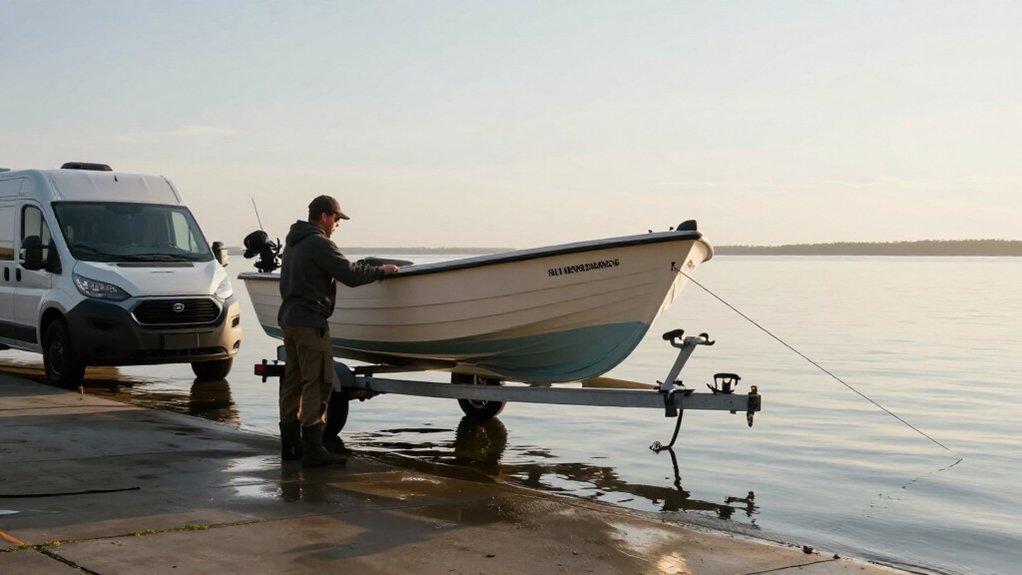
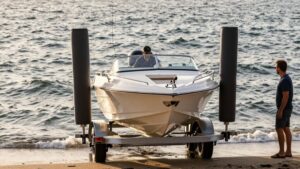
To load your boat solo, approach the ramp slowly, using mirrors and small steering inputs. Back until bunks are halfway submerged.
Stow loose cockpit gear, then float the boat onto supports.
Set the parking brake before stepping away; attach and snug the winch strap once the bow reaches its stop.
Stow the bow line, check transom straps, and correct crooked contact before pulling out.
Test the winch; the next checks can make solo loading safer.
Trailer Depth and Bunk Alignment
Back the trailer in deeper than feels right, with the bunks or rollers roughly halfway submerged so the boat can glide onto them. Before the boat reaches the trailer, check that the bow roller sits centered with the boat’s bow. If contact looks crooked, stop, back the boat away, and reposition the trailer; don’t force the hull toward the center.
A shallow setup can keep the hull from settling onto the bunks, leaving you to re-crank or make extra adjustments. Once the boat is on the bunks, crank until the hull is firmly seated against the bunks or rollers, not merely resting there. That secure contact confirms the trailer’s depth and alignment are supporting the boat as intended. Verify hull seating before securing it.
Ramp Approach Angle
Before backing down the ramp, approach it on a shallow, controlled line so your trailer is square to the ramp.
Use side mirrors as your main reference; rearview perspective can shift quickly while trailer alignment changes more slowly. Begin reversing with tiny steering inputs, then pause to judge movement. Large wheel turns may swing the trailer sideways and demand repeated corrections.
- Keep your approach gradual and controlled.
- Check mirror alignment before you reverse.
- Make one small steering adjustment at a time.
- Back just slightly deeper than on launch approach, letting the boat glide onto bunks or rollers without forcing it into place.
As the bow roller contacts, confirm the hull tracks straight. If the angle looks wrong, stop, pull forward out, and reset your approach.
Step 1: Stow Loose Cockpit Gear
Clear the cockpit before backing down the ramp.
Move rods, coolers, tackle boxes, and the net into your truck before you back down. The trailer tilts as you launch, and unsecured gear can shift or fall. Place loose cockpit items in sealed bins or tied-down bags; they can slide and tempt you to reach while you align the trailer.
Remove detachable electronics, life jackets, and grab bags from the transom and cockpit. Store them together in one spot for a grab after launch.
Check for loose lines and tools; dangling gear can snag the bunks or interfere with winch strap handling.
Keep only essentials aboard. Leave the bow line accessible, coiled and positioned so you can grab it as soon as the stern floats.
Step 2: Set the Parking Brake
Set the truck’s parking brake firmly and shift into Park before you unhook the trailer or step away on the ramp. If the ramp is steep or slick, apply the brake hard, then shift into Park to prevent rolling while you handle the trailer.
After backing far enough for the stern to float, keep the rig stationary as you get out and take hold of the bow line.
For extra security, place a wheel chock behind a rear tire. Before leaving the driver’s seat, gently test whether the truck holds without changing gears. If it shifts or creeps, secure it again; continue only when it stays firmly in place.
Step 3: Attach the Bow Winch Strap
Keep the bow winch strap attached until the boat is floating, so it can’t shift while the stern is unsupported.
When you’re ready to secure the boat, connect the strap to the bow eye after the bow contacts the roller or bow stop. Guide the strap as you winch slowly, keeping it centered so it can’t slip off the roller or catch hardware around the bow roller.
Once the hull sits against the bunks or rollers, tension the strap snugly, without jerking. Check that it’s straight and secure; tension helps prevent bouncing. Keep the bow strap as your primary restraint. Only then release temporary guiding lines or stop points you’ve used to line up the boat.
Step 4: Use Short Throttle Bursts
As you back up, use 1,2-second throttle taps to creep the trailer into position, then pause to check its movement in your side mirrors before steering again. Keep power low enough to stop within a few feet. If movement speeds up, ease off immediately and correct.
Treat each burst as a micro-adjustment: creep, stop, and reassess rather than backing continuously. Sustained power can make the trailer swing harder to control alone. When its angle begins to change or it drifts, wait after each burst and confirm its new position in your mirrors before applying another. If the boat settles onto the bunks or rollers unevenly, use bursts to back up a fraction, pause, and re-center. These adjustments help prevent binding and slack in your strap or lines.
Step 5: Check Keel Clearance at Crossmember
Before loading, confirm the keel will clear the crossmember at the launch angle by comparing its height with the hull’s draft. Check the trailer from the side, noting the keel’s path past the crossmember and any welded supports as the hull settles onto the bunks or rollers.
A quick dry run, or reference marks, can show where the keel sits once the supports carry the hull. Use that position to judge clearance during loading.
When the boat touches supports, watch keel area. If you feel resistance or see a hang-up, stop cranking; don’t force the hull. If clearance is borderline, adjust trailer height or roller spacing so bunks or rollers support the keel. Crossmember contact can damage the hull and leave it unevenly seated.
Step 6: Stow the Dock Line
Once the keel clears the crossmember, stow the bow line where you can grab it as soon as the stern starts to float. Keep the line routed from the bow eye or cleat and fed forward before you back down the ramp. Coil slack on the cleat or in your truck; keep it clear of the winch strap and rollers. A loose line can snag a roller, wrap around a bunk, or catch the trailer frame.
If you’re using a long rope to guide the bow, keep it coiled until the boat floats. Deploy it when alignment contact starts. Before you step out to guide, make sure you can lift the line without looking. If you must search for it, stow it first, before loading.
Verify Transom Strap Attachment
Check that the transom saver is in its stowed, ready position before backing down the ramp. After the boat floats onto the trailer, inspect the transom strap or saver connection. Confirm it’s threaded through the correct hardware and rests firmly against the transom, not over a brace or corner. Check each attachment point; both ends must engage fully, with no slack between the strap and hardware.
Take care not to confuse a snug connection with excessive force. Tighten only until the boat is secure; don’t pull the hull upward or cock it against the trailer bunks. Before moving the truck, pause and inspect the connection again. Make sure the strap remains snug and properly seated. A final check helps prevent vibration from loosening it.
Correct Uneven Bunk Contact
If the hull sits unevenly, back the trailer deeper until both bunks or rollers are roughly halfway submerged, then stop and let the boat settle. Do not push it onto the trailer. Before retrying, inspect bunk height and angle. Keep the keel centered; neither side should ride high or touch first. Re-approach straight with steering inputs, pausing for the trailer to respond. Keep the bow roller aligned as the boat floats evenly onto both supports.
| Check | Look for | Action |
|---|---|---|
| Hull | Centered keel | Correct approach |
| Contact | Both sides touch | Pause and assess |
| Visible gap | Daylight at one bunk | Back out and realign |
| Stability | No rocking at bow/midship | Verify before driving |
Crank until seated; compare gaps and push the bow or midship lightly. If it rocks, realign before driving.
Grease the Winch Pawl
Before loading alone, remove or roll back the winch cover and wipe gritty residue from the pawl mechanism. Apply a thin layer of waterproof marine grease to the pawl’s contact points, where it engages the gear. Keep grease off the strap and drum; contamination can reduce grip and make the strap feed unevenly as you center the boat.
Test the winch before you rely on it. Crank it under line tension and confirm the pawl clicks into place and holds. Then crank back to check that the pawl releases freely.
If it slips, sticks, or won’t hold, stop and correct the problem before loading alone first. Grease the pawl at least annually, and more often after saltwater use or frequent dunking. Reliable engagement matters when you load without a spotter.
Conclusion
When you load your boat alone, take your time and follow the same safe routine at every ramp. Set the trailer depth and approach angle, secure loose gear, and keep the boat centered on the bunks.
Before you pull away, attach the bow winch strap and transom straps, stow the dock line, and check the winch pawl. If conditions feel unsafe or you lose control, stop and ask for help. Don’t rush the process.
What Size Trailer Hitch Do I Need? Class Selector
Enter loaded trailer weight, tongue weight and your ratings to get the minimum hitch class (I–IV) and see which rating sets your limit.
Towing Capacity & Truck + Trailer Weight Calculator
Total your loaded trailer, estimate tongue weight and compare it with your tow rating, payload, GVWR, GCWR, rear GAWR and hitch limits.