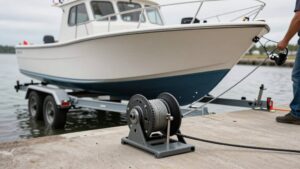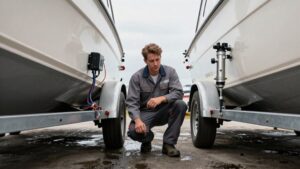
Boat Trailer Winch Cable vs Strap: Strength, Safety and Lifespan
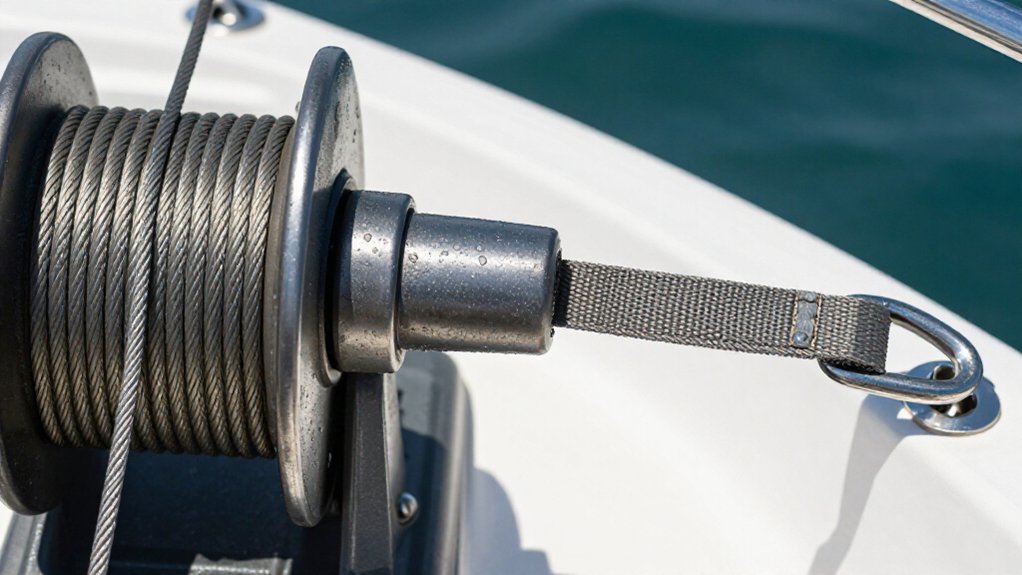
On trailers, a winch strap resists saltwater corrosion better than steel cable, but UV, cuts, and abrasion shorten its life.
Inspect straps for fraying, fading, damaged stitching, and check cable for rust, kinks, or broken strands before use.
Use working load limits, not breaking strength, and match capacity to boat weight and bunk type.
Smooth pulls reduce shock loading; drum and hook fit matter.
Compare costs, upkeep, and handling risks as you choose. More guidance can help you select confidently.
Corrosion and UV Resistance
Salt water and UV exposure can weaken every winch material, but they affect each differently: metal cable can corrode and become hazardous when strands break, while synthetic rope can degrade in marine conditions.
Your choice matters: use corrosion-resistant hardware, and don’t rely on synthetic rope in marine service. A winch strap generally tolerates exposure better, but inspect it and replace it at the first fading, cut, fraying, or deformation. Protect cable from salt and moisture; store straps shaded, near 60–80°F and below 60% humidity. Keep chemicals off both materials. Before each launch, confirm the assembly moves freely and holds the load without abnormal wear.
| Material | Practical control |
|---|---|
| Cable | Rinse and dry; inspect for corrosion. |
| Strap | Shade; replace damaged webbing. |
| Synthetic rope | Avoid marine use. |
| Hardware | Choose corrosion-resistant parts. |
Cable Strand Failure Patterns
Unlike strap wear, a metal winch cable can become hazardous as soon as one strand breaks: the remaining strands may carry uneven loads and fail suddenly. Cable damage can escalate quickly, without gradual warning; don’t wait until it feels weaker.
Inspect the cable before use for broken wires, kinks, crushed sections, or termination damage. Poor clamp placement can cut into strands or load them improperly, creating a weak point that may worsen under use. If you find strand damage or significant wear, stop using the cable and replace it rather than monitoring it.
Keep your hands and body out of the cable’s recoil path, and never place a hand where a released cable could penetrate. Follow the winch maker’s inspection and replacement guidance closely.
Breaking Strength Under Load
When you pull a boat across bunks, don’t size the winch cable or strap by breaking strength alone: use its working load limit (WLL), the rated load it’s designed to handle.
Breaking strength marks maximum force before failure, not a safe operating target. For bunk boards, use a 2:1 pull advantage, so choose a WLL at least half your boat’s weight. Roller bunks provide a 3:1 advantage, making a WLL near one-third the weight a minimum.
For a 4,900-pound boat, compare those needs with the rating; a 5,000-pound WLL target may be excessive for boards, but assess bunk type and margin.
A 2-inch strap rated at 2,600-pound WLL may suit a 2,300-pound boat, but not a 4,900-pound load. Cable strands can fail abruptly; a strap can fail when overloaded.
Loading and Unloading Speed
WLL sets the safe load, but loading speed affects the force your strap sees. Use the winch to walk your hull onto the bunks or rollers in controlled increments. Smooth pulls limit shock loading; quick, jerky cranking can raise dynamic force beyond the steady working load, even with a strap rated around 2,600 lb WLL.
Plan for the trailer’s support type. Roller bunks often need about a 3:1 pull ratio, compared with roughly 2:1 for bunk boards. Don’t over-tighten to rush the boat into place. After a fast pull, inspect the strap for fraying, edge wear, stretching, or deformation.
Repeated hard pulls accelerate wear and may force earlier replacement. Keep your pace controlled, and stop if the load surges or binds.
Drum and Hook Fit
Before installing a strap, match its width to the winch drum so it winds evenly without overlapping or slipping. Check that the hook or snap ring fits your bow eye and the winch attachment point; a poor fit can pull at an angle and side-load hardware.
Choose enough strap length to reach the drum and tighten fully, while following the manufacturer’s instructions for storing excess; don’t leave slack in the wraps. Confirm the strap and hook WLL suits your trailer hardware and intended pull; don’t use breaking strength as the working rating. For example, DL24249 lists about 2,600 pounds WLL and 4,000 pounds breaking strength. If you’re retrofitting without a through-bolt, check side-plate clearance and drilling so the strap lies flat and tracks straight.
Replacement Parts Availability
Straps are often easier to replace: standard sizes such as 2 inches wide by 25 feet long are widely sold, and published working load limits help you select the right rating. Check that the replacement matches your winch drum and hook hardware, then confirm its WLL suits the load.
Complete winch-strap kits commonly include snap or safety hooks, so you can replace the assembly without sourcing each part separately. You may also keep a correctly rated spare aboard to reduce downtime. A strap failure can leave the boat supported only by its safety chain, so inspect fit and rating before use.
Cable replacements are less interchangeable. You’ll need the specified cable type and diameter, plus compatible terminations or clamps. Follow the winch maker’s installation instructions; incorrect clamp placement can damage strands and undermine the connection. If you choose cable, identify its exact specifications before ordering and verify that replacement hardware suits the winch before installation.
Snapback and Abrasion Hazards
Choosing the right replacement parts helps, but safe handling matters just as much: a failed load-bearing strap or cable can release stored energy and whip hardware along its path. Metal cable can turn a broken strand into a hazard; remaining strands may shift or let the line run, causing penetrating injuries. A webbing strap is less likely to cut you, but it still stores tremendous energy and can snap violently if it fails. Keep your hands outside the line path, and wear eye protection while winching.
Abrasion can weaken either material where it rubs against sharp edges, clamps, rollers, or bunks. Route the line without twists and keep it clear of corners and hardware that can chafe it. Inspect contact points before use; localized edge wear or damaged strands can signal failure before the rest looks worn.
Replace the strap or cable immediately if you find fraying, edge damage, deformation, or broken strands.
Wet-Weather Handling Tradeoffs
Wet conditions can reduce your grip on the winch and load, so keep clear of the line and control the handle firmly. Cable strands can fail suddenly once damaged, while wet straps need inspection for fraying and edge cuts; choose a strap with a published WLL suited to your boat and bunk setup.
Rinse salt from metal hardware, then dry the cable or strap before storage to limit corrosion and material degradation.
Grip in Wet Conditions
When rain or spray reaches the winch, a properly rated synthetic strap usually grips more consistently than rope and avoids the sudden hand-injury hazard of a frayed metal cable. For wet launches, you control grip through setup and inspection:
- Check the working load limit; a 2-inch strap rated 2,600 pounds suits only loads within its rating.
- Keep tension even, remove twists and tangles before locking the winch; folded webbing can load unevenly and slip.
- Inspect after outings for cuts, fraying, deformation, and unreadable labels; replace damaged webbing before towing.
Rope stretches under load, then may fail later, tempting you to shorten or retie it and risking inadequate tension.
Cable may feel dependable in rain, but one broken strand can snap and pierce your hand.
Corrosion and Drying Needs
Grip matters during a rainy launch, but drying and corrosion control determine how well your winch line holds up between trips.
A strap won’t rust like cable, but rinse saltwater off and let webbing dry fully before storage to limit mildew and chemical damage. After rain or saltwater exposure, store it loosely in a shaded, UV-protected area; trapped moisture and sunlight can weaken fibers.
Before each trip, inspect edges for cuts or fraying: a loaded strap stores substantial energy, so damage can create a serious hazard.
Cable resists stretching, yet corrosion can hide at clamp points. Inspect for red rust and pitting, and replace damaged cable. For corrosion resistance and easier post-exposure recovery, choose a marine-grade strap sized for the load. A roughly two-inch strap with a listed 2,600-pound working load limit may suit some setups; verify your winch and boat requirements before use.
Upfront Cost and Upkeep
A basic winch cable usually costs less upfront than a marine-safe strap, but you should compare rated capacity before choosing. You’ll need to inspect cable corrosion and strand damage, while a strap requires checks for fraying, fading, and stretching.
Factor in routine upkeep and planned replacement costs, and replace either option promptly if wear raises safety concerns.
Initial Purchase Cost
Cable usually costs less upfront than a quality 2-inch winch strap, but the initial savings can disappear if damage forces an early replacement.
A properly sized 2″ × 25 ft strap may cost more, yet its rated capacity helps you buy for the load rather than price alone. For example, a model rated near 2,600 lb WLL and 4,000 lb breaking strength gives you a basis for selection; match WLL guidance to your boat’s weight and follow the manufacturer’s limits.
- Compare prices, but remember a broken cable strand makes use unsafe.
- Choose a marine-rated strap with UV- and water-resistant construction if exposure warrants the higher price.
- Don’t substitute rope: stretch can shorten usable length and prompt early replacement.
A higher purchase price can be the practical choice when it gives you predictable capacity and dependable service.
Routine Maintenance Expenses
Routine upkeep costs come mostly from inspection and timely replacement, not major repairs. Before each launch, carefully inspect your strap for fraying, cut or abraded edges, fading, stretching, and damaged stitching; check hooks, ratchet, and winch hardware for corrosion. Once a month, confirm chemical warnings and load-rating labels remain legible.
These checks cost little beyond your time, but they help you catch damage before loading the boat.
Budget for replacement when wear or environmental exposure compromises your strap; don’t keep using a suspect strap to save money. Metal cable demands close attention too: broken strands can injure hands and signal unsafe damage. Store straps dry, neatly coiled, and out of sunlight to limit deterioration. Treat inspection and safety-critical replacement as routine expenses, not optional upgrades.
Long-Term Replacement Costs
Compare upfront price with how often you’ll need to replace the gear. A marine-suitable strap may cost more than a budget option, but its service life can lower replacement spending. For example, some 2-inch-by-25-foot straps carry a 2,600-pound working load limit; verify the rating for your setup.
- Inspect the strap before use and monthly; replace it for fraying, edge damage, fading, stretching, or deformation.
- Plan service intervals: heavy-duty straps often last 1–3 years; lighter-duty models, 3–5 years.
- Unlike cable, a strap doesn’t become hazardous when one metal strand breaks; unlike rope, it avoids knot-shortening and stretch-related rework.
Routine checks let you replace it deliberately, rather than after failure. That predictability can stabilize upkeep costs and reduce the risk and expense of an urgent, unsafe winch repair.
Select by Boat Weight
When selecting a winch strap, start with your boat’s full-gassed weight—not its dry weight or the hook’s rating. For example, treat a 24-foot Cobalt weighing about 4,900 pounds fully gassed as the working boat mass. Don’t choose capacity from a hook-only rating: a hook marked around 4,000-pound WLL doesn’t establish that the strap-and-tied system can handle trailer-loading forces. Check the strap’s published working load limit (WLL), not just breaking strength.
For bunk boards, often treated as a 2:1 mechanical advantage, target strap/winch WLL of at least half the boat’s weight: about 2,450 pounds for 4,900 pounds. For roller bunks, often treated as 3:1, target at least one-third, or roughly 1,633 pounds.
A 2,600-pound-WLL strap clears the bunk-board minimum; verify your complete setup before loading begins.
Conclusion
Choose your winch line by matching its rated capacity to your boat’s loaded weight, not by material alone. A strap resists corrosion and handles wet conditions, but UV damage and abrasion demand inspection. A cable may suit your drum and loading routine, yet broken strands can injure you, and snapback remains dangerous.
Check the hook, attachment, and manufacturer limits before launch. Replace damaged line, keep hands clear under tension, and never exceed the winch’s rating.
Boat Trailer Parts Selector & Rating Checker
Enter your boat plus gear weight and the rating printed on each trailer part to see which parts are rated below your loaded weight.