Bunk vs Roller Boat Trailer: Which Is Easier to Launch and Load?
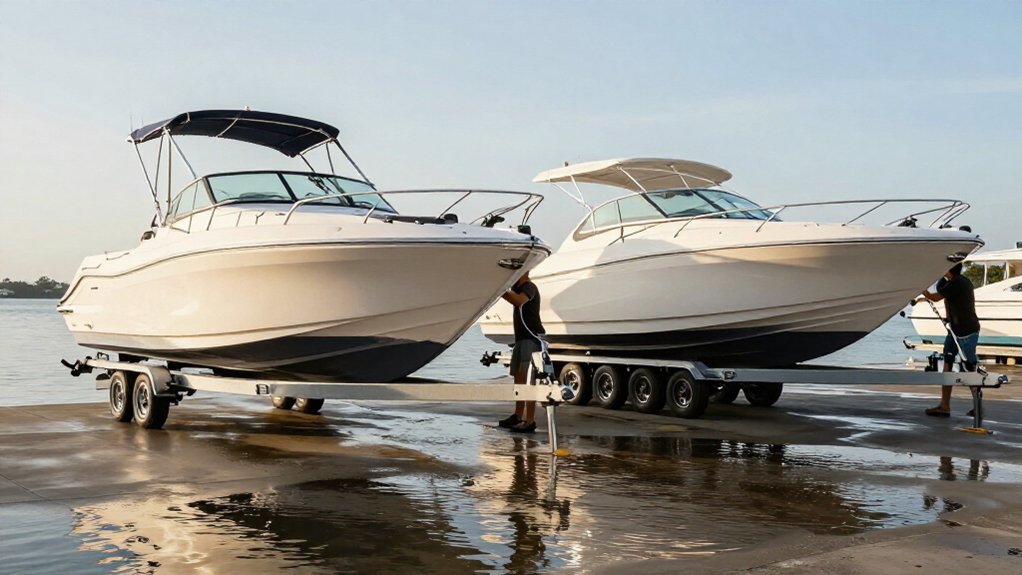
On a level ramp with adequate water, bunks usually make launching and loading easier: back in until the hull floats onto carpeted supports, then winch as needed.
Rollers can suit shallow or steep ramps because they need less immersion, but you must keep it aligned and control strap slack as it moves.
Before boarding or retrieving, confirm hull support and footing.
Ramp depth, hull shape, and upkeep guide your choice; these factors can help you choose.
Ramp Slope and Water Depth
Ramp slope and water depth determine how far you need to back the trailer in. With bunks, you’ll often need to submerge part of the trailer so the boat can float onto the supports. Don’t back in farther than needed; check ramp footing, water depth, and your vehicle’s position before moving.
| Ramp condition | Bunks | Rollers |
|---|---|---|
| Short, steep ramp | Needs more immersion | Often suits grade |
| Shallow water | May not float aboard | Can glide on/off |
| Side slope | Check level carefully | Still check level |
At low tide, shallow water can leave bunks beyond reach, even when the ramp remains usable. Rollers generally handle limited depth better because gravity helps the boat move on or off. Check ramp level, traction, and space before launching or retrieving.
Roller Alignment at Retrieval
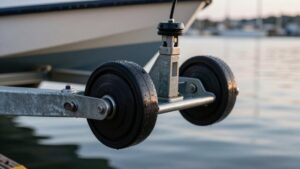
How cleanly does a roller trailer retrieve your boat? Your placement depends on rollers tracking the hull’s line. If they don’t, the boat can sit crooked and demand extra winching. Line up the trailer so gravity guides the hull onto the rollers without catching at a bad contact point.
- Use enough rollers; fewer contact points may center the hull less reliably.
- Check that roller heights match and each roller turns freely.
- Inspect lead rollers for damage or failure before retrieval.
- Confirm the wheels and frame haven’t shifted; movement can alter alignment.
Rollers usually center the boat once you’ve lined up, but uneven heights or shifting hardware can defeat that guidance. Check from a safe position and keep people clear of pinch points during retrieval.
Launch and Retrieval Outcomes
Launch and retrieval depend on ramp depth, slope, and trailer design: bunks work best when you can back in far enough for the boat to float onto level, carpeted supports, while rollers can glide on or off with less immersion at shallow or steep ramps. At low tide or on a short, steep ramp, your boat may not float far enough to catch the bunks, so you’ll need extra winching. Keep the trailer aligned and avoid forcing the hull onto uneven supports.
On developed ramps with adequate depth, bunks often make loading faster and smoother, with little movement and minimal winching. Rollers suit undeveloped or shallow ramps, but their moving parts demand careful control. Keep the winch line and safety chain attached until the boat’s afloat; start the engine in forward gear to ease tension before unhooking.
Boarding From a Floating Dock
When boarding from a floating dock, center the boat and confirm the hull is supported before stepping aboard. A roller setup can help when water depth varies, while bunks depend more on adequate flotation.
- With bunks, wait until the boat floats high enough to wet the carpeted bunks; inadequate depth can delay alignment and reloading.
- Bunks’ friction generally steadies the boat as you line up, reducing movement while you prepare to board.
- Rollers let the boat glide into position in shallow water; use controlled winching, and monitor movement as it settles.
- Center the boat, confirm support, and minimize lateral movement before stepping aboard; secure your footing, avoid rushing, and keep hands clear of pinch points as the boat shifts.
Hull Shape and Support
Because trailer support affects hull stress and movement, match the setup to your boat’s construction. Bunk trailers use evenly spaced carpeted boards to distribute weight along the hull and limit movement while towing. This steadier support can protect the hull during loading and trailering.
If you own an aluminum boat, you’ll often benefit from bunks because its thin hull handles continuous support and friction better than concentrated roller contact.
Roller trailers support the hull at small points, so choose roller size and spacing carefully. Poorly positioned rollers can shift the boat or concentrate pressure enough to dent foam-core finishes over time. Secure the boat correctly, then check that each roller contacts the intended hull area.
Check your hull’s designated support zones and confirm the bunks or rollers align with them before you launch; uneven contact can increase stress and complicate recovery.
Bunk Carpet Replacement Costs
Bunk carpet typically needs replacement about every six years, though heavy use and harsh conditions can shorten its life. Your actual cost depends on whether damage reaches the bunk supports.
- Check carpet for thinning, tears, or exposed bunk material; replace it before rough contact strips hull paint.
- Inspect the wood and supports for water damage or rot, since compromised bunks can require repair beyond carpet.
- Power loading accelerates wear, so budget for more frequent replacement if you routinely drive the boat onto bunks.
- Use compatible lubricant or sliding pads regularly to reduce friction and grinding, and follow product guidance to protect the hull.
Before relaunching, secure replacement carpet smoothly and verify each bunk is sound; damaged supports can compromise safe, even hull support overall.
Winch Strap Wear
After checking bunk carpet and supports, inspect the winch strap too: roller trailers often put it under repeated tension during recovery, especially if it rubs against guides, the fairlead, or the trailer frame. On roller setups, keep the winch line aligned as you walk the boat up or back; repeated contact can fray fibers, glaze the surface, or flatten sections.
Keep the winch line and safety chain connected until your boat is in the water and pressure eases when you start the engine in forward gear; then unhook. Bunk trailers may need less prolonged winching because bunk friction holds the hull, but don’t assume your strap is sound.
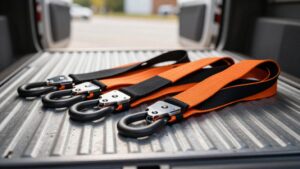
Inspect your winch strap for fraying, glazing, or flattened spots; replace it before it fails.
Trailer Storage Requirements
Before choosing a trailer, measure your available storage space, including clearance for the tongue and maneuvering. Decide whether you’ll store it indoors or outdoors, since exposure affects how often you’ll need to rinse and inspect rollers, bearings, and steel components.
Secure the winch line and straps correctly, and check that nothing is under tension before storage.
Storage Space Needed
How much room you need depends on the trailer’s layout and the access you’ll want for checks. Measure the trailer’s full length, widest points, and the clearance needed to walk around it safely; don’t size the space by the hull alone.
- Bunk trailers usually fit a footprint close to your boat’s length. Fixed-width carpeted bunks have no moving parts that need extra side clearance.
- Roller trailers may need more practical width because frames and roller assemblies can extend beyond bunk skids.
- In a tight space, bunks reduce side-to-side demands; keep the trailer stable and secured before checks.
- Allow rollers additional vertical clearance if needed for inspection, and leave access to check their components; seized or corroded parts can compromise safe loading and reliable operation.
Indoor Versus Outdoor Storage
Storage conditions affect how much care each trailer needs. Indoor storage can favor a roller trailer if you secure moving parts and keep rollers clean and dry. Otherwise, moisture and dirt can cause rust or seizure. Check that supports are stable before working around the trailer.
Outdoors, weather and salt expose bunk carpet and roller components to corrosion. Choose galvanized steel or aluminum hardware to limit saltwater damage. Bunks generally need less daily upkeep because they use friction and fewer moving parts.
Rollers need more attention: check alignment, lubricate rollers, and inspect them seasonally; failed units may need earlier replacement. If you launch outdoors often, plan to re-lubricate rollers and protect bunk pads. This reduces friction wear and helps prevent paint stripping and corrosion.
Solo Boater Considerations
When you launch alone, bunks can hold your hull with friction and reduce winching on a suitable ramp. Rollers can ease retrieval on steep or shallow ramps, but you’ll need to control the winch line and safety chain until the boat floats securely.
Choose for your ramp conditions, and use forward gear to relieve line pressure before unhooking.
One-Person Loading
If you’re loading alone, the ramp’s depth and slope matter more than the trailer type. On a mostly level ramp, bunks often suit you: immerse them partly, then pull the boat forward with little effort. Their friction and even hull support make movement predictable.
Rollers can help you load on shallow or short, steep ramps, but they let the hull slide readily. Keep adequate rollers under the hull; too few reduce support and make alignment harder.
- Check ramp depth before backing; bunks need partial submersion for smooth loading.
- On bunks, center the keel and pull steadily; friction limits hull movement.
- Inspect roller coverage before loading; adequate support helps keep the hull aligned.
- Choose according to ramp conditions; maintain control as hull moves onto trailer.
Launching Without Assistance
For solo launching, bunks are usually easier on a level, well-developed ramp with enough water to float the boat onto the pads. Back in until the hull settles onto the carpeted bunks, then use minimal winching as needed.
This approach also simplifies solo loading when you can align the boat at a normal angle and let it catch on the pads.
At shallow, steep, or rough ramps, rollers may let you launch without submerging the trailer as deeply. Gravity can move the boat off, but keep it connected to the winch line and safety chain until it’s in the water.
Before using rollers, check their size and spacing, and manage line slack carefully; releasing too early can cause problems. Match your setup to ramp depth, tide, and conditions.
Safety While Solo
Solo safety depends on how predictably your boat moves during launch and recovery. Choose a setup that limits awkward corrections, keeps you clear of moving water and reduces time exposed at the ramp.
- With bunks, back in far enough for the hull to float onto evenly spaced carpeted supports. Their friction helps hold the boat steady; recovery may need only minor winching.
- With rollers, keep the winch line and safety chain attached until the boat floats. Start the engine, shift to forward gear to ease line pressure, then unhook.
- At shallow, windy, or rocky ramps, rollers can reduce deep submersion, but align carefully to prevent drifting.
- Use controlled winch-in and winch-out steps, and keep each task quick. Keep your boat secured through every transition.
Seasonal Debris and Roller Jams
As seasons change, weeds, sand, mud, and ice melt can collect between a roller trailer’s moving parts and make rollers stick or turn unevenly. After winter or spring starts, debris may also shift a roller out of alignment or jam it completely; a lead roller can fail after a winter. Before each seasonal change, inspect the roller frame and turn every roller by hand, clearing buildup and checking for damage.
Don’t reach beneath a supported boat, and keep hands clear of pinch points. If a roller won’t turn freely, stop loading and troubleshoot on stable ground rather than forcing the hull forward. You may need extra winching time to position the boat, making a shallow launch more stressful.
Bunks use friction instead of moving parts, so frame debris generally won’t create the same roller-specific jams. Clean and inspect before you launch, not during a rushed power-loading attempt there.
Conclusion
Your best choice depends on your ramp, hull, and how you retrieve the boat. Bunks give stable support and suit predictable launches with adequate depth; rollers can ease loading when alignment or water levels challenge you.
Check roller condition, winch strap wear, and trailer storage needs before deciding. At every ramp, keep hands clear, secure the boat, and control its movement. Practice your approach and retrieval plan so you’ll launch and load safely.
Boat Trailer Parts Selector & Rating Checker
Enter your boat plus gear weight and the rating printed on each trailer part to see which parts are rated below your loaded weight.
Towing Capacity & Truck + Trailer Weight Calculator
Total your loaded trailer, estimate tongue weight and compare it with your tow rating, payload, GVWR, GCWR, rear GAWR and hitch limits.