What Hitch Ball Size Do U-Haul Trailers Need? Size by Trailer Type
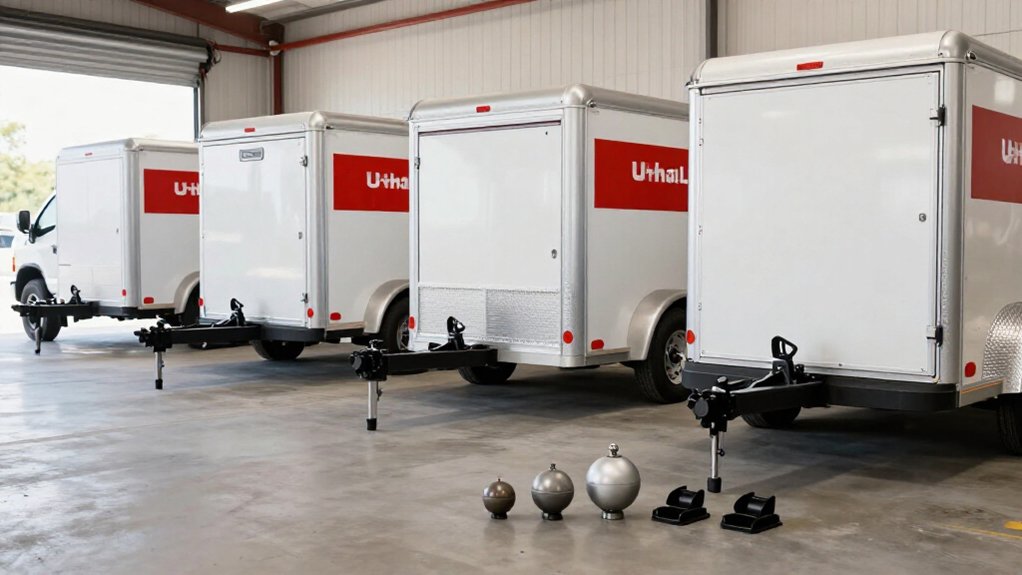
U-Haul trailer ball size varies by model, so you must match your hitch ball to the diameter printed on the coupler label—not assume a standard size by trailer type.
Check that the ball shank fits the mount, and confirm the frame-mounted receiver and vehicle meet the trailer’s ratings and U-Haul requirements.
Once connected, set the trailer level, secure the coupler latch and pin, and test every light.
The details below help you verify before towing.
U-Haul Ball Size Chart
U-Haul trailers don’t all use the same hitch ball size; the ball must match the coupler on the specific trailer you’re renting. Use the chart as a selection aid, not as a substitute for checking the equipment in front of you. Before connecting, confirm the trailer’s coupler label or specifications and compare its required diameter with the ball’s stamped size. The coupler must seat fully over the ball and its latch must close and secure without force.
A ball that’s too small or too large can leave the connection unlatched, even if the hitch fits your vehicle. At pickup, ask U-Haul staff to verify your hitch class and the trailer’s rated requirements, including ball size. If the sizes don’t match, don’t tow; obtain a compatible ball or have the hitch changed at a location that offers installation. Recheck the latch and safety chains before travel, and lights.
Hitch Ball Size by Trailer Type
Trailer type can guide your setup, but the coupler determines the required hitch ball size. For ramp-style utility trailers such as 4×8, 5×8, and 6×12, use the size specified on your rented trailer; don’t assume a standard Class I-II setup settles the match. Enclosed cargo trailers and specialty models, including motorcycle trailers with wheel chocks and tie-down points, also need the exact ball listed for their couplers.
| Trailer type | What you should check | Safety reason |
|---|---|---|
| Utility | Trailer label | Correct coupler fit |
| Enclosed cargo | Coupler specification | Secure connection |
| Specialty | Trailer label | Prevent mismatch |
If you don’t know your required size, U-Haul can help match your vehicle’s hitch class and receiver rating to the correct trailer setup, including confirming that the ball fits its coupler before you tow. That check helps protect your connection and everyone sharing the road.
Ball Shank Diameter
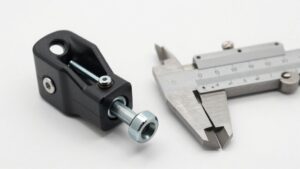
Beyond ball size, check the shank diameter—the part that fits through the hitch mount—against the trailer’s coupler and your hitch’s rating.
Your ball must match the coupler’s specified size and use a shank that fits the hitch mount. U-Haul setups use 1/2-inch shanks for light-duty or 5/8-inch shanks for higher-duty ratings. Required diameter depends on trailer rating and hitch class.
For larger trailers requiring Class III or higher, expect the larger shank-and-ball setup, not a light-duty option.
A mismatched shank can prevent the coupler from seating on the ball, compromising a secure connection. Don’t tow unless the ball assembly matches the trailer’s requirements and your hitch’s rating. At U-Haul, staff can match the ball and shank to the trailer and your vehicle’s hitch class.
U-Haul Coupler Label Locations
Check the coupler’s front face and the trailer tongue or jack area for a label showing the required ball size; it should be readable beside the tongue. Use that marked size rather than guessing from the trailer type.
If you can’t find the label, don’t connect; ask U-Haul staff to identify the correct ball.
Coupler Label Placement
Before attaching a U-Haul trailer, find the ball-size label on the coupler, not the trailer frame. Check the front of the coupler or the latch area where the hitch ball enters. That label identifies the required ball size and provides the most reliable reference for matching your hitch to that specific trailer.
Read the coupler information before positioning the trailer over your ball. Confirm that the ball size matches the size shown on the label; don’t rely on appearance or assumptions based on another U-Haul model. A mismatch can prevent proper seating and create an unsafe connection.
If you can’t read the label or aren’t sure how to interpret it, give U-Haul the trailer and coupler details so staff can confirm the correct ball and setup. Verify the label before hooking up.
Trailer Tongue Decals
At the trailer’s front, look for a tongue or coupler decal on or beside the latch plate; it lists the hitch-ball size and connection specifications for that specific trailer.
Read the decal before you connect anything, and match its stated ball diameter to the ball mounted on your tow vehicle. The coupler must drop fully over the correctly sized ball; only then can you close and secure the latch as directed. A near match isn’t safe: an undersized or oversized ball can prevent proper seating and locking, increasing the risk of separation while towing. Check connection specifications on the label.
If the decal’s missing, damaged, or unreadable, don’t estimate from appearance or use a ball that merely seems to fit. Give U-Haul the trailer’s model information and ask staff to confirm the required size. Staff also use this label to verify hitch compatibility before rental; you must meet that requirement to tow.
Common Label Locations
U-Haul typically places the hitch-ball size label on the top or front face of the coupler housing, often near the latch.
Look over the coupler body and around the latch assembly, where a manufacturer or compatibility label may identify the required ball diameter for that trailer. Keep your view clear of dirt and grease, but don’t move or operate the latch while the trailer remains connected.
If you don’t see a legible label on the coupler itself, inspect the trailer’s tongue near the coupler for a secondary compliance or connection label.
Treat the coupler marking as specific to that trailer: match its stated ball size exactly. Don’t assume another trailer uses the same size. Check the label before pickup, since trailer types differ.
Finding Size Information
The coupler label is the most reliable guide to the hitch ball size for your rental. Inspect the coupler area, especially the front underside of the hitch mechanism, for a label or stamped specification. Check around the coupler throat and clevis as well; markings there may state the required ball diameter.
Read the size and confirm it applies to your exact trailer unit, since cargo, utility, and specialty models can have different coupling requirements. Your rental paperwork or receipt may also list compatible equipment, so compare those details with the coupler specification. If U-Haul installs your hitch, staff can match the ball to the trailer’s labeled requirement. Before towing, verify that the ball diameter matches the coupler and that your hitch components carry suitable ratings.
What To Do If Missing
If the coupler label is missing or unreadable, ask U-Haul staff to confirm the required ball size for your specific trailer model. The label is typically affixed near the hitch coupler, on the trailer tongue, where you can check it while facing the trailer. Staff can look up the coupler requirements for that model; don’t estimate the size from appearance or use a ball that seems close.
Before towing, verify that your hitch ball matches the coupler exactly. An incorrect size can prevent a secure connection and make the trailer unsafe to operate. If your ball is missing or doesn’t match, ask whether the location can provide or install a compatible hitch setup. U-Haul offers this service at most locations when possible, for trailers that require a hitch. Don’t connect or tow until staff confirm the correct setup.
Verify Before Towing
Before towing, match the trailer coupler’s size—commonly 2 inches or 2-5/16 inches—to your hitch ball, and confirm the receiver’s stamped class and capacity suit the trailer.
Check the rental paperwork or trailer label if you’re unsure which specification applies; don’t infer it from the trailer’s appearance. Inspect the receiver markings and compare its rating with the trailer’s stated requirements and your vehicle’s towing limits. The lowest applicable rating governs, so never exceed it.
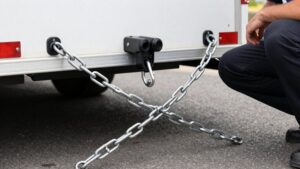
If your vehicle lacks the required receiver or ball setup, ask U-Haul whether a compatible hitch installation is available at that location; staff can help match the hitch class to towing capacity. Before departure, connect the trailer’s lighting plug and test running lights, brake lights, and both turn signals with a helper. Don’t tow if any required light fails. Secure the coupler and safety chains, then recheck the connection and load before moving on public roads safely.
Coupler Compatibility Limits
Although a ball may appear to fit, U-Haul requires its diameter to match the trailer coupler exactly; the receiver must also be frame-mounted and rated for the trailer. You must use the specified ball size because a mismatched ball can prevent the coupler from seating and locking securely. A connection that seems close isn’t compatible and can separate under load. Before renting, confirm your hitch ball diameter, receiver rating, and vehicle’s towing capacity meet U-Haul’s requirements.
The receiver must attach to your vehicle’s frame, and you need a working connector for the trailer’s brake lights and turn signals. U-Haul staff can check your towing and hitch compatibility at the counter, then confirm the required hitch class and ball/coupler match before they finalize your rental.
Ball Mount Height Adjustments
Once you’ve matched the hitch ball to the U-Haul trailer’s coupler, adjust the ball mount so the connected trailer sits level. Use the receiver’s available rise or drop setting to bring the trailer tongue to the correct height. Don’t judge the setup by ground clearance alone: a tongue that sits too high or too low can create unsafe towing angles and poor weight transfer.
After you adjust the height, recheck the hookup. Confirm that the coupler is fully seated on the ball and that the trailer tongue is properly supported with the jack raised. Make these checks on level ground, with the tow vehicle and trailer aligned. If you’re unsure which rise or drop setting fits your U-Haul trailer, ask at the counter.
Staff can match the ball mount height to the trailer’s coupler requirements before you tow.
Coupler Latch Inspection
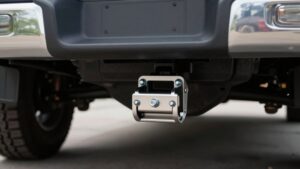
After setting the ball mount height, check that the coupler latch fully engages and its latch pin is seated. U-Haul trailers rely on this latch to secure the coupler to the hitch ball. Before pickup, inspect the coupler jaw: it should align correctly, with no gap between the coupler and ball area.
- Confirm the primary latch is closed and the pin sits fully in place; don’t assume contact means it’s locked.
- If equipped, close the secondary latch for added retention.
- Gently tug the trailer; it shouldn’t move forward or backward.
If the latch won’t close smoothly or looks damaged or worn, stop and report it to U-Haul before towing; don’t proceed with uncertain engagement. Recheck after securing, and ask staff to verify proper locking.
Check Trailer Light Connector
Connect the trailer’s light plug to your vehicle and confirm the connector or adapter matches the vehicle’s electrical socket. A working connection lets your trailer’s brake lights and turn signals alert drivers behind you. Before leaving the pickup area, verify you have the correct plug or adapter; ask U-Haul staff to confirm it fits your vehicle’s hitch electrical connection.
- Park on level ground and seat the connector firmly.
- Have someone press the brake pedal while you check both trailer brake lights.
- Activate each turn signal and confirm the matching trailer light flashes.
If a light fails or the plug won’t fit securely, don’t tow yet. Check the connection and resolve wiring problems before driving; faulty lights can compromise safe towing and legal compliance. U-Haul staff can help verify the required hookup at pickup. Keep the vehicle and trailer stationary during this check.
Conclusion
Before towing, verify that your hitch ball matches the trailer’s coupler label for size and capacity. Check the ball shank diameter, coupler compatibility, and ball mount height; never force a mismatched connection.
Inspect the coupler latch to confirm it closes and locks securely, then connect and test the trailer lights. If any component is damaged, loose, or uncertain, stop and resolve the issue before driving. Your equipment must meet the trailer’s requirements for a secure tow.
What Size Trailer Hitch Do I Need? Class Selector
Enter loaded trailer weight, tongue weight and your ratings to get the minimum hitch class (I–IV) and see which rating sets your limit.
Hitch Bike Rack Load & Fit Checker
Check your e-bikes and hitch bike rack against your receiver's tongue-weight rating and the rack's own capacity, in lb or kg.
Hitch Step Fit Checker
Check if a hitch step fits your receiver: shank vs opening, step load rating vs the heaviest user, and approximate platform height.
Towing & Trailer App Finder
Filter 13 verified towing apps by purpose, platform, brand, hardware and price, including GM, camera, leveling, brake and weight apps.