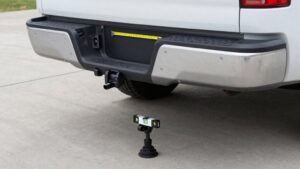
What Is an Adjustable Ball Mount and Who Really Needs One?
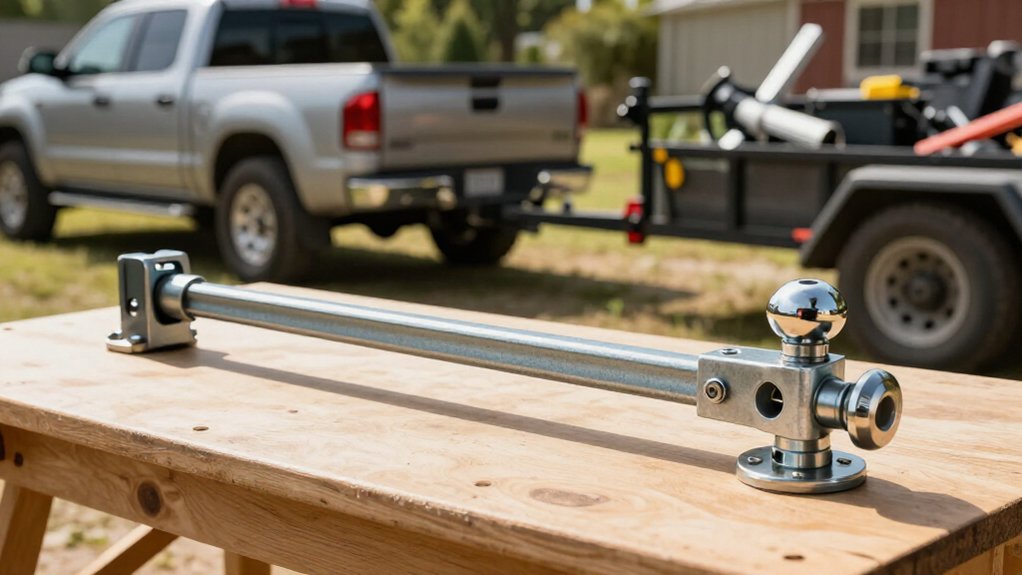
An adjustable ball mount lets you raise or lower the hitch ball so your trailer sits level with your vehicle’s receiver.
You need one when a fixed mount can’t match coupler and receiver heights, or when you tow trailers with different coupler heights.
Measure both heights on level ground, then choose a rated rise or drop setting.
Keep tongue weight within 10–15% and load limits.
The details below help you choose and set one safely and correctly.
Trailer Height Mismatch
A trailer height mismatch occurs when the coupler sits at a different height from your tow vehicle’s receiver, pitching the trailer nose-up or nose-down. When the ball sits too high, tongue weight can fall below the safer 10–15% target, increasing sway risk as the trailer rides nose-up.
If the ball sits too low, tongue weight may exceed the ideal range, while reduced ground clearance and added stress burden your vehicle and trailer suspensions. An adjustable ball mount can correct the mismatch by placing the ball within its rise-or-drop range, helping your trailer frame sit level with the road.
Before you choose one, measure coupler-to-ground height and confirm the mount’s rise and drop cover your tallest and shortest setups. Keep all components within ratings to support safe, predictable towing. Don’t rely on stance alone; check your loaded trailer before travel and recheck after changing loads.
Pin-Hole Height Adjustments
At each pin-hole setting, your adjustable ball mount changes the ball’s height by a fixed rise or drop. Measure from the ground to your trailer coupler on level ground, then select the channel hole that brings the coupler to the ball’s height so the trailer rides level. Don’t estimate: an incorrect setting can leave the trailer nose-high or nose-low and affect towing stability.
Many mounts use two locking pins: one secures the shank in the receiver, while the other holds the ball or tongue head at your chosen position. Confirm both pins are fully seated and secured before towing, and check the hardware.
The indexed holes let you adjust for different trailers or switch between rise and drop without replacing the mount. If your measured height falls outside the available range, use a riser or another mount instead of forcing a poor fit.
Backing Into Steep Driveways
When backing into a steep driveway, set the adjustable ball mount’s rise or drop so the coupler aligns with the ball on level ground before towing. Measure coupler height from the ground and compare it with your receiver-to-coupler difference; confirm the mount provides enough rise or drop before your climb.
A wide adjustment range lets you fine-tune ball height. If the ball sits too high, the trailer may nose up, reducing tongue weight below the 10–15 percent target and increasing sway risk once you reach level ground. Too low can overload the hitch and reduce clearance, risking contact with the vehicle or suspension.
Don’t assume a flip-over shank or extra riser will cover the difference; check the model’s limits. Stop and reassess if the trailer doesn’t sit near level.
Aluminum vs. Steel Mounts
When choosing an adjustable ball mount, weigh aluminum’s lower weight and corrosion resistance against steel’s greater durability. You’ll handle aluminum more easily when switching trailers, but you must still check its rated towing capacity.
Match the mount’s rating and drop or rise to your trailer before towing.
Weight And Durability
The main tradeoff between aluminum and steel adjustable ball mounts is weight versus durability. An aluminum mount is lighter, making handling and setup easier. Choose it if you install or remove it often and its rating suits your trailer.
Steel is heavier but offers a robust build for frequent towing, high-capacity loads, and rough use. Consider handling demands too. Inspect locking pins regularly for wear.
Before towing, verify the mount and hitch ratings comply with your vehicle’s GVWR and GCWR limits. Set ball height correctly to maintain proper tongue weight and stable trailer handling. Neither material makes an overloaded or poorly adjusted setup safe; choose a mount rated for your load and check that its adjustment system locks securely before each trip.
Corrosion Resistance
Beyond weight and load capacity, consider how each adjustable ball mount resists corrosion. Aluminum’s lighter body typically resists corrosion better, so it suits coastal air and salted roads. Premium anodized or polished finishes add protection. Steel favors durability, but powder coat, zinc plating, or textured coatings help shield it. Inspect pins and attachment points.
| Mount | Corrosion notes |
|---|---|
| Aluminum | Anodized finish |
| Steel | Coated; inspect pins |
Because adjustable mounts add shank-to-channel interfaces and locking-pin locations, clean and lubricate pins on either material to limit seizing and uneven wear.
If you switch trailers or vehicles frequently, choose aluminum or well-coated steel, then check adjustment points. Don’t force a corroded pin; restore free movement and secure engagement. Protective finishes can wear, so inspect them and address chips before corrosion spreads.
Towing Capacity
Choose an adjustable ball mount rated for your trailer’s total weight and tongue weight; the wrong rating, or an extreme rise or drop position, can exceed safe limits.
Check the capacity stamped on the specific mount, then compare it with your trailer’s loaded weight, tongue weight, and your vehicle and receiver ratings. The lowest applicable limit governs; a higher-rated mount can’t increase your vehicle’s GVWR or GCWR.
Aluminum mounts are lighter and resist corrosion, making handling and setup easier for many utility, cargo, and equipment trailers. Steel mounts generally offer greater durability and robustness for heavier loads or harsher use. Neither material alone establishes safe capacity: ratings vary by model.
Adjustability only helps you level the trailer; it doesn’t add strength. Confirm the mount’s rating at the selected rise or drop position, since its extreme settings may have structural limits. If any rating is unclear, don’t tow until you verify it first.
Trailer Weight Capacity
Check the adjustable mount’s rated gross and tongue weight limits, and don’t rely on your vehicle’s tow rating alone. Measure tongue weight; it should generally be about 10–15% of the loaded trailer’s weight and remain within the mount’s rating.
Match the mount’s rated capacity at your chosen rise or drop to your trailer, and level the ball to help preserve stable handling and braking.
Rated Weight Limits
For safe towing, your trailer’s loaded weight must stay within the lowest applicable limit: your vehicle’s GVWR and GCWR, the hitch’s rated gross trailer weight, and the adjustable mount’s ratings. An adjustable mount doesn’t increase your vehicle or receiver capacity; it connects the trailer at a selected height.
Models span capacity classes, often about 6,000 to 20,000 pounds. Check the mount’s stamped or labeled gross trailer weight rating, then compare it with your loaded trailer’s weight and every applicable vehicle and hitch rating. Don’t rely on appearance or a rating from another model. When you change trailers, loads, or receivers, confirm the rating for that setup and keep the selected rise or drop within the manufacturer’s stated range. Verify unclear ratings before you tow.
Tongue Weight Capacity
Beyond gross trailer weight, you also need to verify tongue weight, the downward force the trailer puts on the hitch ball.
A safe target is typically 10–15% of your trailer’s total weight, but measure your setup to confirm. Your adjustable ball mount doesn’t change tongue-weight capacity; it sets hitch height. Choose a mount rated for your tongue weight, and keep your vehicle within its GVWR and GCWR limits.
Recheck after each height adjustment: setting the hitch too high may reduce tongue weight and raise sway risk, while setting it too low can increase tongue weight, stress components, and cut ground clearance. Use a tongue-weight scale before towing; incorrect loading can affect steering, braking, and trailer stability, even when you’ve locked the mount.
Match Tow Ratings
Match the adjustable ball mount’s ratings to your trailer’s loaded weight, not its empty weight: its maximum towing and tongue-weight capacities must meet or exceed your setup’s demands.
Estimate your actual tongue weight, often 10–15% of trailer weight, and choose a mount rated for that load. Verify both ratings against the trailer’s GVWR or loaded weight, whichever governs your setup.
Set the ball so the coupler sits level, and keep the required receiver-to-coupler difference inside the mount’s rated drop/rise range. Incorrect height can shift load and impair braking or steering, despite adequate ratings. Recheck each trailer’s weight, tongue load, and height when switching. Verify ratings and tongue weight for every trailer configuration.
| Check | Match | Why |
|---|---|---|
| Tow rating | Loaded weight/GVWR | Capacity |
| Tongue rating | Actual target | Stability |
| Drop/rise | Coupler level | Handling |
Switching Between Rental Trailers
When you switch between rental trailers, an adjustable ball mount lets you change the ball height to suit each coupler, helping the trailer frame sit parallel to the road for steadier handling and braking.
Measure each rental’s coupler height from the ground, then compare it with your receiver height. Insert the shank, secure it with the pin and clip, and choose the closest channel hole to set the ball at the needed rise or drop. Check that the trailer sits level before you tow.
For varying couplers, a dual-ball mount with 2-inch and 2-5/16-inch balls lets you switch sizes without swapping assemblies.
Verify its published rise/drop range covers each trailer’s height difference; don’t assume one setting suits all rentals before you tow safely.
Ball-Mount Clearance Risks
An incorrect rise or drop can leave the trailer frame angled, affecting handling and braking. When you set the ball too high, the tongue may carry less than 10–15% of trailer weight, increasing sway risk. Set it too low, and tongue weight may exceed the ideal range; reduced ground clearance raises the chance of bottoming out or stressing your vehicle’s suspension.
Before switching trailers, measure receiver height and coupler height with the trailer level. Confirm the mount’s adjustment range: required drop must cover receiver height minus the shortest coupler height, and required rise must cover receiver height minus the tallest. If a coupler height exceeds the shank’s limits, flip the shank only if your model supports it. Recheck level and clearance before towing.
Incorrect Ball Size Selection
Even with the correct ball height, the wrong diameter can keep the coupler from seating securely. A 2-inch ball under a 2-5/16-inch coupler won’t seat properly, even when your adjustable mount has the right drop. That mismatch can weaken the connection, accelerate wear, and destabilize towing or create uneven tongue-load transfer.
Read the coupler’s stamped size; don’t guess by appearance. If your mount has dual balls or a rotating platform, set and lock the matching ball before measuring height and hitching.
- A loose fit can turn a routine trip into a dangerous separation.
- Extra wear may leave you facing premature replacement.
- Instability can put your trailer and other road users at risk.
- Dual-ball mounts let you match common couplers without swapping mounts each time.
Verify Your Coupler Height
Start by measuring from the ground to the bottom of the trailer coupler; that’s the height your ball mount must match. Compare that measurement with your tow vehicle’s receiver height. If the coupler sits higher, you need rise; if lower, you need drop. Measure on level ground and account for the trailer’s loaded position.
For multiple trailers, ensure maximum rise covers the difference to your tallest coupler and maximum drop covers the difference to your shortest. Confirm the required height matches an available vertical shank hole or setting. If not, choose another hitch or a compatible riser notch. Don’t assume you can flip the hitch over to extend its range; verify its design and limits first. A level trailer supports stable, safer towing overall.
Conclusion
An adjustable ball mount solves trailer-height mismatches by letting you reposition the hitch ball, but you don’t need one unless you tow different trailers, face uneven approaches, or can’t achieve level towing with a fixed mount.
Before each trip, verify coupler height, ball size, pin engagement, clearance, and rated capacity. Choose steel or aluminum based on load and use. Don’t assume adjustment increases capacity; keep the trailer level and secure every connection before you drive.