Are Trailer Hitch Locks Worth It? What They Stop and What They Don’t
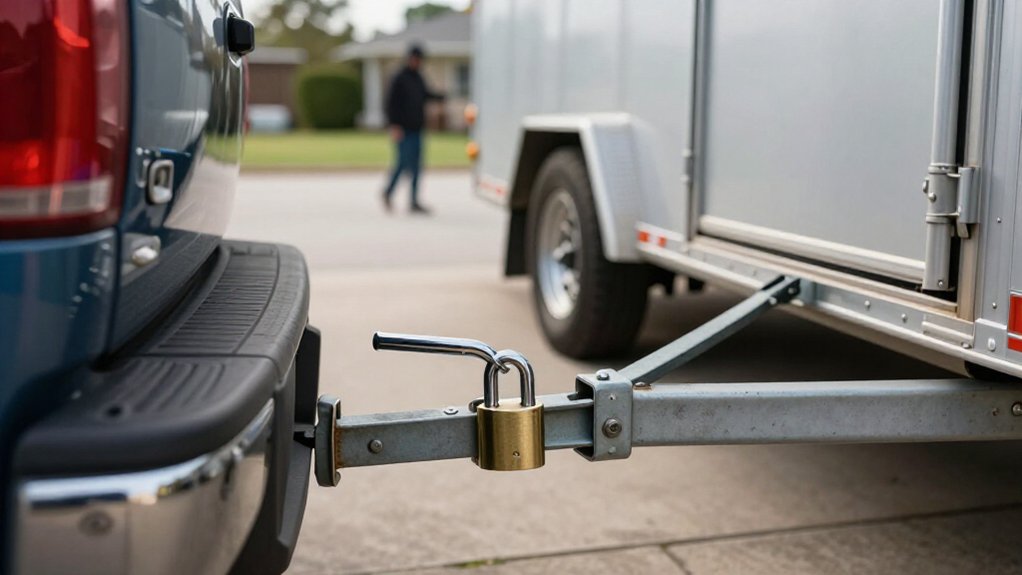
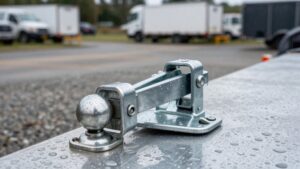
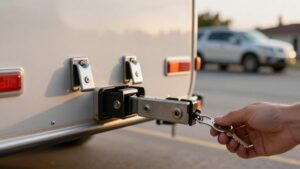
Yes, a trailer hitch lock is worth using when you leave a ball mount or drop hitch in your receiver: it blocks quick removal and can deter walk-off theft at an unattended jobsite.
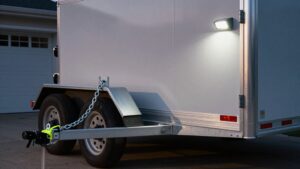
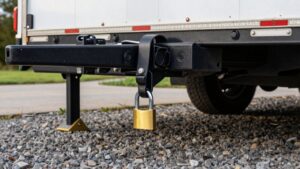
But it doesn’t secure an unhitched trailer; use a coupler lock to prevent someone attaching it to a tow ball.
Choose hardened steel, a snug fit, and a covered keyway for weather resistance.
The fit details below can help you choose correctly.
Hitch Locks: Limits and Benefits
When your trailer is hitched, a hitch lock replaces the standard pin with a keyed one, securing the ball mount or drop hitch in the receiver. It helps prevent quick-win theft by blocking someone from pulling the pin and removing the hitch accessory without tools. Choose a hardened-steel model with a weather-resistant mechanism and covered keyway to reduce corrosion and keep the lock usable outdoors.
A hitch lock protects this receiver connection; it doesn’t secure the trailer after you uncouple it, because the pin no longer joins the receiver to the coupler. Use a coupler lock when the trailer is unhitched, or add a ball or wheel lock for storage. Together, these devices address removal points, so match each lock to the trailer’s state.
Time Unattended at Jobsites
At an unattended jobsite, a locking hitch pin can stop a quick walk-off theft by preventing someone from pulling the ball mount or drop hitch out of the receiver.
When your trailer stays hitched, this pin secures the vehicle-to-hitch connection and makes removing the mount less convenient. It doesn’t secure an unhitched trailer: once you park it, the coupler remains available to be lowered onto a tow ball.
Use a coupler lock to prevent drive-away attachment. Match the lock to how you leave the trailer. Keep the hitch pin engaged whenever the trailer remains connected, and lock the coupler whenever you unhitch. This two-layer approach covers connection points, rather than relying on one device to protect a setup it wasn’t designed to secure.
Bolt-Cutter Resistance
Because thieves target the easiest point to cut, choose a hitch lock with hardened steel or a reinforced locking bar and a tight fit that leaves little room for bolt cutters to grip.
A strong body resists cutting at vulnerable points; robust geometry also denies cutters clean contact and leverage. Avoid soft metal sections that could separate the lock quickly.
| Feature | What it means |
|---|---|
| Hardened steel | Resists cutting at exposed points |
| Snug fit | Limits cutter access and leverage |
Find a tamper-resistant, weatherproof model with a reinforced shackle or locking bar. A loose universal fit can leave pry gaps where tools gain purchase. Choose proven heavy-duty construction rather than a cheap lock that may fail when you need it.
Keyed-Alike Convenience
Keyed-alike locks let you secure a hitch pin, coupler, and other accessories with one key, so you’ll carry fewer keys and manage locks more easily. Match locks to your setup, such as a hitch pin for a connected trailer and a coupler lock for a parked, unhitched trailer.
Key matching simplifies access but doesn’t change what each lock protects against.
One Key, Multiple Locks
When you use keyed-alike locks, one key can secure multiple compatible towing points, such as a locking hitch pin and a coupler lock. This setup helps when you switch receiver-mounted gear: the same key can lock a ball mount, drop hitch, bike rack, or cargo carrier, provided each unit accepts the matching lock.
You can also pair a coupler lock on an unhitched trailer with a hitch pin securing a drop hitch or ball mount in the receiver. Keyed-alike cylinders don’t change fitment requirements; choose a pin sized for your receiver, such as 5/8 inch for a 2-inch receiver or an appropriate 2.5- or 3-inch option for heavier-duty setups. Using one key across these points can reduce forgotten-device omissions, helping you cover more opportunities for walk-off theft or tampering. It doesn’t make an undersized or incompatible lock effective. Check each lock’s specifications before buying the keyed-alike set.
Streamlined Lock Management
If you use a coupler lock when your trailer’s unhitched and a hitch pin when it’s in the receiver, keyed-alike locks let one key operate both. You can secure the trailer while it’s uncoupled, then switch the lock to the receiver connection without checking which key fits.
Keyed-alike locks also work across receiver-mounted accessories, including ball mounts, drop hitches, bike racks, and cargo carriers. Before buying, match each lock to your receiver size—2, 2.5, or 3 inches—and verify the pin’s required length; keyed alike doesn’t mean universally compatible.
For dependable outdoor operation, choose weather-resistant construction, such as a corrosion-resistant finish and a protective keyway dust cap. These features help keep the shared key turning smoothly after exposure to rain, dirt, and road spray. Check locks for wear or binding.
Fewer Keys to Carry
Weather-resistant construction helps keep a shared key working outdoors, and keyed-alike locks reduce the number of keys you carry. A keyed-alike system lets you open multiple receiver-mounted locks with one key, such as a hitch pin and an accessory lock. If you switch trailers or routinely secure ball mounts, drop hitches, bike racks, or cargo carriers on the same vehicle, you won’t need to sort through separate keys.
Centralized access can speed pre-trip removal and lower the chance you leave a lock engaged; remove the hitch lock completely before driving. The same approach can simplify handling across tow rigs at camp, worksites, or public lots. Covered keyways and corrosion-resistant finishes help preserve cylinder operation through repeated outdoor lock cycles during regular outdoor use, too.
Match Locks to Your Setup
Choose a keyed-alike hitch lock when you want one key for multiple receiver-mounted accessories, such as ball mounts, bike racks, or cargo carriers. Match the lock to your receiver size: a standard 5/8-inch hitch pin style fits common 2-inch receivers, while a 2.5-inch heavy-duty system suits trucks such as F-250 and up, Ram 2500 and up, and Silverado/Sierra 2500HD and up.
For extra clearance, choose a long-shaft option, such as a 3-inch design, to reach through receiver walls and the accessory shaft. A keyed-alike system simplifies key management, but it doesn’t make a poor fit secure. Check for a snug interface without pry gaps.
If you secure multiple points on a trailer, matching keys can simplify access, but each lock protects only the connection it covers. A shared key won’t secure unrelated trailer components, so choose separate locks for couplers or other points and verify each lock’s rating.
Hitch Type and Theft Risk
Your receiver hitch’s risk depends on whether it’s hitched: use a locking pin to deter walk-off theft, and secure an exposed coupler to prevent drive-away theft.
Match the lock to your receiver size and pin dimensions so it fits without pry gaps; fifth-wheel setups need security suited to their coupling hardware. Parking location also matters, since thieves often target the easiest connection point.
Receiver Hitch Risks
A receiver hitch lock reduces walk-away theft risk when a trailer’s hitched by securing the ball mount or drop hitch in the receiver with a key-operated pin. It won’t stop someone from removing the trailer once it’s unhitched; the receiver lock protects only the receiver-mounted component. Match the pin to your receiver’s diameter and length.
A 2.5-inch receiver on an F-250, Ram 2500, or 2500HD-class truck may need a pin than a 3-inch receiver; a poor fit can create pry access. Choose hardened steel and a tamper-resistant cylinder to resist sawing, drilling, and hammering. Cheaper mechanisms may fail under attack.
Remove the lock before driving: it isn’t designed for towing, and leaving it installed can damage the hitch or coupler without reducing theft risk.
Coupler Hitch Risks
When your trailer’s unhitched and parked, a coupler lock blocks a thief from latching onto the ball and towing it away. This is the primary drive-away risk while the trailer sits unattended, so choose a lock designed for your coupler’s shape and size. A poor fit can leave gaps that give tools room to attack the connection.
A receiver hitch lock serves a different purpose: if you leave a drop hitch or ball mount installed, a locking hitch pin helps prevent someone from pulling that accessory out. It won’t secure an unhitched trailer, because the receiver connection no longer carries it. Lock strength matters too. Soft, low-durability models may yield more readily to bolt cutters, drilling, or hammer-and-pry attacks than hardened-steel options. Verify compatibility.
Fifth-Wheel Security
Fifth-wheel security depends on where the hitch locks: a receiver pin secures a ball mount or drop hitch only while it’s installed, while a fifth-wheel lock must restrict access to the coupling or adapter interface.
That distinction matters because a receiver pin can block walk-off removal of a ball-mount assembly, but it won’t secure a fifth wheel’s coupling when thieves target its locking mechanism.
If you tow a fifth wheel, choose a lock that covers the actual hitch or adapter access point; one lock can’t address every defeat path. A fully hitched trailer may still be driven away if other components remain unsecured. When you detach it, the hitch connection disappears, so you’ll need additional barriers suited to its unhitched state.
Favor hardened steel and a strong cylinder to resist fast sawing, drilling, or picking attempts; cheap locks may yield quickly. Check fit and operation before buying, since a durable lock that doesn’t engage the intended interface won’t protect.
Parking Location Matters
At public lots, campgrounds, and work sites, exposed trailers offer thieves quick opportunities, so match the lock to how you’ve parked. Your hitch type and parking state determine what a lock can secure. When the trailer remains hitched, a locking hitch pin secures the drop hitch or ball mount in the receiver, preventing someone from removing the accessory and walking off with it. It doesn’t secure an unhitched trailer.
If you leave the trailer unattached, use a coupler lock; it blocks a thief from fitting the coupler onto a tow ball and driving away. Public lots, campgrounds, and work sites raise exposure because thieves often seek quick opportunities, so block the likely first step. If you move between home, camp, and work, carry both locks: use the hitch pin when hitched and the coupler lock when unhitched. One lock can’t cover both parking states reliably.
Receiver Pin Diameter Matters
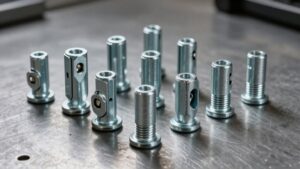
A locking hitch pin must match the receiver and accessory’s pin holes; a common size is 5/8 inch for 2-inch receivers, while larger 2.5-inch receivers may require a heavy-duty model.
Before buying, confirm your receiver’s diameter and check that the accessory shaft’s hole aligns. A wrong-size pin may not pass through receiver walls and the mount, leaving a gap or insecure fit that can give a thief leverage to pry at the connection.
For a 2.5-inch receiver, use a pin for that platform; heavy-duty options may include a weatherproof cylinder and two keys. When you switch vehicles or accessories, a ball mount, drop hitch, cargo carrier, or bike rack, recheck fitment. A longer shaft can add reach, but it can’t correct a diameter mismatch.
Lock Corrosion in Road Salt
Road salt and moisture can corrode inexpensive hitch-lock pins and cylinders, causing the mechanism to stick or jam. Choose hardened-steel bodies with powder-coated or chrome-plated, weather-resistant finishes; these help protect the working parts, but they don’t make a lock corrosion-proof. Use a keyway dust cap or watertight cover to keep salty spray and grit out of the cylinder, where contamination can cause sticking, jamming, or intermittent operation.
In salted winter areas, inspect the lock after storms, wipe away brine, and keep the mechanism clean and dry so deposits don’t corrode internal moving parts. Choose a tamper-resistant, corrosion-resistant model that can resist drilling or sawing and still function after exposure; a seized lock offers little practical security when salted roads are routine.
Shank Length and Fit Clearance
Matching the shank length to your receiver and accessory makes sure the locking pin passes completely through the accessory shaft and both receiver walls. A mismatch leaves the pin unsupported: too short may not align; excess length can obstruct the receiver or prevent seating.
Match pin to receiver size, 2-inch or 2.5-inch, and choose a long-shaft model for a longer drop hitch. Flush contact leaves no daylight gap for prying. It also limits leverage and movement from towing vibration.
- Insert the pin through the accessory and both receiver walls.
- Check that the lock head sits flush and closes fully.
- Pull the locked assembly; reject any looseness.
- Test fit before each trip, especially after changing accessories.
If the lock won’t seat cleanly, correct the length or clearance mismatch before towing.
Keyway Dust-Cover Protection
Once the lock fits securely, protect its cylinder from the elements with a tight, weather-resistant keyway dust cover.
A sealed keyway keeps rain, snow, and dust out; grit and moisture can gum up the cylinder, making key insertion or turning unreliable over time, especially when you park outdoors. A powder-coated or chrome-plated finish with a covered keyway generally resists corrosion better than bare or poorly sealed metal.
Use this routine to protect your lock:
- Check the cover seals before exposure.
- Remove the key; close the cover fully.
- Before long storage, inspect the cap for grit or damage.
- Clear blockages gently; don’t force the key.
A sealed cylinder also limits contaminant-related wear, helping your lock maintain consistent resistance to tampering and picking, though a dust cover can’t make it theft-proof or invulnerable.
Conclusion
A trailer hitch lock adds a useful layer of security, but it won’t make your trailer theft-proof. Choose a lock that matches your receiver’s pin diameter and leaves enough clearance for a snug fit. Treat bolt-cutter resistance as a delay, not a guarantee, and don’t assume keyed-alike locks offer stronger protection.
At jobsites or during long unattended stops, secure the trailer itself to a fixed point when possible. Clean and lubricate the lock regularly, especially after exposure to road salt, and keep its key accessible.
What Size Trailer Hitch Do I Need? Class Selector
Enter loaded trailer weight, tongue weight and your ratings to get the minimum hitch class (I–IV) and see which rating sets your limit.
Tongue Jack Rating Calculator
Estimate tongue weight from trailer weight and a cited 10-15% range, then check whether your tongue jack's rating covers it.
Hitch Bike Rack Load & Fit Checker
Check your e-bikes and hitch bike rack against your receiver's tongue-weight rating and the rack's own capacity, in lb or kg.
Hitch Step Fit Checker
Check if a hitch step fits your receiver: shank vs opening, step load rating vs the heaviest user, and approximate platform height.
Towing & Trailer App Finder
Filter 13 verified towing apps by purpose, platform, brand, hardware and price, including GM, camera, leveling, brake and weight apps.