Can a Gooseneck Hitch Pull a Fifth Wheel? Adapter Pros, Cons and Warranty Risks
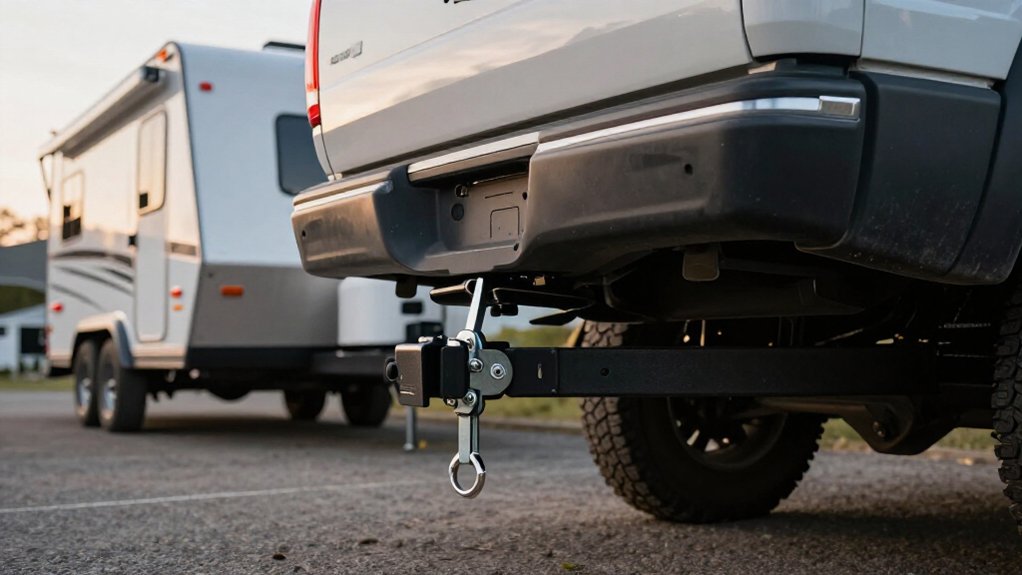
Yes, you can tow a fifth-wheel trailer with a gooseneck hitch using an approved adapter, often reusing your existing ball. But don’t assume it fits: confirm the exact pin-box model and required accessories with the trailer maker.
Adapters can change turning forces, ride, and frame loads, affecting warranty coverage.
Match ratings to loaded trailer and pin weight, then verify bed-rail clearance under load and articulation.
Written approval and documented checks help protect your setup.
Continue for key risks and checks.
Warranty and Frame Risks
When you use a fifth-wheel-to-gooseneck adapter, the lower ball connection can increase leverage on the trailer’s front frame and pin box, potentially affecting Lippert’s limited frame warranty. That risk isn’t a blanket prohibition: Lippert guidance in document CCD-0004318 identifies the Reese Goose Box 5th-Wheel-to-Gooseneck Air Ride Coupler Adapter (#RP85FR) as the specific approved workaround, not any adapter.
It replaces certain pin boxes, including Lippert 1621, 1716 and 0719, and Rhino/Fabex PB 600-series models. Coverage may depend on your exact configuration and required accessories, such as safety chains (#RP49151) or spacer kit (#RP97FR). Get written confirmation before towing that approval is current for your trailer and pin box, and retain it with your records. Confirm every required component is installed; approval for a different setup won’t establish your coverage.
Fifth-Wheel Adapter Basics
A fifth-wheel adapter lets you tow a fifth-wheel trailer from a gooseneck ball, but it changes the trailer’s designed hitch geometry.
Most designs replace or relocate the kingpin’s effective connection point, so turning forces and ride behavior may differ from a conventional fifth-wheel hitch. Don’t assume an adapter fits every pin box: confirm the exact model and approved hardware with the trailer and adapter manufacturers. For example, Reese Goose Box approval applies only to specified Lippert pin-box series, including certain 1621, 1716, and 0719 configurations.
Match the adapter’s ratings to your fully loaded trailer, including pin weight; some approved applications rate up to 20,000 pounds gross and 5,000 pounds pin weight. Follow installation instructions, and verify whether your setup needs safety chains or spacers. Get written warranty guidance before towing. Check both manuals for approved combinations and required installation components before you tow it safely.
Bed-Rail Clearance Checks
Before towing, check bed-rail clearance with the trailer loaded, since an adapter can change the pivot geometry and load can increase suspension sag. Measure separation at rest and during full articulation, braking, acceleration, and rough sections, when fore-and-aft movement can bring the trailer closer to the rails. Don’t rely on an unloaded truck or a level, stationary setup: pin weight and suspension compression change the geometry.
In a short-bed truck, check the tightest turn you might encounter, not your route. Then assess bumps and uneven roads, where compression can reduce underside clearance and cause rail contact.
If you can’t confirm separation throughout these conditions, don’t tow until an installer checks the setup. Document your checks and follow both manufacturers’ clearance and warranty requirements.
Kingpin-Coupler Adapter Designs
Kingpin-to-gooseneck adapters vary in design, from rigid couplers to purpose-built replacement pin boxes, and attach by clamping or bolting to your pin box or kingpin.
Check that the adapter matches your kingpin and pin-box model; an incorrect fit can create clearance and load-path problems or affect your warranty. Confirm its rated trailer and vertical loads meet or exceed your requirements, since the altered geometry can increase stress on the pin box and frame.
Adapter Types
When you connect a fifth wheel to a gooseneck ball, the adapter design affects ride quality, compatibility, and warranty coverage. Kingpin-to-gooseneck couplers replace the kingpin connection with a coupler that reaches the ball. Fixed, rigid models offer a simple route, but their limited cushioning can transmit road shock, chucking, and vibration into your trailer.
| Design | Trade-off |
|---|---|
| Rigid | More shock; potentially harsher towing |
| Approved air-ride | Cushioned; check fit and ratings |
Verify your pin-box model and fully loaded trailer weight against adapter ratings. RP85FR, for example, fits Lippert, Rhino, or Fabex pin boxes and carries 20,000-lb weight and 5,000-lb tongue limits. Warranty guidance may approve this replacement design, but don’t assume all adapters qualify. Check whether your setup needs safety chains or a spacer kit before towing.
Coupler Attachment Methods
Beyond ride quality, the attachment method affects pin-box loads and fit. A kingpin-to-gooseneck adapter bolts or clamps onto the existing pin-box area, replacing the kingpin interface with a ball coupler. By placing the ball below the original pivot point, it changes hitch geometry and adds leverage. That leverage can raise bending loads on the pin-box mounting structure during braking, acceleration, and bumps.
Designs differ in articulation: rigid metal linkages may transmit road shock more directly than an engineered gooseneck box, affecting ride quality.
For a safer installation, use the adapter kit approved for your pin-box model, plus required safety chains or spacers. Don’t assume a generic clamp-on unit is acceptable. An unapproved attachment can cause clearance or turning problems and may jeopardize warranty coverage.
Compatibility With Kingpins
Although many adapters clamp or bolt onto the existing kingpin area, they don’t fit every pin-box design. Check your trailer’s exact kingpin, coupler, and pin-box model against the adapter manufacturer’s approved fit list; a unit designed for certain Lippert, Rhino, or Fabex pin boxes may not suit another design. Confirm the adapter’s rating covers your trailer’s fully loaded weight and that its kingpin interface can handle expected pin loads.
The adapter lowers the pivot from the original kingpin height to the gooseneck ball, changing the lever arm and redistributing turning, braking, and bump forces through the pin-box structure. Verify installed height and turning clearance, especially with a short-bed truck, where the trailer underside may contact the bed or rails. Check your trailer warranty before installation; approval matters.
Trailer Weight and Ratings
Check that your gooseneck hitch or approved adapter meets or exceeds your trailer’s GVWR and actual loaded pin weight, not just its dry weight. The Reese Goose Box RP85FR, for example, is rated for 20,000 pounds and up to 5,000 pounds of pin weight, so exceeding either limit can compromise safety and warranty coverage.
Confirm your truck, hitch, and adapter are compatible with your exact pin box configuration, and that their combined ratings handle the loaded hitch forces.
Gross Trailer Weight
When you tow a fifth wheel with a gooseneck adapter, size the entire setup for the trailer’s fully loaded gross trailer weight (GTW), not its empty or typical weight.
Your truck’s hitch and ball, adapter, trailer structure, axles, tires, and suspension must each support that load. A component rating alone doesn’t certify the combination: the Reese Goose Box RP85FR lists a 20,000-pound capacity, but you need to confirm each vehicle and trailer limit. GTW also determines braking demand and axle loading. Check loaded axle weights against axle ratings, and verify tire load capacity and suspension limits.
If any rating falls short, reduce cargo or choose compatible equipment; don’t rely on the adapter’s number alone. Follow manufacturer installation, maintenance, and warranty requirements.
Pin Weight Limits
Pin weight has its own limit, separate from the trailer’s gross weight rating. An adapter’s gross rating doesn’t tell you how much kingpin load it can transfer to the ball. For example, the Reese RP85FR is rated for 20,000 pounds of gross trailer weight but up to 5,000 pounds of pin weight.
Check the adapter’s pin limit, your trailer and pin-box requirements, and the gooseneck hitch’s published tongue-weight rating; the lowest limit controls.
Use the trailer’s fully loaded pin weight, not an empty estimate. Cargo shifted forward or suspension settling can raise downforce. The adapter changes the load path, so confirm the pin box and connection area can handle the load. Exceeding any component’s rating risks damage, loss of control, and warranty disputes. When specs conflict or remain unclear, get manufacturer approval before towing.
Combined Ratings
Beyond pin-weight limits, the fully loaded trailer weight must stay within the adapter and hitch ratings because the adapter changes how loads reach the truck. Check the trailer’s GVWR and loaded weight against hitch capacity; don’t assume kingpin ratings transfer to this loading path.
Compare measured pin weight with the adapter’s vertical-load limit. Some approved units support up to 5,000 pounds, but your pin weight must remain within that figure.
For warranty protection, confirm an approved unit fits your pin-box model. Reese Goose Box RP85FR, for example, is rated for 20,000 pounds and up to 5,000 pounds of tongue weight. Include spacer kits and safety chains when checking ratings; never exceed the lowest-rated component. Verify the truck’s GVWR, GCWR, and receiver ratings too; an adapter can’t raise them.
Reuse Existing Gooseneck Ball
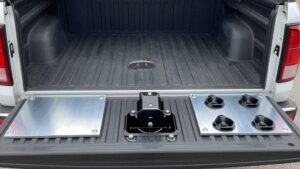
An approved gooseneck adapter lets you reuse your existing ball instead of installing a separate fifth-wheel hitch: its coupler body mates with the trailer’s pin box and transfers towing forces to the ball. That means you can keep one bed-mounted hitch system rather than add a fifth-wheel hitch, but the adapter must be approved for your trailer and truck. Check your exact pin-box model against the maker’s fit list, and install required accessories.
Reese’s RP85FR carries a 20,000-pound rating and supports up to 5,000 pounds of tongue weight; stay within its limits and your vehicle ratings. The ball relocates the connection point, changing geometry and affecting ride and loads on the trailer’s front structure. Verify clearance and compatibility, and seek manufacturer approval to protect warranty coverage.
Added Coupler Wear
Because a gooseneck adapter lowers the effective hitch point below the kingpin, it can increase shock and leverage on the pin box, accelerating wear over time. Rigid metal extensions can transmit road impacts directly to mating coupler surfaces. If you notice chucking, repeated micro-motion may polish or score contact points, so inspect the adapter and pin box regularly; stop towing if you find cracks, looseness, deformation, or abnormal contact.
| Wear factor | What to check |
|---|---|
| Load | Stay within rated capacities |
| Fit | Match adapter to pin-box family |
| Contact | Look for scoring or polishing |
| Movement | Check for looseness or chucking |
Near-limit loading magnifies wear. Match your adapter to the pin-box family; mismatches can concentrate loads. Check both manufacturers’ ratings and warranty terms before towing, and inspect contact surfaces.
Pin-Box Ride Differences
A gooseneck adapter changes the pin box’s ride geometry: the lower connection point can reduce clearance during turns and over uneven ground, while the altered force path may transmit braking, acceleration, and bump loads differently than the trailer’s pin box was designed to handle.
On the road, you may notice:
- Rigid adapters can send road shock forward, increasing chucking or vibration.
- Changed articulation may affect tracking and stability, especially at low speeds or on rough pavement.
- Watch for fore-and-aft movement and reduced clearance as the trailer turns or crosses uneven ground.
- Different loads can stress the pin-box mounting area over time; follow applicable guidance and inspect for movement or damage.
Don’t assume a familiar ride means loads remain within the pin box’s design limits.
Check Trailer Manufacturer Approval
Before you buy a gooseneck-to-fifth-wheel adapter, check your trailer manufacturer’s written guidance and confirm approval for your exact pin-box model. Don’t rely on a dealer’s verbal assurance; get the approval and warranty conditions in writing. Look for an approved adapter or replacement pin-box option in the paperwork.
For example, Lippert’s guidance CCD-0004318 approves the Reese Goose Box RP85FR for warranty retention, but only with specified Lippert, Rhino, or Fabex pin-box replacements. Check that your exact pin-box configuration matches—not merely the brand—and verify capacities against your trailer’s fully loaded weight and tongue load. The cited RP85FR rating is 20,000 pounds, with tongue capacity up to 5,000 pounds. Ask warranty staff if your setup needs safety-chain or spacer kits; requirements vary by pin box.
Conclusion
You can pull a fifth wheel with a gooseneck hitch only when the adapter, truck, and trailer are compatible and properly rated. Check bed-rail clearance, trailer weight, and manufacturer approval before you tow.
Reusing your gooseneck ball may simplify setup, but an adapter can increase coupler wear and change how the pin box rides. Most importantly, confirm the trailer maker permits the conversion: an unapproved adapter could affect frame integrity and warranty coverage. When in doubt, consult the manufacturer or a qualified installer.