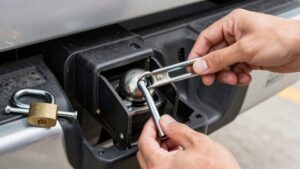
Do Trailer Wheel Locks Work? Boots, Clamps and Lug Locks Tested Against Thieves
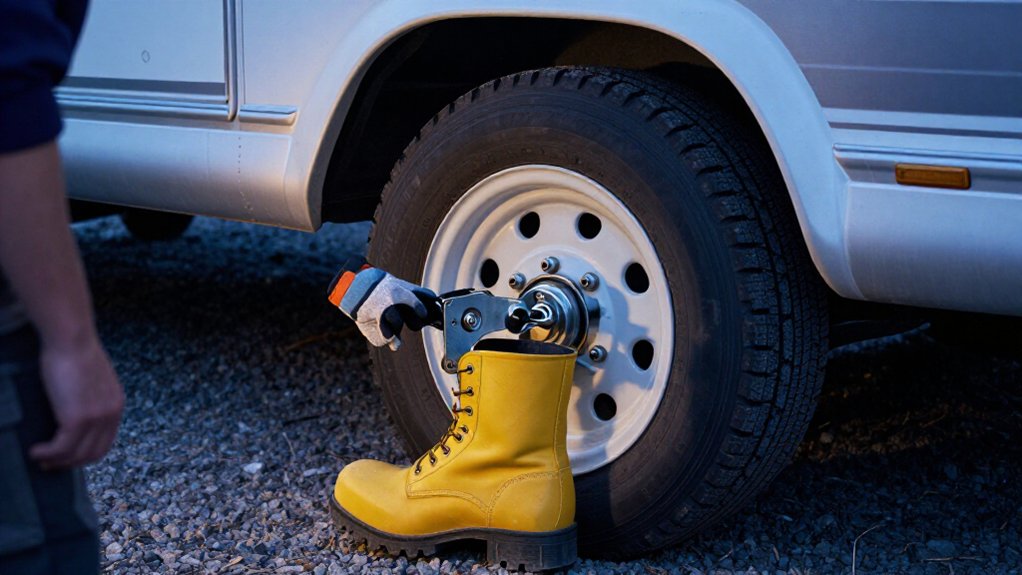
Trailer wheel locks deter opportunistic thieves, but they won’t guarantee security. A snug clamp that encircles the wheel resists movement better than a loose boot or lug-covering lock, which impedes wheel removal. Hardened steel and enclosed hardware can delay grinders, while exposed gaps invite tool access.
Check tire width, spoke spacing, and offset; pressure changes can loosen fit. For overnight storage, secure a second wheel or hitch too. More practical fit and security checks can help you choose wisely.
Boots vs. Lug Locks
Boots and lug locks prevent wheel removal only when they fit securely over the lug area; if a boot can slip off after the tire deflates, its protection drops sharply. Before you choose one, inspect how it covers the lug area and whether you can move it by hand. A loose fit or exposed access point gives a thief room to work around the lock.
If tire deflation creates enough clearance for the boot to slide off, you lose much of its value. A boot lock used alone also leaves the wheel less protected against rotation than a system that physically restrains it. Choose a lug-style boot only when its coverage stays solid and it has no slack after installation.
Then inspect the lock periodically, especially after changing tire pressure or repositioning it. This fit-based check matters more than product labels: you need a secure hold at the wheel, not merely a visible deterrent.
Cordless Grinder Resistance
A secure fit also limits where a thief can apply a cordless grinder. The tool cuts softer metals, such as lightweight zinc alloy, far faster than thick, hardened steel. So the lock’s material and geometry matter more than its label.
Choose a wheel lock with a thick, tough housing, such as a solid-alloy or stainless design. A shell can slow a cutting wheel, though no lock should be treated as grinder-proof. Fully enclosed, tamper-resistant internals also deny the attacker bite points.
Check that the boot or clamp fits snugly, with slack; a tight fit restricts tool placement and leverage. Exposed hardware, slipping boots, or secured clamp arms give the grinder access to vulnerable parts. Before buying, inspect seams, edges, and hardware for cutting targets.
Towing With a Locked Boot
Many boot locks resist towing by preventing wheel rotation and covering the lug nuts, but only while they stay firmly seated. Install the boot between spokes near ground, then tighten it enough to clamp securely; excessive or insufficient force can undermine fit.
| Scenario | Effect | Check |
|---|---|---|
| Deflation | Boot may slip | Inspect tire |
| Prying | Can create leverage | Recheck seating |
| Repositioning | May loosen fit | Confirm clamp |
For example, the PanelTech Boot Lock covers the rim and lug nuts, yet deflating the tire can let it slip off.
Use it as one layer, not your sole defense: inspect fit before towing and pair it with other security measures. Movement stops only while the boot stays seated, so treat tampering as a real vulnerability before each towing attempt.
Hardened Shackle Construction
When you compare trailer wheel locks, check whether the shackle uses hardened steel rather than soft metal that can bend under leverage. A hardened shackle can resist cutting better, but an exposed design still gives tools a place to bite.
Choose a closely fitted lock with minimal play and a shackle protected by a thick housing.
Hardened Steel Shackle
For better cut resistance, choose a trailer wheel lock with a solid hardened-steel shackle rather than thin hollow tubing. The shackle is a likely target during theft, so its material and construction matter. Hardened steel generally handles hand tools and basic prying better than lighter alloys, making a quick defeat less likely.
Check how the lock body meets the shackle: a body that encloses the shackle and latching point limits access for drilling or tool placement. Fit matters, too. When you install the lock, eliminate slack between it and the wheel; excess clearance gives an attacker room to load weak points.
For added delay, consider a shielded shackle or a high-security core, such as a disc-detainer or Medeco option. These features work together; none makes a poorly fitted lock secure.
Resistance to Cutting
A hardened shackle helps, but a wheel lock’s cutting resistance also depends on the strength and exposure of its load-bearing parts. Choose locks built around hardened or alloy-steel shanks and housings; hollow tubing and zinc alloy can take fewer cuts to saw through or break. Thick cast or heavy-gauge steel boots and clamps make attackers spend time and use more aggressive tools to sever structural points.
Check whether steel shielding encloses the body and areas: covering those parts can force a cutter through a larger, hardened cross-section rather than an exposed weak member. Don’t judge protection by the cylinder. A lock can resist picking yet fail once a blade reaches a thin arm or weak structural core. Prioritize robust materials and protected load-bearing metal.
Shackle Design and Fit
Although hardened steel improves a wheel lock’s resistance to bending and cutting, the shackle must also fit the wheel securely. Choose solid-steel construction over hollow tubing or lightweight zinc alloy; material strength won’t compensate for poor sizing. Match the encircling width to your tire width and wheel spacing, not rim diameter. The shackle should close fully and clamp tightly, leaving little slack for prying, drilling alignment, or slippage.
| Check | Practical test |
|---|---|
| Material | Solid hardened steel |
| Width | Fits tire and spacing |
| Engagement | Closes without gaps |
| Installation | Arms between spokes, low |
Position the arms near the ground and tighten enough that you can’t pull the lock off the wheel face. An oversized or adjustable shackle that seats loosely creates leverage points, even when hardened. Verify snug engagement before leaving your trailer unattended.
Wheel and Tire Dimensions
Measure your tire’s width against the lock’s maximum encircling width; rim diameter alone won’t confirm a secure fit. Check wheel diameter and the lock’s inside diameter or arm spacing before buying. Allow clearance for the tread and verify the lock can sit securely around the wheel without slack.
Measure Tire Width
Tire width, measured from sidewall to sidewall, is the primary dimension to check because a wheel lock must fit around the tire—not just the rim. Compare that width with the lock’s stated inside width or encircling range. A fixed 11-inch opening may not suit your tire. Avoid a loose fit: slack can give a thief room to pry the clamp.
Check whether the lock can sit between spokes without hitting suspension, brake drums, or axle hardware. For boot-style or lug-cover locks, measure clearance around the rim and lug pattern; snug coverage helps prevent slipping through gaps. Photograph the wheel and record tire width, rim size, and spacing cues. Compare them with the lock’s adjustable range and fit limits rather than relying on “universal” claims.
Check Wheel Diameter
Beyond tire width, check the wheel diameter and the tire’s overall outside diameter against the lock’s stated fit range. Measure both wheel diameter and tire width; don’t rely on rim size alone. A clamp’s maximum encircling width must match your tire’s actual width, while an advertised inside diameter, such as 11-inch, can restrict compatible wheel sizes.
For clamp-style locks, check that the pincer arms close fully through your wheel’s spoke or rim spacing without slack. With boot- or lug-style locks, verify the boot reaches and covers the lug area so it won’t slip if the tire deflates or the suspension shifts. Before buying, take a photo and measure the wheel/tire area, including brake drums and axle offset; a mismatch can undermine retention.
Allow Clearance for Tread
To prevent a poor fit, compare the lock’s maximum encircling or arm width with your tire’s actual tread and sidewall width, not just the rim size. Measure across the tire’s outer tread and sidewall, then check that dimension against the manufacturer’s stated fit range. For example, the Zento Deals 2-pack lists an 11-inch inside diameter, which may exclude larger tires.
With a clamp-style lock, account for tread curvature and spoke spacing. Position it between spokes near the ground; it should sit securely without rocking. For a boot or lug-lock style, check that tread blocks and sidewall flare won’t obstruct the boot from covering its target area. If it can’t seat fully, someone may slip it off more easily.
Before buying, photograph and measure the wheel and axle area, including offsets and brake-drum clearance, to verify workable geometry.
Securing a Boat Trailer Overnight
When you leave a boat trailer overnight, a snug wheel lock can deter theft by blocking wheel rotation or removal and forcing thieves to spend more time defeating it.
When choosing one, prioritize hardened steel and a close fit. Match the lock to your wheel’s tire-and-spoke spacing, not just tire diameter; check its maximum encircling width or inside diameter so it can’t leave a pry gap. Fully close and latch the device with minimal slack. Position it between spokes.
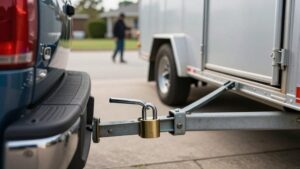
A boot covering lugs may help, though tire deflation can let it slip off; a clamp that encircles the wheel is more reliable. Add a coupler or hitch lock as a second layer. No wheel lock guarantees security, but a firmly fitted device makes removal harder.
Keyed-Alike Vulnerabilities
Keyed-alike wheel locks simplify managing multiple trailers, but they expand the risk if a key goes missing: the same key may open every lock in the set. Treat keyed-alike access as a fleet-control decision, not merely a convenience. If someone steals or copies your key, they may disable several locks, and defeating one shared-key model can make the others vulnerable.
Risk rises when you pair that arrangement with budget boots or clamps whose push-lock mechanisms or cores are easy to bypass. You can reduce exposure by limiting copies, keeping keys on-person, and storing spares in a controlled location. For a fleet, assign responsibility for each key and audit copy counts regularly. Keyed-alike options simplify dispatch but concentrate access. Keep your key-control plan current as trailers and staff roles change.
Locking Only One Wheel
Beyond controlling who holds the key, decide how much of the trailer you need to secure: locking one wheel adds visible resistance and can delay an opportunistic thief, but it won’t immobilize the trailer if its other wheels can roll. Treat one lock as delay, not a guarantee; thieves may target the unlocked wheel. If the remaining wheels can roll, the trailer can still move; assess the parking setup and exposure before relying on one clamp.
- Choose the most accessible, hardest-to-reach wheel.
- Set clamp arms and casing snugly; slack can invite prying.
- A loose universal fit can make defeat quicker.
- Lug-covering boots rely on stopping wheel removal; tire deflation may let a boot slip off.
- Add a second lock when practical to restrict rolling.
Measure Wheel Offset First
Before buying a wheel clamp, measure the wheel offset and clearance around the axle, brake, and spokes. Offset shows how the wheel sits relative to the axle, drum or rotor, and spoke gaps; that space determines whether a clamp seats fully and locks safely.
Don’t judge fit by tire diameter alone. Compare the lock’s maximum inside diameter or encircling width with your actual tire and rim, then check usable contact surfaces.
| Check | Why |
|---|---|
| Offset | Confirms wheel position |
| Axle clearance | Prevents interference |
| Lug profile | Helps boots seat |
If offset pushes the wheel inward, a universal clamp may sit loose or contact only part of the rim, leaving slack to exploit. Lug boots need clearance around nuts and the inner profile to stay seated. Photograph and verify offset and axle clearance before buying.
Conclusion
You need more than a visible lock to protect a trailer. A boot can deter casual theft, but a cordless grinder may defeat exposed metal, and towing remains possible if fit or installation is poor. Pair a well-fitted, hardened-shackle boot with lug locks, secure both wheels when practical, and avoid shared-key weaknesses.
Before leaving your boat trailer overnight, verify clearance, lock engagement, and wheel dimensions; layered security buys time, not certainty against determined thieves.