How Does a Trailer Coupler Lock Work? Ball, Latch and Universal Designs
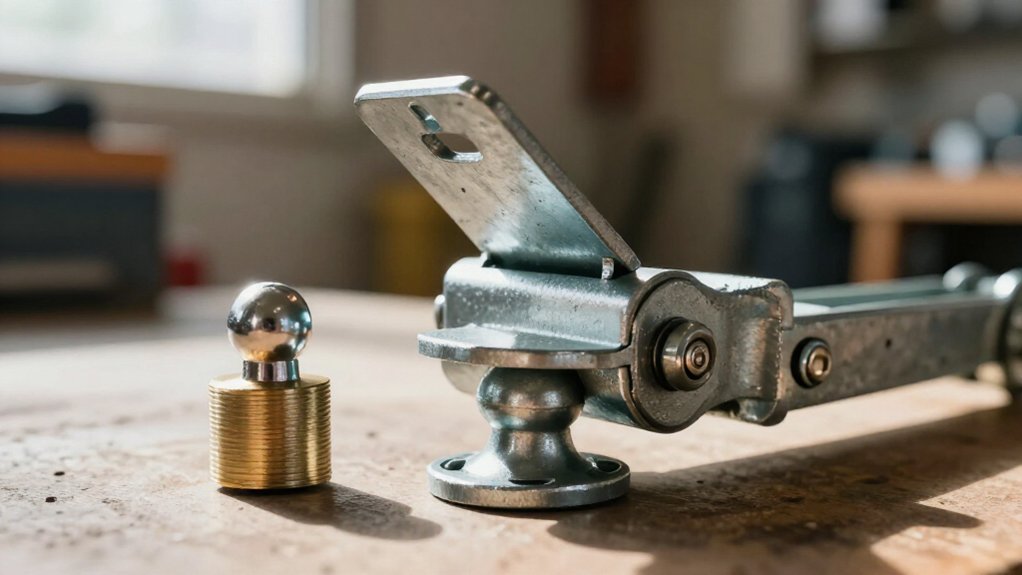
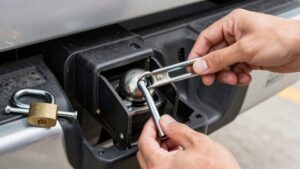
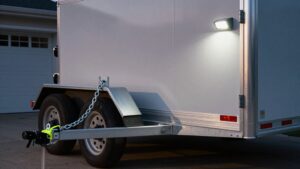
A trailer coupler lock secures an unhitched trailer by blocking the coupler opening or immobilizing its latch, so a hitch ball can’t seat.
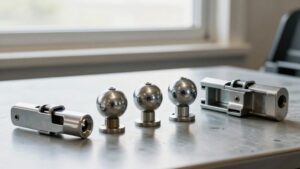
Plug-and-bar models insert a keyed plug and use a bar to resist latch movement.
Universal designs may fit 1-7/8-inch, 2-inch, and 2-5/16-inch couplers, but you must confirm full seating, latch coverage, and no usable gap.
Check breakaway cable clearance and avoid restricting surge-brake parts.
Next, check fit, engagement, and safe parking details.
Locking the Coupler Opening
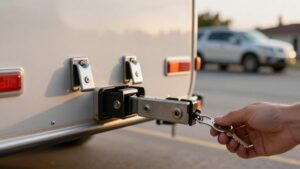
A trailer coupler lock blocks the opening so the latch can’t rotate onto a tow ball. The lock sits across the coupler’s front opening, covering the latch area at the tongue. When you secure it, check that its edges meet the coupler without leaving a workable path to the latch. Any exposed space may let someone reach or manipulate latch parts, reducing protection.
Fit depends on the coupler’s shape as well as the hitch ball’s size. Measure the lock location, including the outer lip width and rim shape, before choosing a universal model. An unusually wide rim can prevent proper engagement, leaving the opening partly uncovered. Don’t assume a lock fits because its rating lists your ball size. Confirm full coverage and secure seating.
Plug-and-Bar Locking
With the trailer unhitched, a plug-and-bar lock inserts a plug into the coupler opening or latch area to block the hitch ball from seating. A keyed cylinder secures the plug. Once engaged, a bar spans the coupler body, stopping you from pushing, lifting, or rotating the latch into its hitch-ready position.
This design depends on your coupler’s geometry: the plug must sit at the correct depth and position to block the latch path. Check fit at the coupler and latch interface, not just ball size; the bar must cover that area without leaving a usable gap. Use this lock only when the trailer’s unhitched for parking or storage. Blocking attachment makes a hookup and departure physically difficult, but it doesn’t replace appropriate theft-prevention measures.
Overnight Campground Security Walkthrough
During an overnight campground security walkthrough, check that the coupler lock is fully seated and the latch area has zero visible play. Look closely at the lock body, the coupler socket, and the latch cover.
A floating latch or partial coverage signals incomplete engagement; don’t assume the key turn alone secured the assembly. The lock blocks the latch path, preventing the coupler from accepting a hitch ball while parked.
If your model uses an inner slide, confirm it remains inserted in the socket and its shield covers the latch, limiting access and pry points. Check for movement, then relock any part that shifts.
Keep the trailer on ground, set its parking brake if equipped, and inspect doors and stabilizers as part of your routine.
Universal Lock Fit
A universal adjustable coupler lock may fit common ball sizes, but you must also check that its bar matches the coupler’s rim and fully covers the latch. Adjust the locking points, then confirm the lock seats securely with enough clearance to block latch movement.
Measure the coupler lip’s width and height at the lock position; if the shape prevents engagement, choose a compatible coupler-specific lock.
Universal Fit Compatibility
Although a trailer coupler lock may be labeled “universal,” it fits only if its bar or shroud matches the coupler’s latch area and rim dimensions. Universal locks commonly accommodate 1-7/8-inch, 2-inch, and 2-5/16-inch ball couplers, but those ratings don’t guarantee body compatibility. Your coupler may be wider than common or have an outer lip that blocks full engagement at the mouth or latch.
A U-shaped or clamp-style barrier must sit around the portion of the body its design targets; misplaced latch geometry can prevent closure or leave the latch exposed.
Before use, confirm the ball size when relevant and measure rim width and height where the lock sits. You can try the alternate orientation, but rotation won’t correct a dimensional mismatch. Don’t tow.
Adjustable Locking Mechanisms
When the coupler matches its contact points, an adjustable universal lock uses a U-shaped bar, often with about 11 positions, to fit standard 1-7/8-inch, 2-inch, and 2-5/16-inch couplers. The bar should clamp around the coupler’s top or a defined rim; its keyed body blocks latch movement, helping prevent opening. Your fit still depends on outer geometry, not ball diameter alone. A wide rim or unusual profile may keep the bar from seating fully in its housing. Don’t treat partial engagement as secure; excess clearance may leave the latch usable.
| Feature | Function |
|---|---|
| U-shaped bar | Adjusts across standard coupler sizes |
| Keyed body | Restrains latch movement when engaged |
Verify full seating and key engagement; ball-size compatibility alone doesn’t prove the coupler is secured for towing.
Measuring for Proper Fit
Before choosing a universal coupler lock, chock the trailer wheels and open the latch, then measure the coupler lip’s width side-to-side and its height or depth where the lock will contact it. Measure dimensions in inches at the exact seating point; fit charts often list width and height separately. Check the coupler’s ball size marking, commonly 1-7/8-inch, 2-inch, or 2-5/16-inch.
If paint or rust hides it, use calipers to measure the ball seat’s inside diameter. Don’t assume a ball size match guarantees fit: a U-shaped bar or puck/slide head may not engage a wider rim. Compare measurements with the fit chart, and confirm the lock covers the latch. Extra clearance can leave it partly exposed, reducing protection. Recheck fit whenever you switch couplers or hardware.
Locking a Surge-Brake Coupler
First, identify your surge-brake coupler by its size and latch or housing shape, since universal locks may not fit. Use an approved lock that blocks the hitch opening or latch without interfering with the internal actuator’s movement.
Confirm the lock closes fully and doesn’t restrict brake actuation.
Identify Surge Coupler Type
A surge coupler needs a lock designed to block its specific locking mechanism, not just one that matches the hitch-ball size. Identify your coupler’s style.
In a surge-brake system, trailer push moves an internal piston to trigger braking; its latch geometry may differ from a standard ball coupler. A universal lock may sit crooked or leave the critical area exposed.
Check the coupler’s outer lip width and height separately, because fit charts treat them as distinct dimensions. Many surge-coupler locks use a blocking head or shroud to stop coupler actuation, rather than relying only on a 1-7/8-inch, 2-inch, or 2-5/16-inch ball designation.
If the rim is wide or unusually shaped, provide a clear photo showing the latch and housing before checking fit, including the external actuator.
Use an Approved Lock
Use a lock approved for your surge coupler’s shape and dimensions to block its latch and coupler opening while the trailer is parked and unhitched. A universal lock may not match your coupler’s engagement points. Because surge couplers contain mechanical components, verify the lock against the coupler’s shape and dimensions, not just the ball size. Some universal designs use an inverted U-bar or fixed opening alignment, which may leave the latch or a gap around the throat exposed.
Before installing the lock, position the coupler as its instructions specify for an unhitched trailer; linkage position affects what the lock must cover. Confirm that it blocks the latch area and coupler opening. Use it only for parking or storage: it prevents coupling, not towing.
Avoid Restricting Brake Actuation
When securing a surge-brake coupler, choose a lock that blocks hitch-ball attachment without pressing on or obstructing the surge piston or linkage. During deceleration, the trailer compresses the coupler; its actuator must move freely to trigger the brakes and return afterward. Choose a design that prevents ball entry while leaving every moving part clear.
A universal U-bar lock may contact or cover the linkage housing because it depends on external geometry, so check its fit rather than assuming compatibility. Follow your coupler maker’s guidance for a lock intended for surge-brake models, and confirm clearance throughout the surge stroke before towing. These locks secure a parked, unhitched trailer only.
Remove yours before travel; otherwise, it could restrict piston movement and keep the brakes from activating.
Rental Trailer Security
Because rental trailers may sit unhitched in lots or at roadside stops, a coupler lock adds a visible barrier that can deter opportunistic theft.
A proper lock blocks the opening, preventing a hitch ball from engaging the latch. That extra step can push an opportunistic hitch-and-go attempt beyond its usual short window, often more than 60 seconds.
Choose a model matched to your coupler’s ball size and lip geometry, width, and depth; a loose fit may leave part of the latch accessible. Universal designs with adjustable U-bars or sliding pucks still need to cover the entire latch area without a usable gap. For stronger protection, pair the coupler lock for parking with a tow-vehicle hitch-pin lock for transport security when parked between trips.
Breakaway Cable Clearance
A coupler lock must leave the breakaway cable free to move without being pinched, stretched, or pressed against the lock. The lock must not block this safety cable. With a universal design, check the cable path throughout the lock’s full movement, including latch-area opening and closing and any sliding covers.
Wider top or front coverage may reduce available clearance.
After installation, verify that the cable has enough slack for normal tongue movement and turning, but cannot snag on the lock’s rim or protrusions. If the fit feels tight, recheck the route; a lock forced over a wide rim may interfere despite appearing to fit.
Pull the cable fully to confirm it actuates the switch, then ensure it returns without remaining trapped against the lock.
Locking an Unseated Coupler
With the trailer unhitched, a coupler lock blocks the coupler opening or latch so a hitch ball can’t be inserted for towing. You’re protecting a parked trailer, not securing a towing connection; remove the lock before hitching.
- Set the adjustable U-shaped bar over or around the coupler body, as the design requires.
- Clamp the housing shut only when the bar seats fully within the coupler’s rim and tongue-width range.
- Check that the latch has no usable access and that the lock leaves minimal exposed gap.
A universal bar may rely less on ball size, but a wide or nonstandard rim can block engagement. Check for movement and latch access; if either remains, choose a compatible fit before leaving your trailer unattended at your campsite.
Lock Cylinder Lubrication Schedule
After confirming the coupler lock fits securely, maintain its keyway and cylinder about once every three months to keep moisture and grit from making the tumblers stick.
First, clean the lock body and coupler socket; remove dirt, rust, and dried debris so lubricant won’t trap contaminants. Use a light, lock-safe lubricant on the keyway and cylinder, not thick oil spray that collects grime.
After heavy rain or exposure to road spray, mud, or salt, inspect and relubricate as needed. Check for rust, damage, or resistance; if your key turns harder, stop forcing it and service the lock before towing.
| Schedule | Action |
|---|---|
| Quarterly | Lubricate keyway and cylinder |
| Heavy rain | Clean, inspect, then relubricate |
Confirm the key turns freely and the lock engages fully before trips.
Conclusion
A trailer coupler lock blocks access to the latch or opening, helping prevent an unauthorized person from connecting your trailer. Choose a design that fits your coupler, and confirm it doesn’t interfere with surge-brake parts or the breakaway cable.
Before leaving, make sure the lock is fully engaged and the trailer is secured on stable ground. A coupler lock adds a layer of deterrence, but you shouldn’t treat it as a substitute for sound parking practices or other security measures.