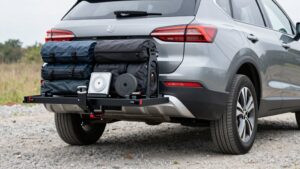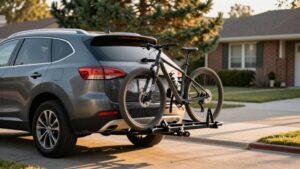
Platform vs Hanging Hitch Bike Rack: Which Protects Your Bikes Better?
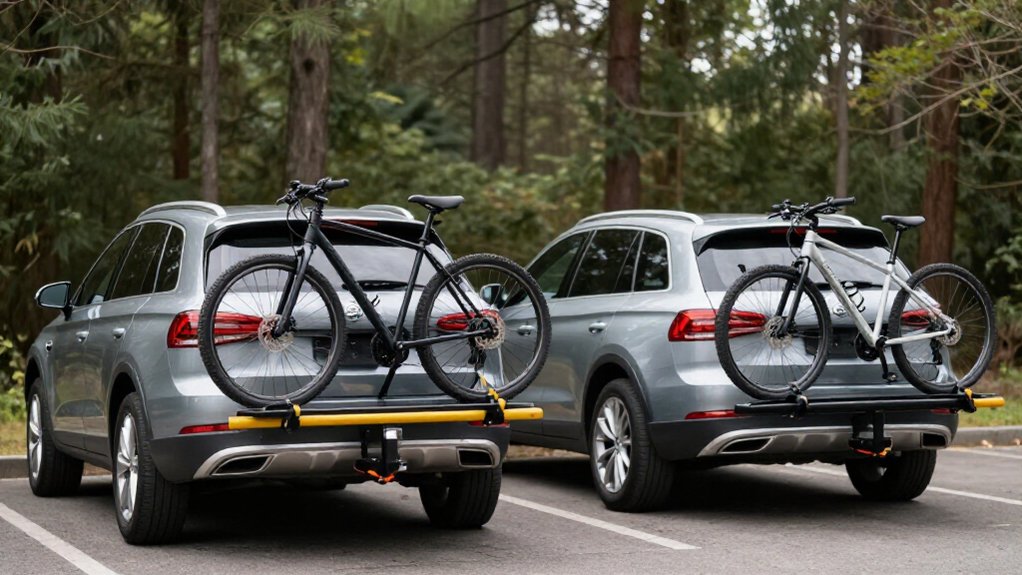
Platform hitch racks usually protect your bikes better because trays secure the wheels and minimize frame contact. Hanging racks hold bikes by frame cradles, so poor fit or road sway can cause rubbing; carbon frames need caution unless the manufacturer permits contact.
Choose a platform model for commuting or trailhead trips, and check wheel, tire, and clearance before buying. Anti-sway straps help hanging racks, but loading and hatch access matter. More details can help you choose.
Frame-Contact Risk Comparison
If you’re concerned about frame wear, a platform hitch rack usually has the advantage: it secures the bike by its wheels, keeping contact with the frame to a minimum. Compare the contact points:
| Rack type | Contact pattern |
|---|---|
| Platform | Wheels; minimal frame contact |
| Hanging | Arms and cradles may touch frame |
| Carbon bike | Wheel grip lowers wear risk |
| Poor fit | More frame-to-rack contact |
A platform design such as the Kuat Piston Pro can grip only the tires, keeping paint and delicate carbon areas clear. A hanging rack supports the bike at its frame, often with arms, cradles, and straps; mismatched geometry can let the frame rub against the rack.
Check geometry and clearance before buying; a poor fit makes hanging-rack frame contact more likely, especially with carbon or delicate paint finishes.
Tray vs. Frame Cradles
Platform trays support bikes at the wheels, reducing direct frame contact, while hanging racks secure them with frame cradles and straps.
Wheel cups or chocks, often paired with ratcheting arms, hold tires; many trays also separate bikes. This limits reliance on your frame and reduces rack contact.
Hanging racks require you to position a top or down tube in padded cradles, then tighten straps. With an unusual frame or no usable top-tube area, you may struggle to achieve a secure fit. For carbon, avoid cradle contact or clamping unless the maker permits it. If frame protection matters most, choose a wheel-supported tray and confirm its restraints fit your tires. Check stated frame and tire compatibility before loading; restraint designs and clearances vary by model.
Road Vibration and Sway
Over rough pavement, platform racks generally limit bike wobble because wheel trays support bikes laterally, while hanging racks let bikes pivot more easily on their support arms. That support reduces vibration transfer and helps keep your bikes aligned on uneven roads. By contrast, each hanging bike can swing side to side unless you fit an anti-sway bar, which is strongly recommended.
Without one, straps and careful positioning may not stop repeated movement; tires or rims can touch, and vibration cycles can increase wear. Some platform designs add further control: the Kuat Piston Pro uses wheel-chock, ratchet-style positioning and a no-interference layout to limit shifting. Whichever style you choose, clamp or strap every wheel and frame contact point firmly before driving. Check before every drive.
Rear-Hatch Access During Loading
Rear-hatch access depends on both the rack’s movement and your vehicle’s door design. Platform racks often use a tilt-away or slide mechanism, so you can reach the trunk or tailgate without removing the rack. Hanging racks commonly tilt too, but that doesn’t guarantee clearance: a side-opening door or side-mounted spare wheel, as on older Prados, Pajeros, and FJ Cruisers, may block it.
If your vehicle has tight rear clearance or the rack projects outward, you may need to tilt or swing it aside whenever you load groceries or gear. An optional swing-away lets racks move clear while bikes stay mounted.
After installation, test hatch access on level ground. Check the opening angle and clearance around any spare-tyre bracket before relying on the mechanism.
Weight Limits & E-Bike Fit
Once hatch access is sorted, check whether the rack can safely carry your bikes. Platform racks usually suit e-bikes better because they offer higher per-bike limits and support bikes at the wheels.
For example, the 1Up Super Duty allows up to 100 pounds per tray, while some models fit tires up to 4.5 inches wide. Wheel support also avoids frame contact, an advantage for carbon bikes whose warranties may exclude stress or clamp damage.
Hanging racks can impose lower limits and require you to lift a heavy e-bike onto raised arms. Check clearance and wheel size; some models reject wheels under about 20 inches. Before loading, verify ratings for the rack, receiver, and vehicle: the lowest governs. An adapter or anti-sway device won’t raise published capacity.
Weatherproofing and Corrosion Resistance
Platform racks often use more metal and grip bikes by the wheels, reducing frame contact and wear from trapped moisture. That construction can resist corrosion better than lighter mixed-material designs, but metal content won’t protect the rack. Hanging racks expose straps, cradles, and joints to road spray, so check coating and weather-sealed hardware around anti-sway and tilt mechanisms. In winter, wheel ratchets or cam systems can ice up; choose corrosion-resistant parts that still operate when wet and cold.
After rain or drives, rinse both rack types and dry them. Saltwater attacks lock cylinders and contact points. Inspect padding, straps, fasteners, and joints for trapped water or coating damage, then lubricate as the manufacturer directs. Wheel-focused securement limits metal-to-metal contact, helping protect your bike.
Parking Garage Clearance
Beyond corrosion resistance, check how each rack affects garage clearance. Platform racks usually project farther behind your vehicle than hanging models, increasing the risk of striking a wall or exceeding a ceiling limit. Their bulkier frames may also need room for rack arms and tilt-away movement before you enter a tight bay.
- Hanging racks generally extend less, so you’ll often clear narrow bays more easily.
- Check your route for low ceilings, angled ramps, and tight turn radiuses when backing in.
- If you need tilt or boot access, a tilt-away design may help, but platform racks still need extra outboard space.
- Compare its loaded footprint with your garage opening and turning path first.
Hitch Installation Effort
Before choosing a rack, confirm your vehicle has a compatible removable hitch and check its tongue-weight rating. You’ll usually find a hanging rack simpler to mount, while a heavier platform rack takes more effort to maneuver onto the receiver.
Compare receiver fit and rack overhang, then test loading and unloading before you drive.
Hitch Compatibility
First, confirm your vehicle has a removable hitch receiver that matches the rack—commonly a 50 mm square receiver, though some older cars use 45 mm. Then check the receiver’s tongue-weight rating against the rack’s requirements; compatibility depends on the vehicle and rack working as a rated system, not merely fitting together.
- Platform racks may need added hitch hardware and a sturdier receiver, so compare both published limits before choosing.
- Their greater reach can also create overhang or clearance constraints on your vehicle.
- Hanging racks are often lighter and simpler to remove, which may suit frequent rack removal.
- Either design must sit squarely without loading the receiver beyond its limits.
At home, test loading and unloading; confirm clearance and fit before carrying bikes on road.
Mounting Complexity
Because platform racks are bulkier and heavier, mounting one often takes more lifting and clearance than installing a lighter hanging rack.
You may need to maneuver a platform rack and align its longer reach with the receiver before inserting it. Hanging racks lift more easily and mount faster, which helps if you remove the rack often. Their fold-up design can simplify storage, while a platform rack takes more space.
Regardless of design, you must insert and lock the hitch pin correctly; a loose connection can compromise secure transport. After mounting either rack, perform a test load and unload. Check that the rack stays seated in the receiver and that your bikes don’t shift. This check helps catch alignment or locking problems before you drive.
Commuting vs. Trailhead Trips
For daily commuting, you’ll generally get steadier, quicker loading from a platform rack that supports the wheels or lower frame with less movement. On trailhead trips, its wheel cradles and wider bike spacing can limit sway and contact, especially with heavier bikes.
Match the rack to your routes and bike loads, and check how its support design protects your frames and tires.
Daily Commute Stability
On daily commutes, platform racks usually keep bikes steadier than hanging racks because trays and wheel or frame restraints limit movement and bike-to-bike contact. Defined trays and wheel restraints hold each bike in place; many models add light frame contact only where needed. That separation cuts rubbing on stop-start streets.
- You lift bikes lower, making frequent loading easier and crooked placement less likely.
- Wheel or frame restraints limit wobble without relying on hanging cradles.
- A Kuat Piston Pro grips tires; its chocks engage in seconds.
- Its 12mm cable adds security during routine stops.
Trailhead Trip Protection
When you’re loading and unloading at a trailhead, a platform rack generally protects bikes better by securing their wheels in trays and limiting sway on the drive.
A platform design keeps bikes from shifting during commutes to the trail, and tire-gripping cradles avoid frame contact that can mar finishes during loading. Hanging racks hold bikes higher; without an anti-sway bar, movement can increase bike-to-bike contact and frame rub. Position each bike carefully before you drive.
In winter or wet conditions, platform ratchets can ice, as reported with the Kuat Piston Pro, so test operation and cinch wheel straps tightly before leaving the trailhead. Though hanging models are easier to lift off and store between uses, that convenience doesn’t remove the need to control movement and prevent contact.
Matching Racks To Routes
Match the rack to your route: a platform model is usually faster and steadier for frequent commuting, while a lighter hanging rack can suit local shuttle rides if you add an anti-sway bar.
- For repeated loading, wheel-only platform grips limit bike-to-bike and rack contact, helping prevent paint or rim scuffs.
- At trailheads, choose a rated platform for 60–80-pound e-bikes; high hanging arms make lifting harder and can exceed per-bike limits.
- For rough roads or longer drives, platforms position wheels more firmly, reducing vibration-driven movement between bikes and finish damage.
- Before departure, check rack, receiver, and vehicle tongue-weight and overhang limits; the lowest rating governs.
For mixed routes, balance loading speed against portability; secure bikes, confirm clearances, and recheck the setup before you drive again.
Best Budget Rack for Families
For families on a budget, a platform rack often offers a more stable ride than a hanging rack, with less bike-to-bike contact. Wheel trays support each bike, reducing sway; hanging models may need an anti-sway bar to limit movement.
At about $550, the RockyMounts MonoRail is a practical pick. It includes a locking hitch pin, bike locks, and a six-foot cable. Adjustable trays and strap extenders accommodate tires up to five inches, so you can mix kids’ bikes with fat bikes.
If you carry more than two bikes, check that the platform model offers the capacity you need; closely spaced hanging bikes can touch. For heavy e-bikes or adult bikes, confirm per-bike limits and choose a wheel-secured, e-bike-capable design. Before driving, compare total bike weight with your hitch and tongue ratings, then test clearance and fit at home.
Conclusion
Choose a platform rack if you want lower frame-contact risk, steadier support, easier loading, and better e-bike capacity. It usually costs more and adds weight, but protects delicate frames without clamping tubes.
A hanging rack can suit lighter bikes, tight budgets, and occasional trailhead trips; however, sway, hatch access, and frame compatibility need closer checks. Before buying, verify hitch limits and garage clearance. For family commuting, prioritize secure fit over price alone, and drive cautiously.