How to Prevent Trailer Theft: Layered Security That Thieves Hate
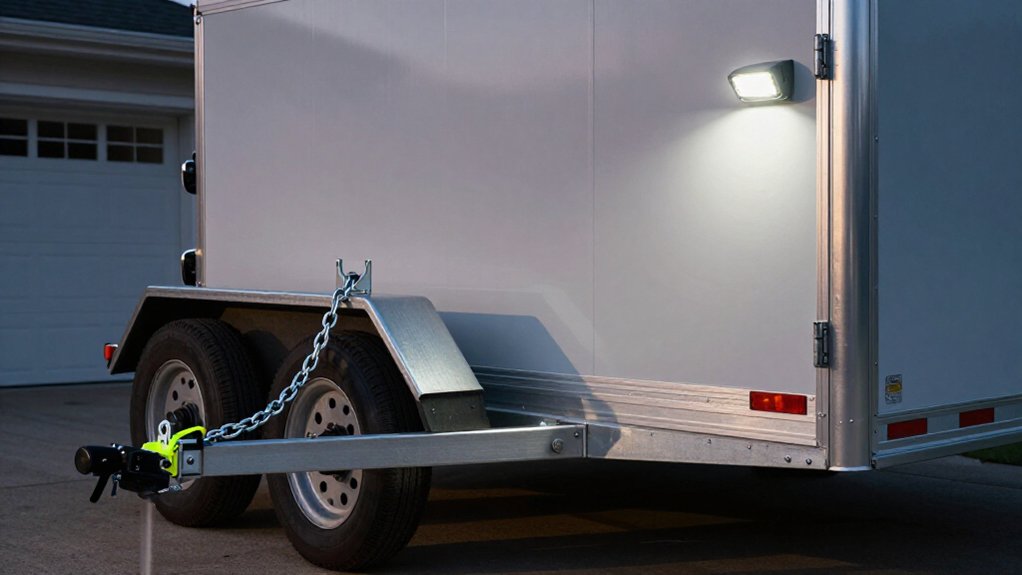
To prevent trailer theft, park in a bright, visible spot and block easy hitch access with a nearby vehicle or barrier. Fit a tight coupler lock, secure safety chains, and add a wheel clamp.
Test immobilization before leaving.
Lock the gate, then conceal a GPS tracker with movement alerts. Record the VIN and photograph identifying details.
Lubricate lock cylinders quarterly.
The following checks can strengthen every layer and keep your trailer harder to steal.
Theft-Risk Assessment
Assess trailer theft risk by measuring how quickly someone could reach and latch the coupler: theft is often a fast “hitch-and-go” when lighting is poor and no one’s watching.
Time each parking spot: can a stranger reach the coupler in seconds without crossing a watched area? Prioritize private homes and campsites; 65% of U.S. trailer and RV thefts in 2025 occurred there, often without visible locks.
Raise risk when enclosed trailers contain tools, registration papers, or $10,000-plus cargo; greater payoff can motivate lock cutting. Exposed or isolated parking, gates, exits, public roads, fence gaps, and unmonitored entrances give thieves predictable access.
Check bypasses carefully: loose chains can provide another hitch point; exposed couplers invite prying or grinding, while absent wheel locks leave an easy route.
Secure GPS Tracker Properly
Locks and careful parking can slow a thief, but a concealed GPS tracker can help you locate the trailer if it’s taken. Mount it beneath the frame or inside a compartment, where it’s concealed, hard to reach, firmly fixed, and protected from weather and vibration. Choose a unit with 30-plus days of battery life, or hardwire it/use solar for extended storage; turn on movement and geofence alerts.
- Add a Bluetooth tag as backup in case someone disables the GPS unit.
- Test location accuracy and alert timing after installation.
- Record the tracker ID and app details for quick access.
- Give law enforcement exact coordinates if the trailer’s stolen.
Check updates consistently; reliable satellite contact helps you share current coordinates during recovery, not an outdated location.
Step 1: Park in a Lit, Visible Spot
At night, park your trailer in a well-lit spot with regular foot traffic, such as near building lights, an office, or a busy parking lane. That steady activity makes it harder for someone to work unnoticed and gives nearby staff or passersby a chance to spot suspicious behavior.
Choose a space where lights stay on after closing and people or security staff still pass through; a bright lot that’s empty all night may offer less protection than it seems.
Back it against a wall or barrier, or park a vehicle close beside it. This can slow a hookup and keep the hitch exposed to view. In a yard, place it within a camera’s line of sight. Avoid dark, isolated corners and anything that blocks observation.
Step 2: Document VIN and Photos
If your trailer goes missing, clear records can help police and insurers identify it quickly. Record your trailer’s VIN and serial or ID numbers. Photograph each marking from multiple angles, including the tongue, frame, axle area, and VIN plate.
Capture every feature that distinguishes your trailer: custom paint or wraps, logos, reflective decals, door and latch styles, wheel and tire details, and unique damage. Back up clear, wide-angle images and close-ups immediately to cloud storage or a secure offsite system. Include registration papers and proprietary components that could support recovery.
Keep digital and physical copies of your title, registration, and purchase documents with this file. Recheck your VIN and markings periodically, then update your photos and backups. Update records whenever markings or components change.
Step 3: Install a Coupler Lock
Your VIN records help identify a stolen trailer, but a coupler lock can make it harder to take in the first place.
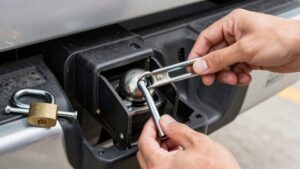
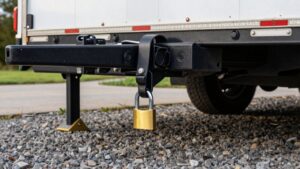
Choose a coupler-specific lock that fits tightly around your latch and coupler. A close fit covers key contours and removes leverage points thieves target with pry tools or crowbars. Skip universal-fit and loose generic designs: gaps can give thieves room to attack the latch with grinders, screwdrivers, or pry bars. Prefer hardened steel and keys that resist duplication; cheap locks may fail quickly against an angle grinder.
Whenever you detach your trailer and park it overnight, use the lock. It blocks quick hitch-and-go attempts. Add other barriers, such as locked chains, to make your trailer a slower, less attractive target for thieves.
Step 4: Install a Wheel Clamp
Lock a heavy-duty wheel clamp over the trailer’s wheel to stop it from rolling and make towing far more difficult, even if a thief bypasses other locks. Choose a model that fully covers the wheel and resists prying and cutting. This rigid barrier adds time and effort to a fast, tool-assisted theft, making your trailer a less attractive target.
Whenever possible, pair the clamp with a coupler lock. Immobilizing the wheel and blocking the hitch force a thief to defeat separate barriers, increasing delay and exposure. Park so the clamped wheel sits away from open approach space; limited access can frustrate quick attempts.
Each time you secure the trailer, check that the clamp locks firmly and sits properly against the wheel. A loose or poorly seated clamp may give an attacker leverage to move or reposition the trailer.
Step 5: Add a Hitch-Side Warning Decal
Place a bright warning decal on the hitch-side face of the tongue, where it’s visible from ground level before anyone can reach the coupler. That placement puts your warning in view during setup, when a thief may be planning a quick hitch-and-go.
State plainly that you use a coupler or wheel lock and GPS or geofenced alerts. The message should signal that stealing your trailer will take time and trigger detection, making it a less attractive target. Keep the lettering large, high-contrast, and readable without approaching the trailer.
Add your company name and a phone number or asset ID to suggest that you can trace and report it, discouraging rapid resale or part-out. Replace faded or damaged decals so the warning stays credible. A decal can’t stop a determined thief, but it can expose your defenses and persuade a thief to move on before attacking the coupler.
Step 6: Lock the Safety Chains Together
Secure the safety chains together with a purpose-made chain lock to prevent thieves from using them as an alternative hitch point. Keep the chains taut and secured whenever you park; loose links give thieves something to grab, unhook, and use as leverage to move the trailer.
Choose a high-hardness keyed chain lock that compresses multiple links at several points. A basic padlock leaves an easy weak spot, and thieves can defeat flimsy setups quickly.
When you secure the coupler, lock the chains too, so defeating one barrier won’t let anyone recreate a tow connection. If you’ve got a wheel lock, add it; each extra obstacle costs time and makes your trailer a less attractive target. Make it routine whenever you leave the trailer parked.
Confirm the Gate Latch Is Secured
Before leaving your trailer, make sure the gate latch fully seats and locks; a latch that’s only partly engaged can pop open if bumped or pried.
At day’s end, inspect the latch pin and lock mechanism; don’t assume they’re secure because they appear in place. Pull the gate and release it to confirm the latch holds.
If your trailer has a secondary latch or keeper, secure both so defeating one won’t provide access to the load or hitch area. Clear dirt and rust, and check for a bent striker that could prevent catching. Add a small lock or cover over the latch hardware when practical; it can slow manipulation with a pry tool.
Include this check in your final walk-around before leaving the trailer unattended.
Wheel-Bearing Lockup Checks
Once the gate latch is checked, immobilize the trailer with a wheel boot or chock that fully covers the wheel and clamps tight.
Check the lock before you leave: confirm its padlock or integrated bolt is fully engaged, with no gap or exposed bolt a thief could lever. Inspect from both sides and match coverage to your setup; tandem wheels need appropriate immobilization, or the trailer may roll enough for hitching.
| Check | Secure result |
|---|---|
| Lock engagement | No gap or exposed bolt |
| Wheel coverage | Both sides; correct wheel count |
Push the trailer before walking away. If it moves, reseat the boot or chock immediately; a wheel defense works only when rolling stops. Verify valve-stem covers are intact; tire tampering or air loss can still defeat immobilization.
Lubricate Lock Cylinders Quarterly
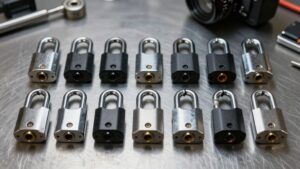
To keep trailer locks quick and reliable, lubricate each cylinder every three months with a dry graphite or PTFE lock lubricant. Apply it into the keyway, then cycle the key 10–15 times, locking and releasing, so lubricant reaches pin-tumbler parts that dust and moisture can gum up.
If you feel resistance or sticky turning, avoid oil-based grease; it attracts grit and can worsen binding. Use dry lubricant, then wipe excess from the cylinder mouth to prevent buildup.
After lubrication, test the lock and recheck it after a week to confirm smooth operation and engagement. Rain, snow, and dust can contaminate exposed cylinders within months, so quarterly service is your baseline. A binding lock slows security checks and gives thieves time when your trailer sits unattended.
Conclusion
You can’t eliminate trailer theft, but you can make your trailer a harder target. Assess your risks, secure the GPS tracker, and park where people can see it. Record the VIN and photos, then lock the coupler, safety chains, and gate latch.
Check the wheel bearings and lubricate lock cylinders every quarter. Make these steps part of your routine, and you’ll improve your chances of deterring thieves and recovering your trailer if it’s taken.