Coupler Lock vs Hitch Lock: What Each Protects and Which You Need
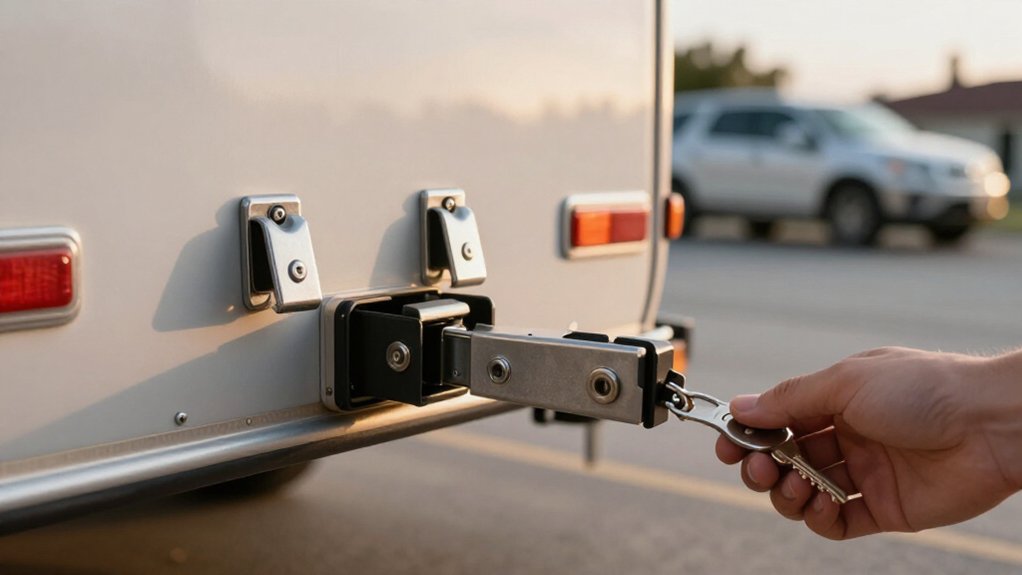
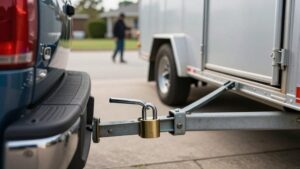
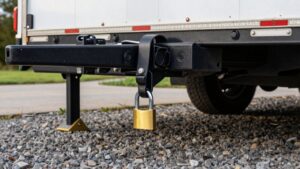
A coupler lock blocks your trailer’s latch, preventing someone from connecting an unhitched trailer to a tow ball.
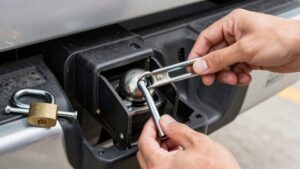
A hitch lock secures the ball mount in your vehicle’s receiver, preventing its removal.
If you’re parking the trailer unhitched, choose a correctly fitted coupler lock; add a hitch lock when the ball mount stays installed.
Match coupler size and lip dimensions, and remove the coupler lock before towing.
The sections ahead clarify fit, placement, and weather resistance.
Receiver Pin vs. Coupler Jaw
A receiver pin lock and a coupler jaw lock protect different parts of your setup: the receiver pin lock replaces the standard hitch pin to keep the ball mount from sliding out of the vehicle’s receiver, while the coupler jaw lock blocks the trailer’s latch from opening onto a towing ball. Choose by what you need to secure: your vehicle’s hitch hardware or the trailer’s connection point. While towing, you can typically leave the receiver pin lock in place; when unhitched, use a coupler jaw lock to deter unauthorized hitching.
| Lock | What it protects |
|---|---|
| Receiver pin lock | Ball mount |
| Prevents removal | Vehicle receiver |
| Coupler jaw lock | Coupler latch |
| Deters hitching | Unhitched trailer |
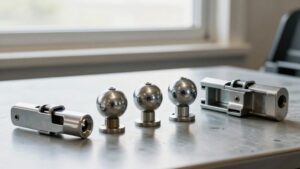
Check common ball sizes: 1-7/8, 2, and 2-5/16 inches; fit matters.
How Locking Bars Engage
When your trailer is uncoupled, a coupler lock’s bar slides into the latch’s release area and blocks the latch from opening or swinging over a tow ball. The housing slides over the latch and seats against the coupler body, placing the bar edge-to-edge across the release region with no usable gap.
Check the coupler’s lip dimensions before choosing a lock: a 2-inch model may allow a maximum lip width of 3¾ inches and height of 5/16 inch. If the bar won’t align or fully cover the latch, don’t force or hammer the housing; choose a size that fits.
Once seated, activate the lock with its key or specified locking operation to keep the bar in place while your trailer is parked and unattended. Proper fit matters.
Theft Deterrence in Practice
Proper fit keeps a coupler lock in place; its theft-deterrence value comes from blocking the latch so a thief can’t quickly hitch up and drive away. That barrier makes your parked, unhitched trailer harder to steal. A thief must remove the lock before the coupler can connect to a hitch ball.
You can’t tow with the coupler lock installed, so remove it before travel and use it when you leave the trailer unattended. A hitch lock prevents removal of the ball mount or hitch-mounted accessories from your vehicle’s receiver. When your trailer remains connected, or you leave the hitch installed, that protection matters.
Match each lock to the trailer’s status: secure the unhitched coupler, and consider a hitch lock for the receiver connection.
Weatherproofing and Corrosion Resistance
Because coupler and hitch locks often stay outdoors, choose high-strength steel with a corrosion-resistant finish, such as a zinc coating, to withstand rain, road spray, mud, and salt. These conditions can cause rust and lock failure.
Choose locks with sealed or water-resistant cylinders to limit water and dust intrusion, which can make keys stiff or jam the mechanism. Prefer silicone-lubricated designs or models with drain holes, which help moisture escape and keep operation smooth through shifts in temperature and humidity.
In cold climates, sealed construction and moisture control also reduce internal freezing, so your lock’s more likely to rotate when you need it. Check for corrosion or salt-spray testing and stated performance across extreme temperatures; those claims help you judge whether a lock can handle year-round outdoor exposure in your climate.
Receiver Diameter and Coupler Size
Check both dimensions before choosing a lock: a hitch lock replaces the receiver’s pin and must match the receiver size, while a coupler lock must fit the coupler’s ball and latch dimensions. Confirm your receiver diameter; an ill-fitting hitch lock won’t sit. Common ball sizes include 1-7/8, 2, and 2-5/16 inches, but ball size alone doesn’t guarantee fit.
The lock must also fit the coupler lip where its housing rests. Measure lip width and height, then compare them with the manufacturer’s chart. For example, a published 2-inch application allows a maximum 3-3/4-inch lip width and 5/16-inch lip height. Your measurements must fall within those limits. Check that the lock fully covers the latch without a workable gap. Verify exact compatibility; don’t force a lock that won’t sit.
Keying Alike and Spare Keys
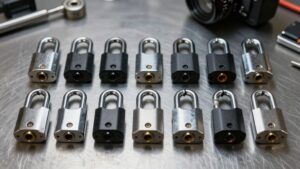
Once you’ve confirmed each lock fits, consider whether keyed-alike locks would simplify securing multiple trailers or using both a hitch lock and a coupler lock. With a keyed-alike set, one key operates several locks, so you won’t need to carry a separate key for each. Keep the set limited to the exact models and sizes you bought; coupler locks must match the coupler’s ball size and lip dimensions.
Carry a spare key because you need a key to remove either lock: a hitch lock secures the receiver pin, while a coupler lock blocks the latch. For a coupler lock, test the spare after installation to confirm it turns and releases the lock. Store spare keys separately from your trailer, not in the cab or on the lock, so theft won’t compromise the whole set.
Lock Placement and Ground Clearance
For proper coverage and ground clearance, seat a coupler lock evenly over the coupler’s latch so it fully blocks the release mechanism without hanging low or shifting. Before you buy, measure the coupler lip’s width and height/depth; fit charts list these separately. A lock that fits the coupler size alone may still leave the latch exposed.
- Check both lip dimensions; a 2-inch coupler example allows 3-3/4-inch width and 5/16-inch height.
- Center the lock over the latch; confirm it covers the release point without gaps.
- Keep the body seated evenly against the coupler to limit low-hanging edges and shifting under load.
- Don’t force a mismatch; gaps weaken latch coverage, and a low edge can snag underneath.
A hitch lock sits at the receiver pin and secures the ball mount, but it won’t protect your coupler when the trailer’s unhitched.
Installation and Removal Ease
You’ll install a hitch lock quickly by replacing the receiver pin, while a coupler lock requires you to uncouple the trailer and fit it evenly over the latch.
Remove the coupler lock before towing; the hitch lock can typically stay in place. If the coupler lock doesn’t align smoothly, check its fit rather than forcing it.
Quick Installation Steps
Although both locks install quickly, each fits a different point: with the trailer uncoupled, slide the coupler lock over the latch and seat its housing flush against the coupler body before locking it. Check the fit before you engage either mechanism; an uneven seat can signal a mismatch, not a need for force.
- For a coupler lock, confirm its lip width and height match the coupler; ball size alone won’t establish fit.
- Insert the key or operate the mechanism only after the housing sits evenly in place.
- For a hitch lock, align its shaft with the receiver holes, replacing the standard hitch pin.
- Press or assemble the top portion down to trap the ball mount securely inside the receiver.
Then verify both locks sit evenly.
Easy Removal Process
Removal depends on which lock you use: take off a coupler lock before hitching, but leave a hitch lock in place while towing. A coupler lock blocks the latch, so you must remove it before you connect the trailer to your vehicle. To take it off, open its mechanism and lift the housing from the coupler. If it resists, check that you’ve released the lock; don’t pry against the latch.
When reinstalling, match the lock to the coupler lip’s specified width and height or depth. A poor fit can leave gaps, so swap sizes instead of forcing it.
A hitch lock replaces the receiver’s hitch pin and usually stays installed during towing, securing the ball mount without a removal step each trip. When you need to remove it, use the key to reverse the pin-lock operation, align the halves, and withdraw the lock from the receiver opening.
Choosing by Trailer Parking Location
Where you park your trailer, at home, in an unattended public lot, or in long-term storage, should guide your lock choice. If it’s unhitched, use a coupler or tongue lock; a hitch lock won’t protect it once you remove the ball mount from the receiver.
Match the lock to your coupler’s design and dimensions, and add a hitch lock when the ball mount stays installed.
Home Garage Parking
When you park your trailer unhitched in a home garage, use a coupler lock to keep someone from connecting it to a tow ball.
A coupler lock blocks the latch from engaging the ball, making it the practical choice while your trailer sits inactive.
- Verify the coupler’s size—1-7/8, 2, or 2-5/16 inches—before buying.
- Check lip width and height/depth against the lock’s specifications.
- Confirm the lock fully covers the latch area.
- Remove the coupler lock before towing; it can’t stay on during hookup.
If you leave the trailer hitched in the garage, choose a hitch lock: it replaces the receiver’s pin, preventing ball-mount removal without a key.
Secure whichever connection remains exposed. Choose by whether your trailer’s connected or unconnected in storage.
Unattended Public Lots
For an unattended public lot, use a coupler lock to stop someone from connecting your parked trailer to a tow vehicle and driving it away. When your trailer’s unhitched and its coupler is exposed, a hitch lock won’t protect it; that lock works only while the trailer’s attached to your tow vehicle’s receiver.
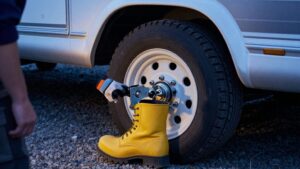
Match the coupler lock to the ball size—commonly 1-7/8, 2, or 2-5/16 inches—and the maker’s specified lip width and height. For example, one 2-inch coupler lists a maximum 3-3/4-inch lip width and 5/16-inch lip height. On an A-frame or straight tongue, choose a snug-fitting model that leaves no usable path to the latch; gaps weaken protection. Add a wheel lock to block rolling as well as unauthorized connection attempts.
Long-Term Storage Spots
If you’ll store your trailer unhitched, use a coupler lock to prevent someone from hitching it to a tow vehicle; choose one that fits your coupler and fully blocks access to the latch.
Match your lock to parking:
- For a ball-mount coupler, measure lip width and height/depth; confirm both fall within the lock’s limits.
- A common 2-inch model may allow up to 3-3/4 inches of lip width and 5/16 inch of lip height.
- For an A-frame or straight tongue, cover the latch completely; gaps can leave a usable path.
- If you’ll store it hitched, use a hitch lock to secure the ball mount in the receiver.
Choose protection by access: a coupler lock guards the trailer side; a hitch lock guards the vehicle-side receiver.
Match the Lock to Your Setup
Choose a hitch lock to secure the vehicle-side receiver connection: it replaces the standard hitch pin, prevents the ball mount from sliding out without a key, and can usually stay on while towing.
Choose a coupler lock when you’ll leave your trailer unhitched: it blocks the coupler latch, so another vehicle can’t connect and tow it until you remove the lock.
Match size by measuring the coupler lip, not just ball size. A 2-inch coupler may specify lip width of 3-3/4 inches and height/depth of 5/16 inch; check both dimensions on the fit chart.
For A-frame or straight-tongue trailers, choose an edge-to-edge lock with no usable latch gap. Cross-check your coupler model’s specifications; wrong sizing can expose the release area or prevent proper seating.
Conclusion
Choose your lock based on what you need to secure: a hitch lock pins the trailer to your vehicle, while a coupler lock blocks the trailer from being attached. Check receiver diameter or coupler fit, locking-bar engagement, ground clearance, and corrosion resistance before buying.
Consider where you park and how easily you can install and remove the lock. For stronger protection, use both when your setup allows, and always confirm each lock fits securely before leaving your trailer unattended.